

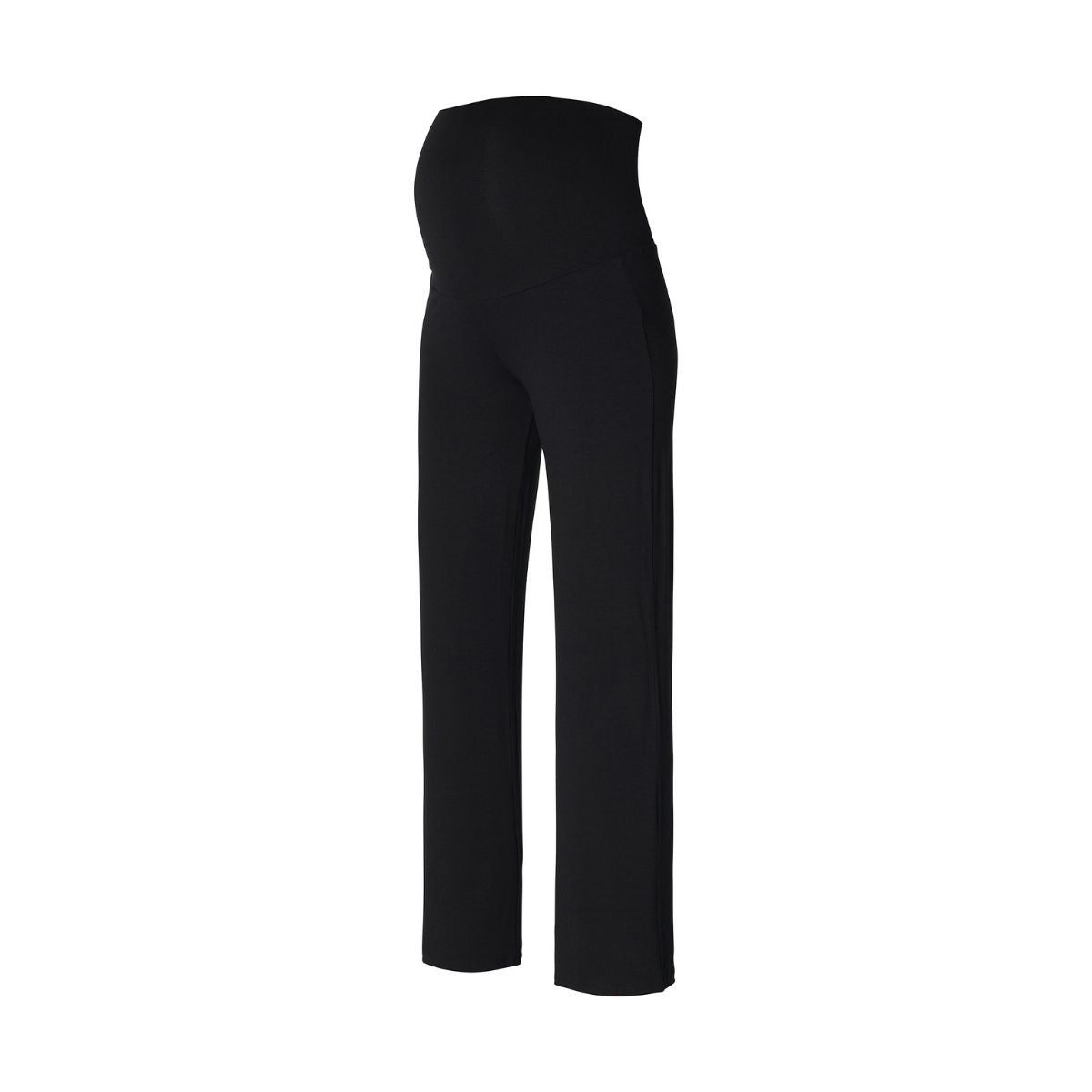
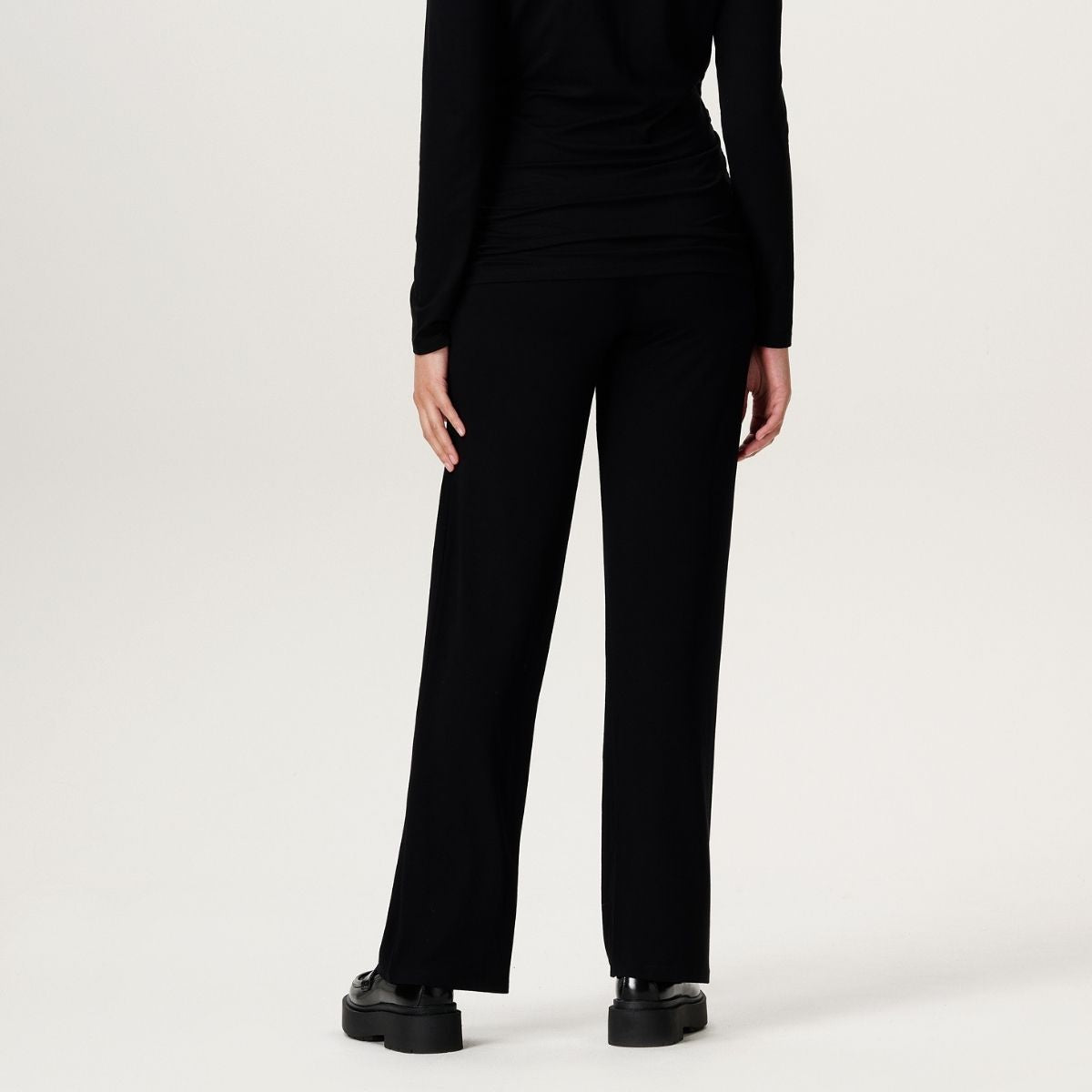
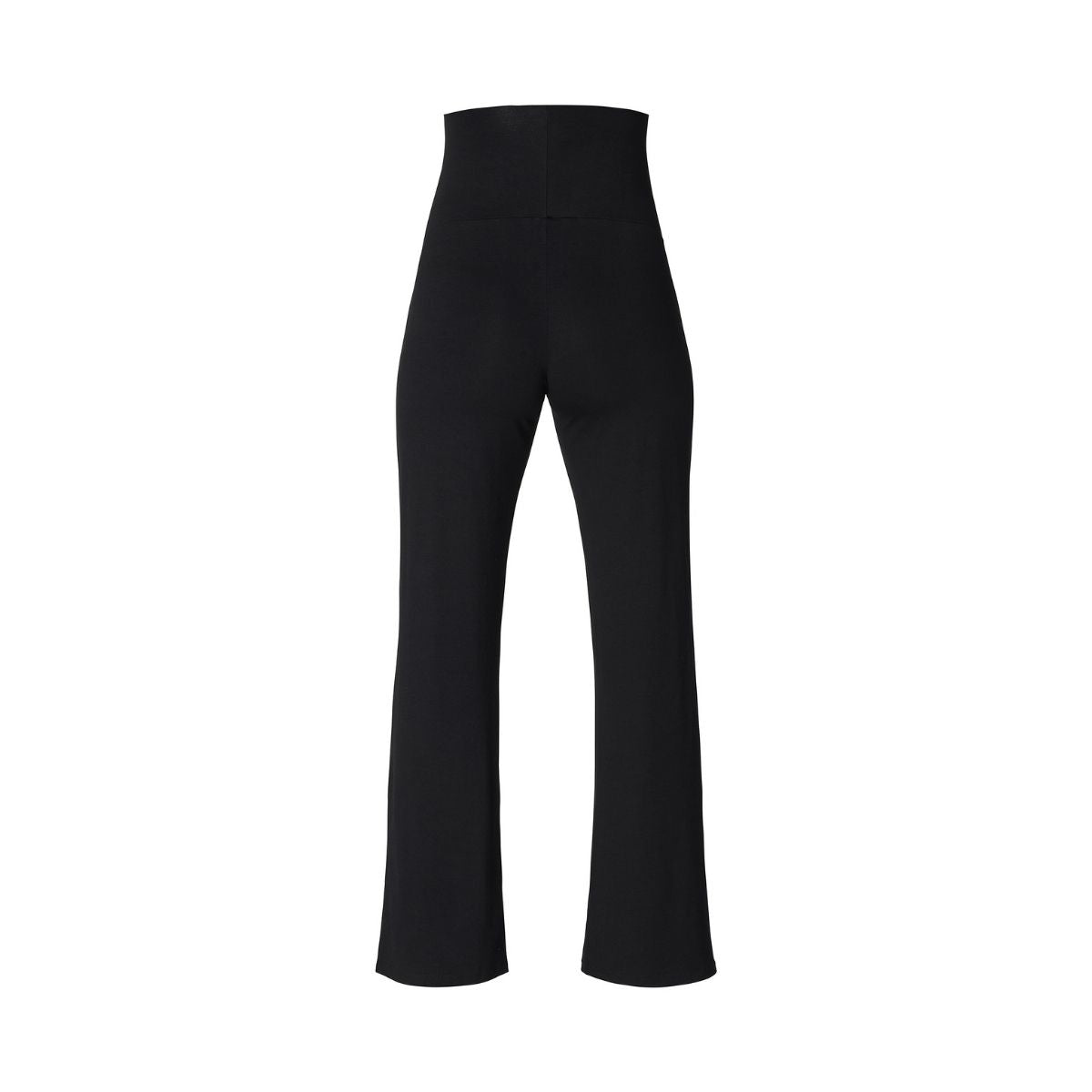
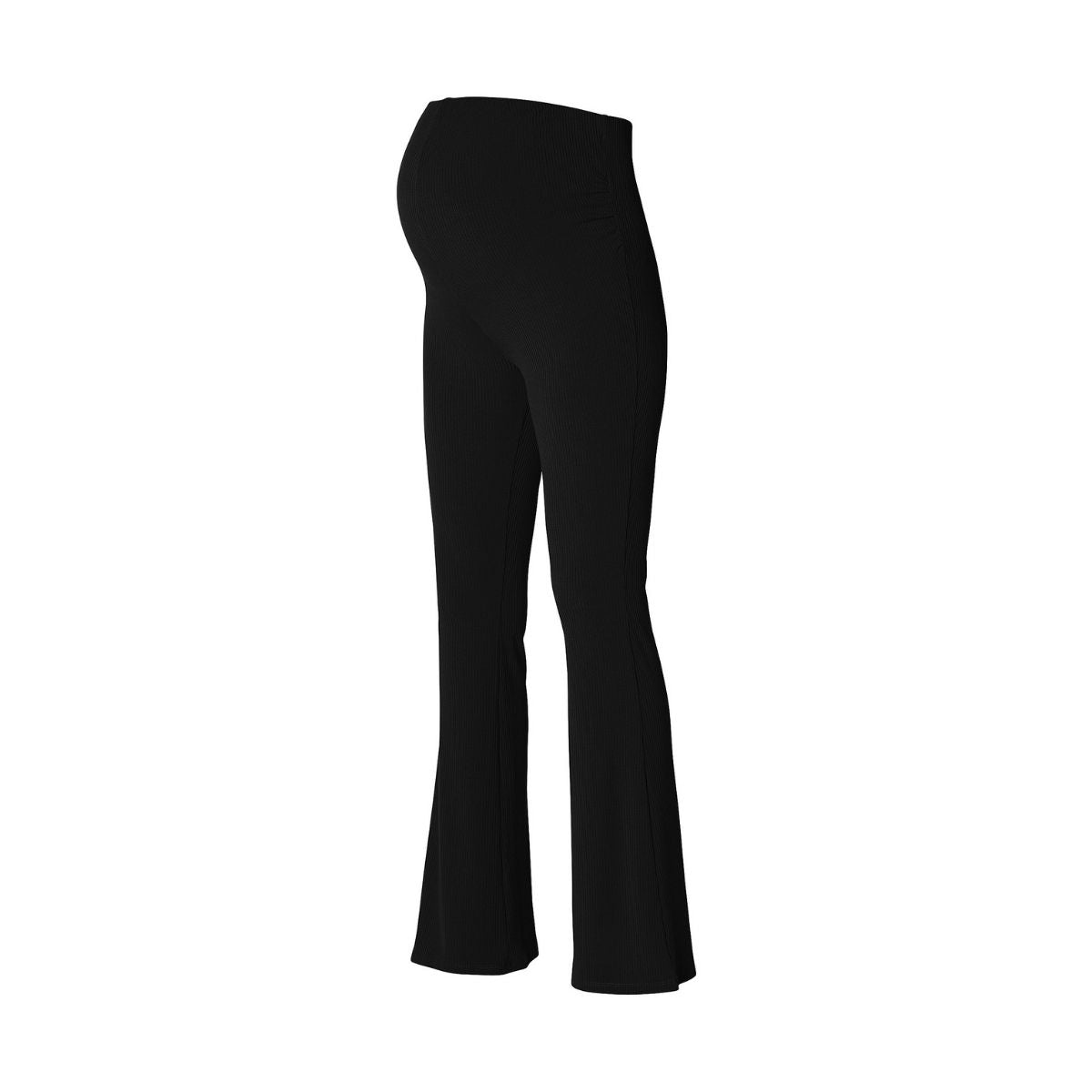
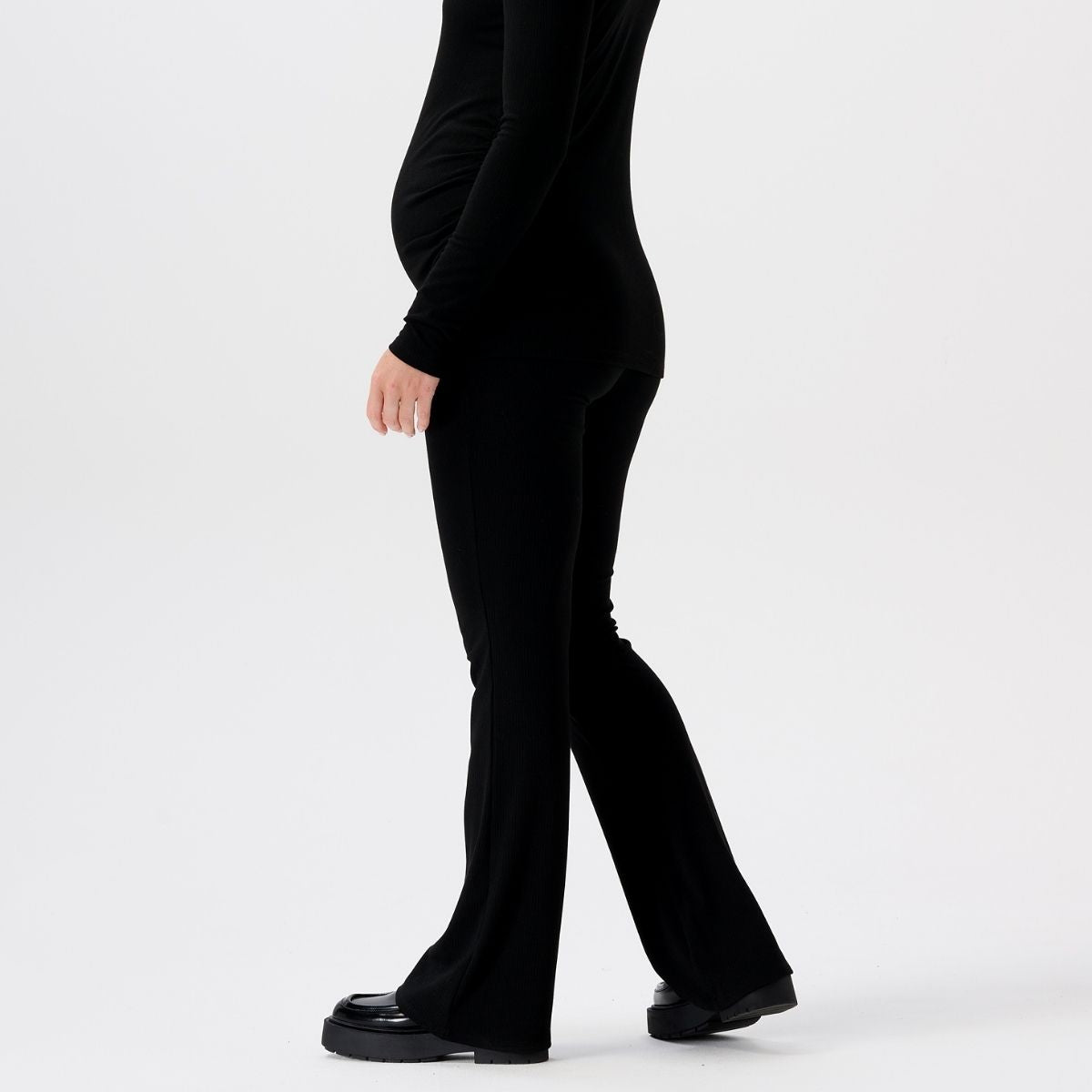
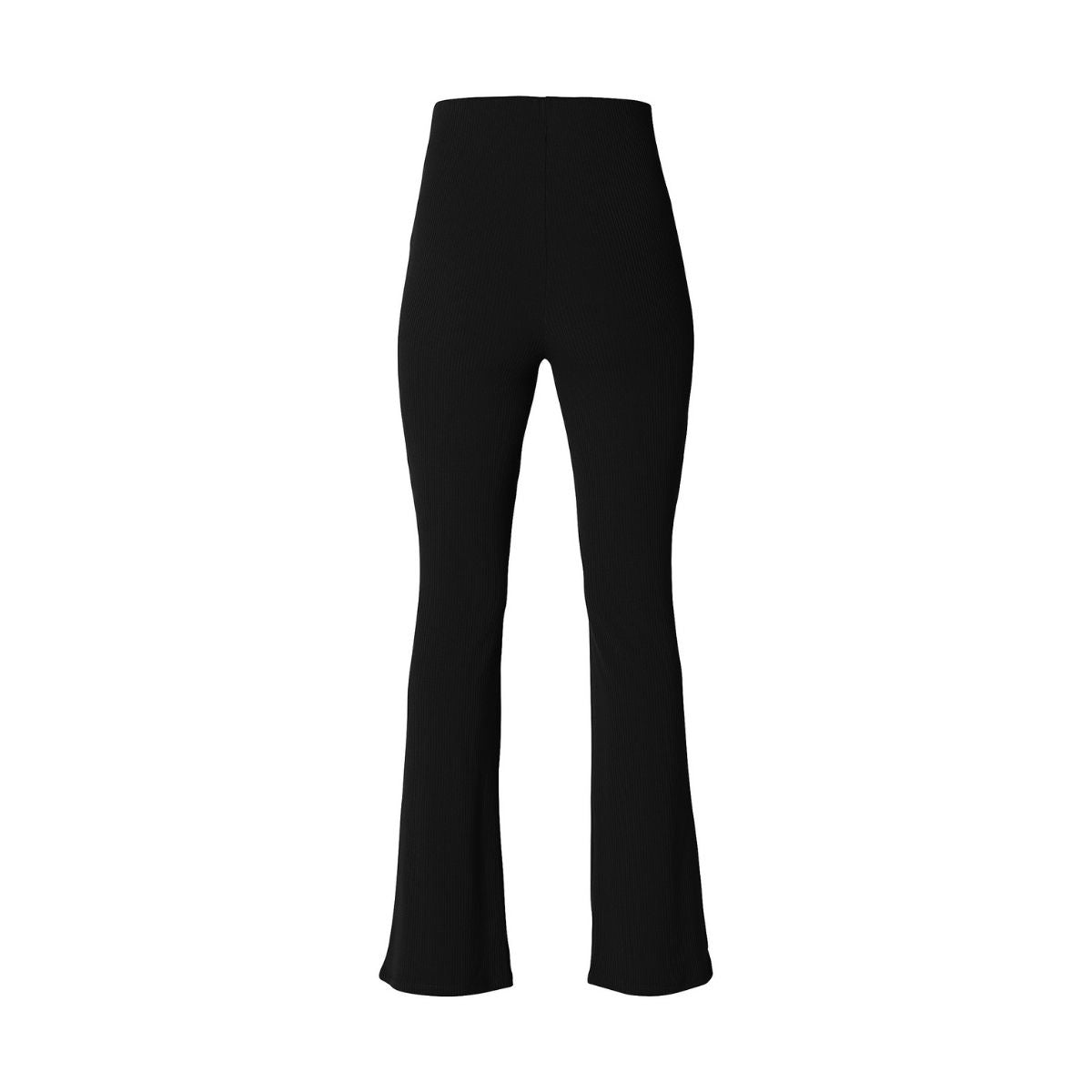
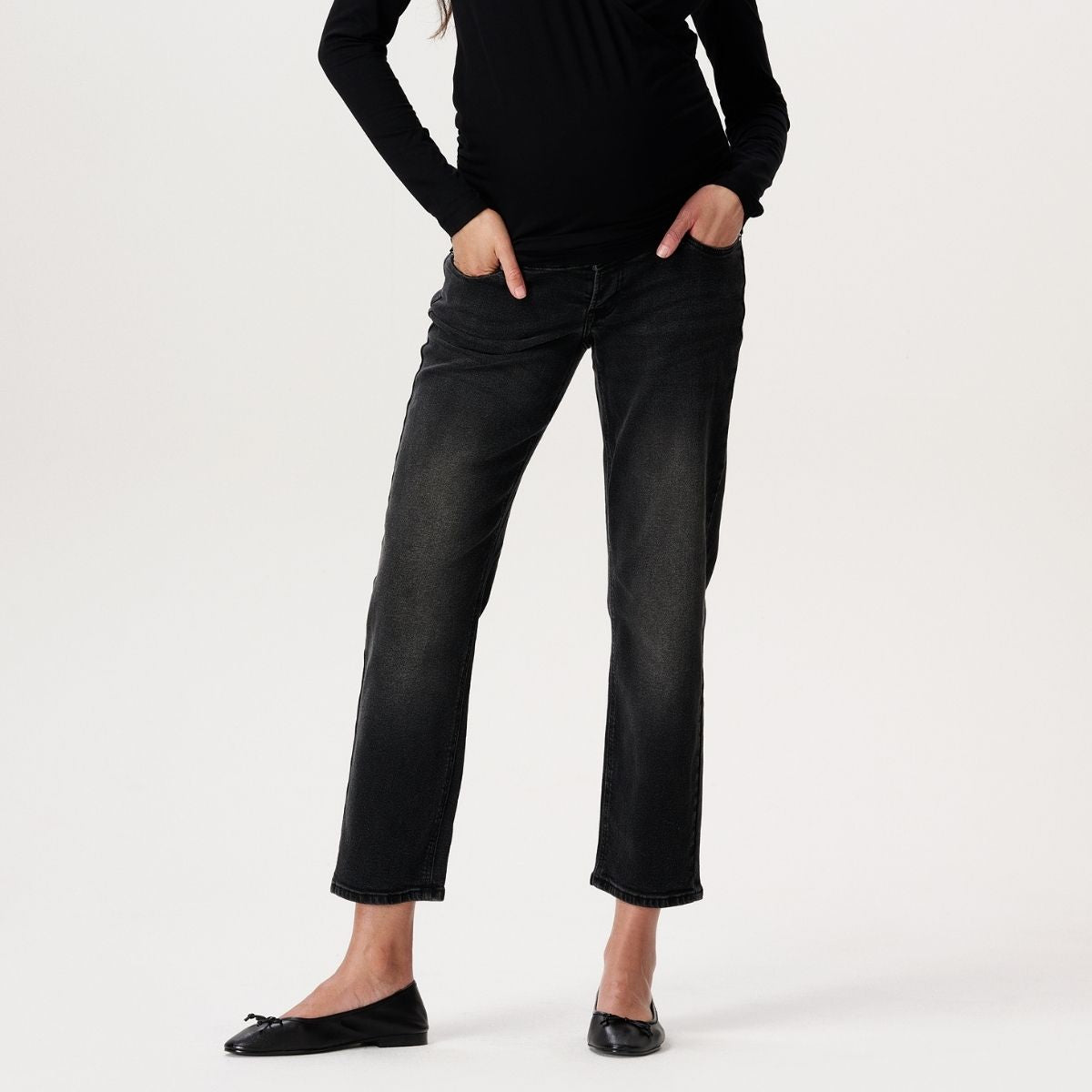
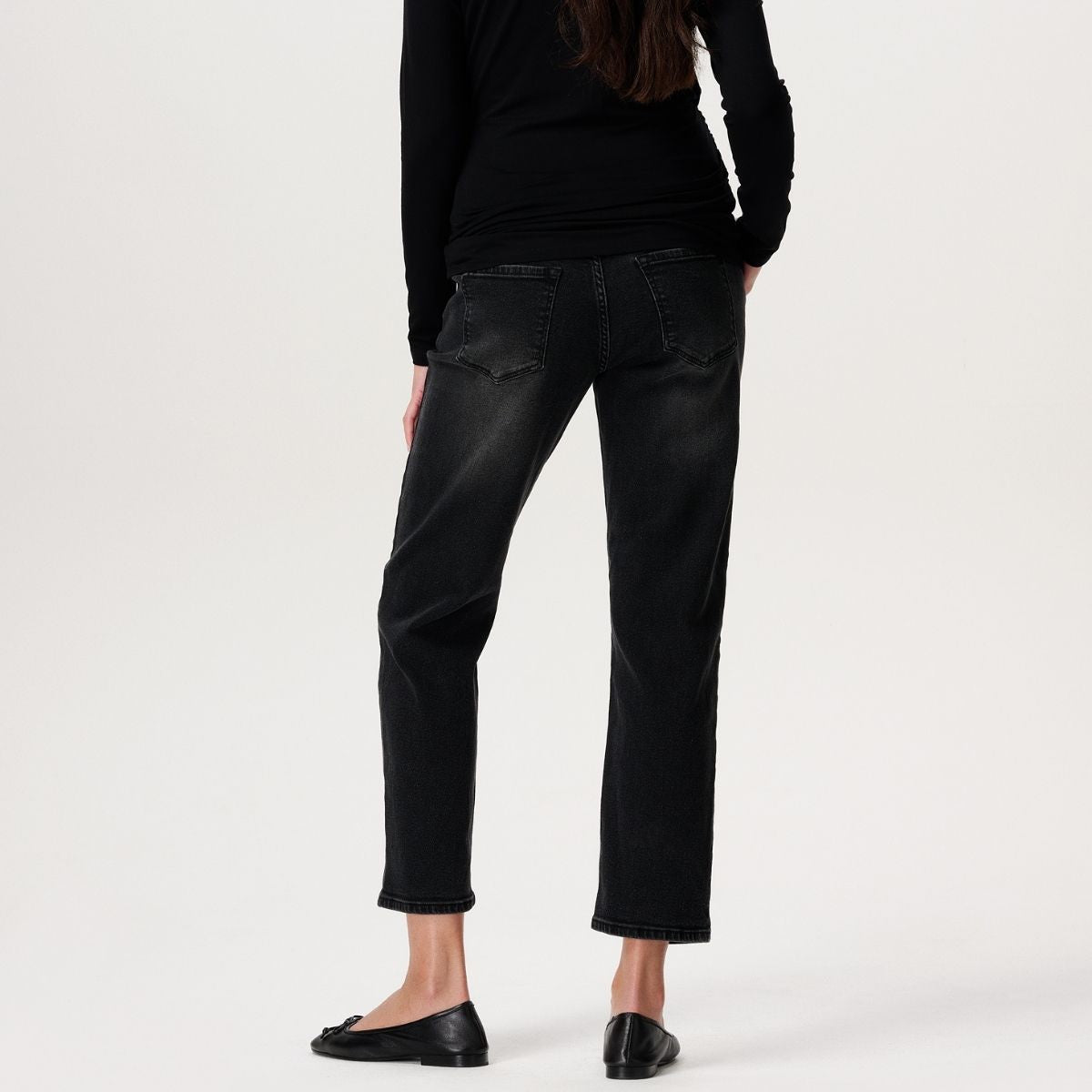
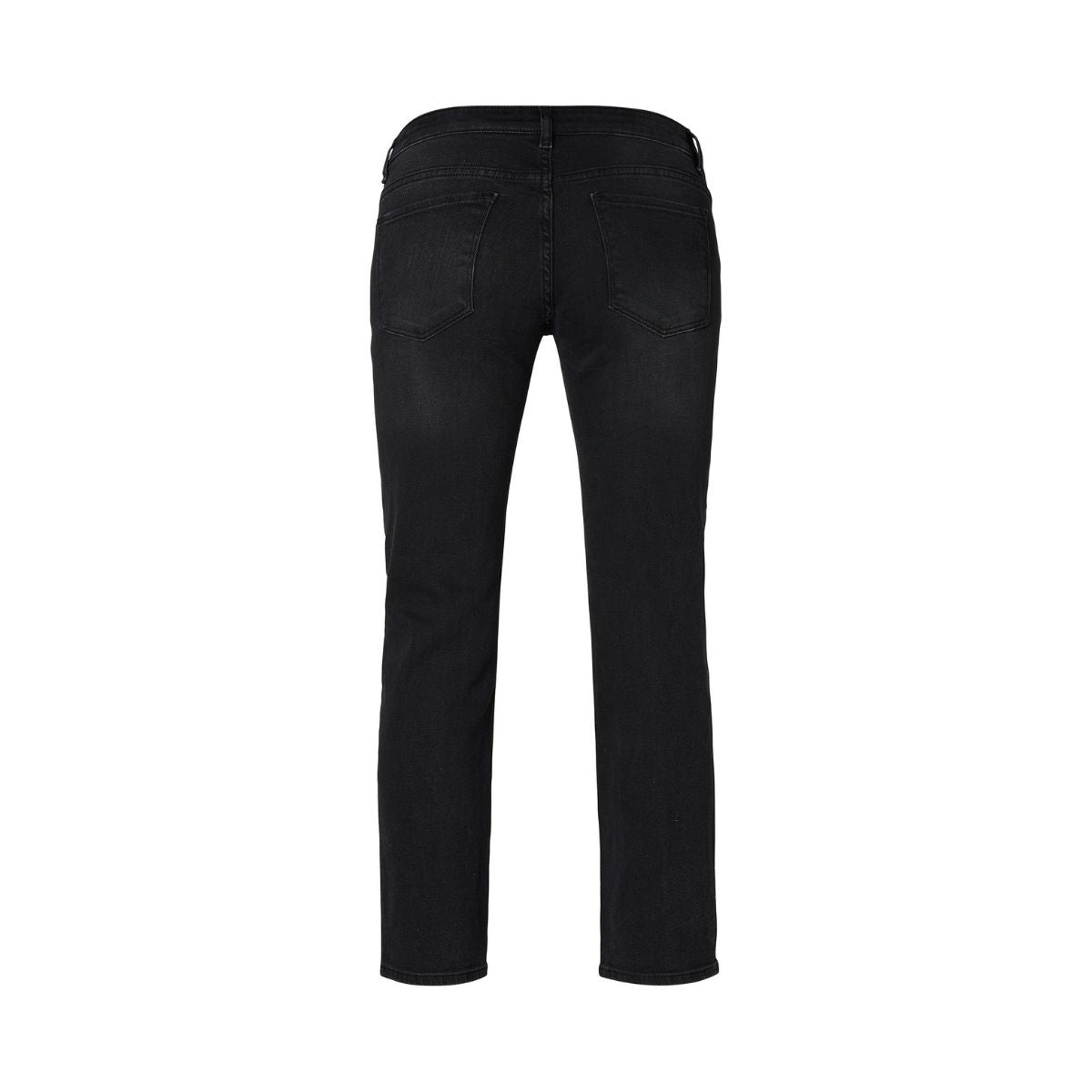


Maternity trousers in styles that work with your wardrobe
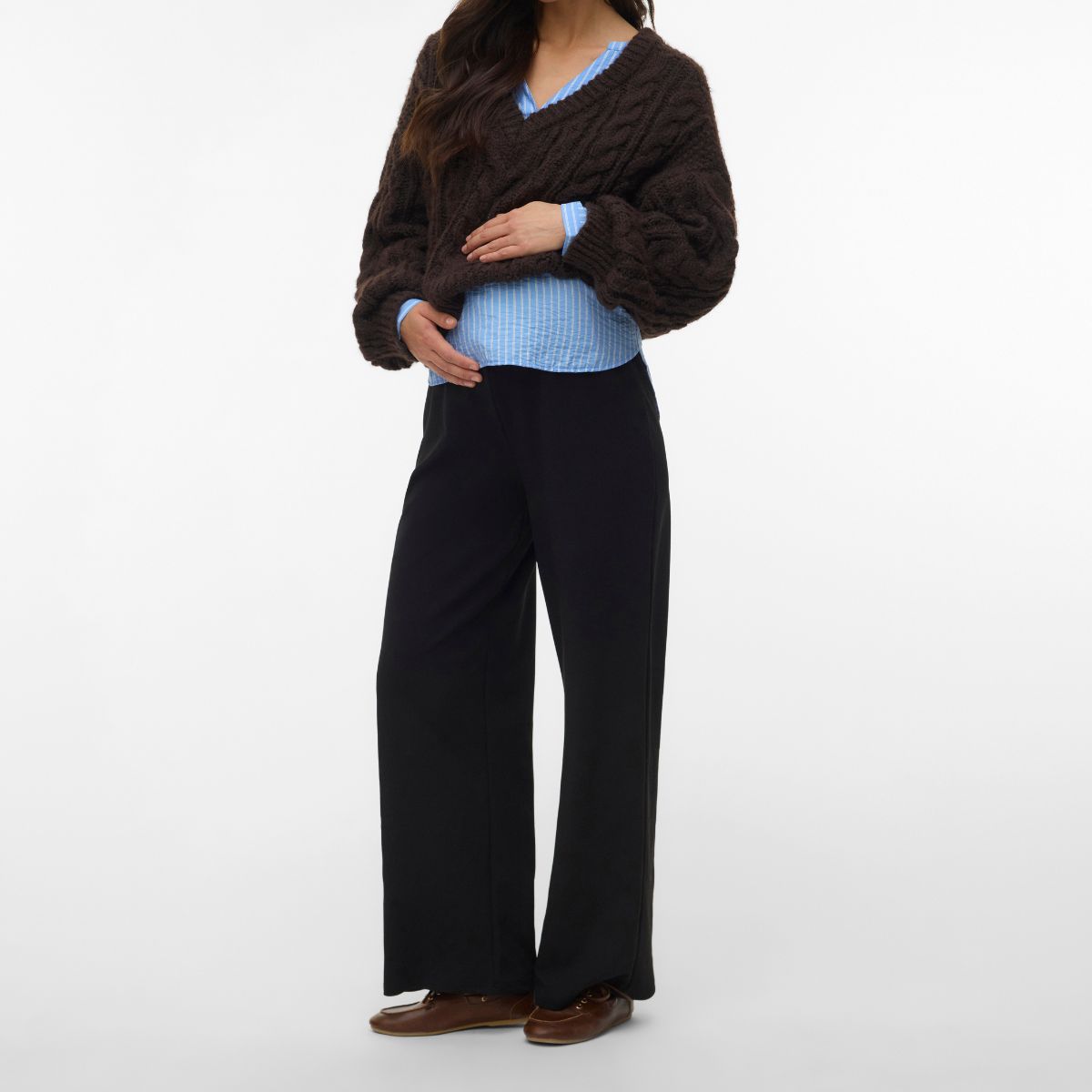
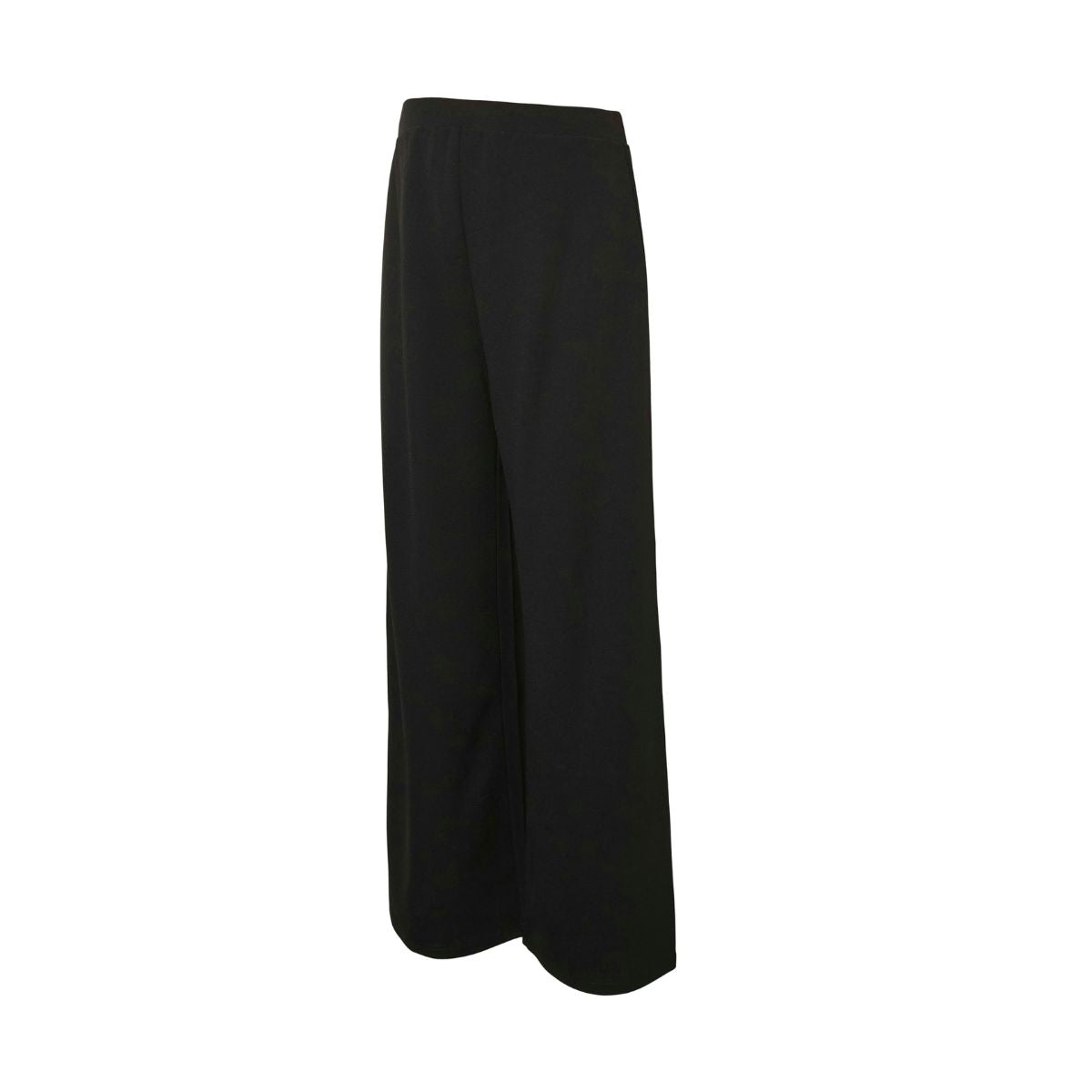
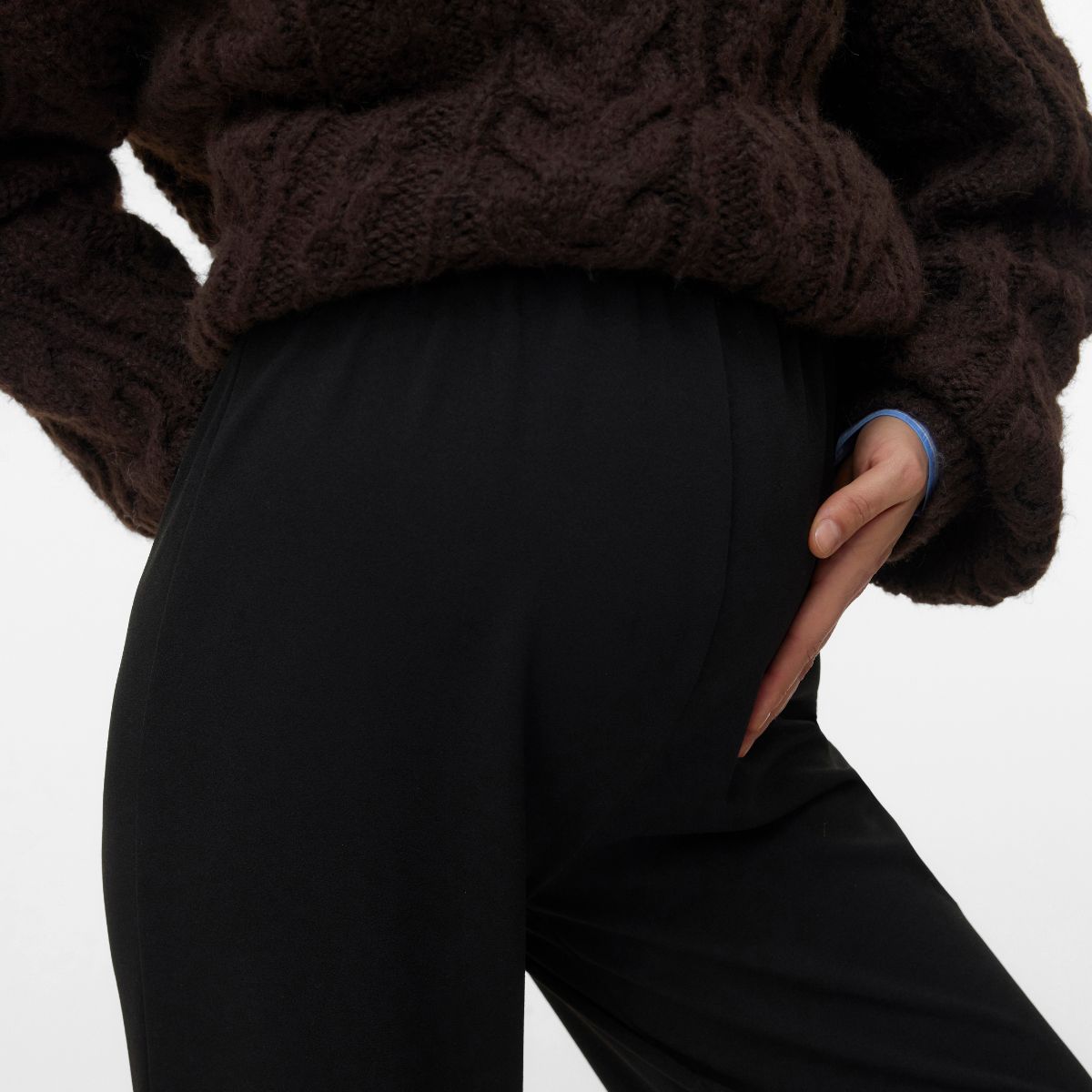
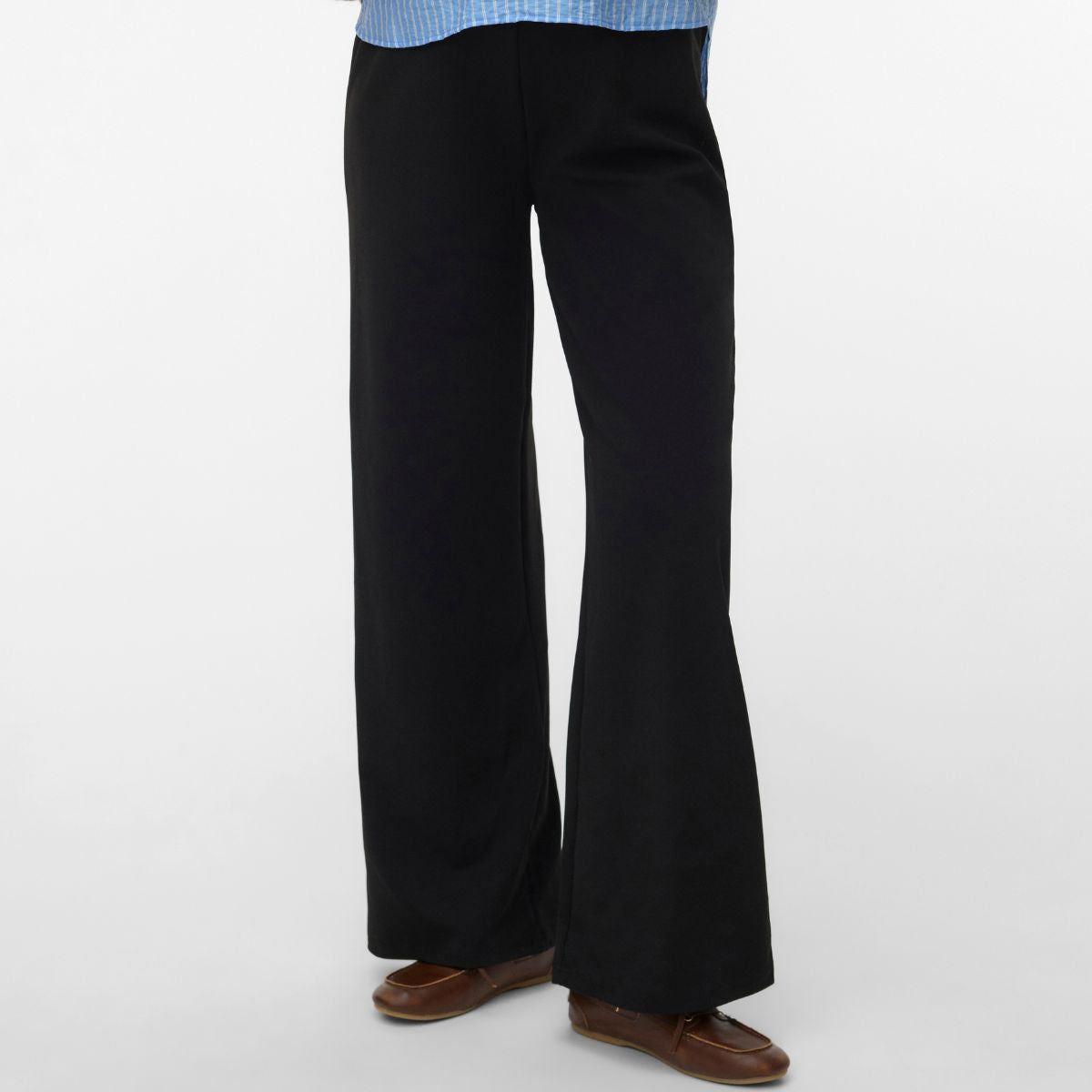
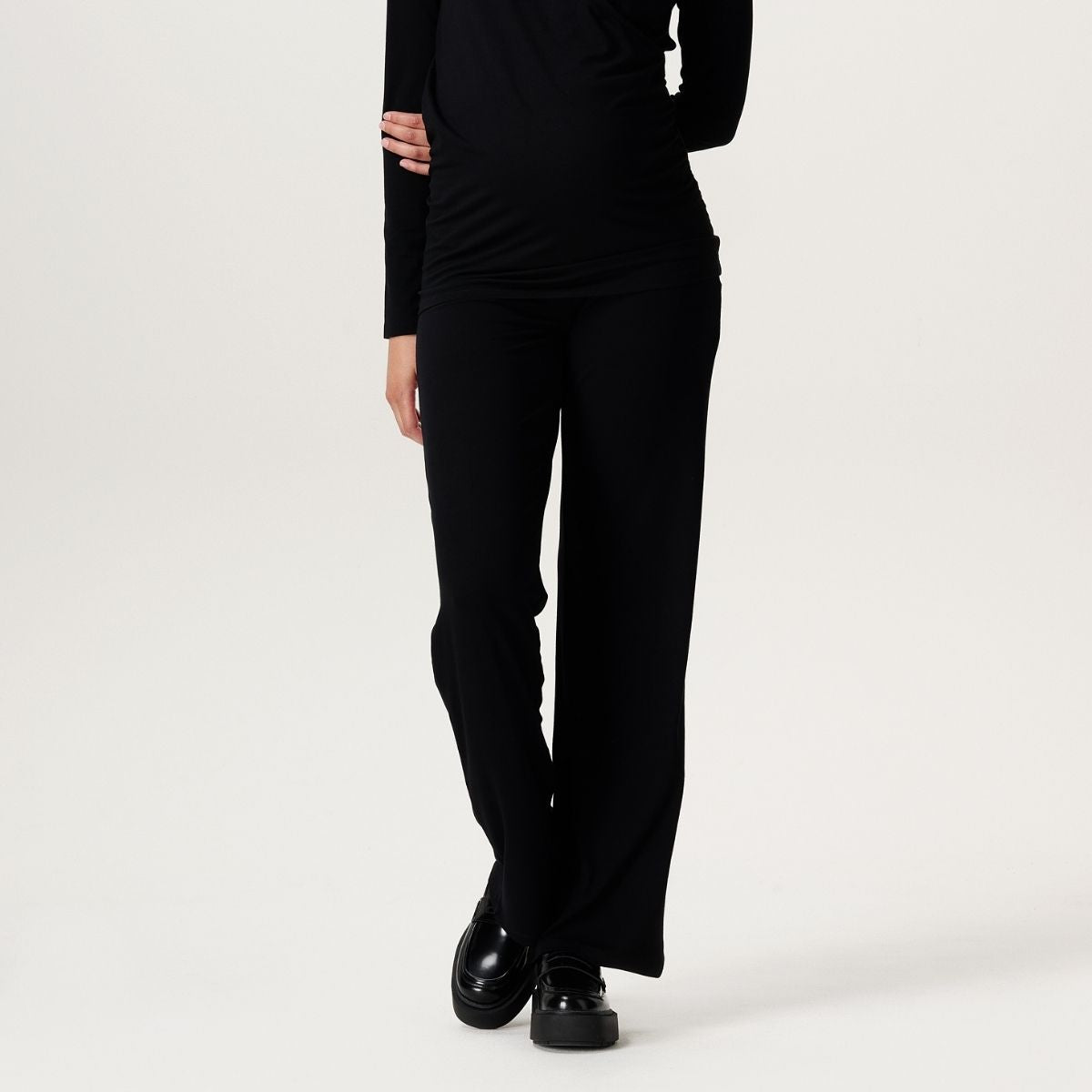
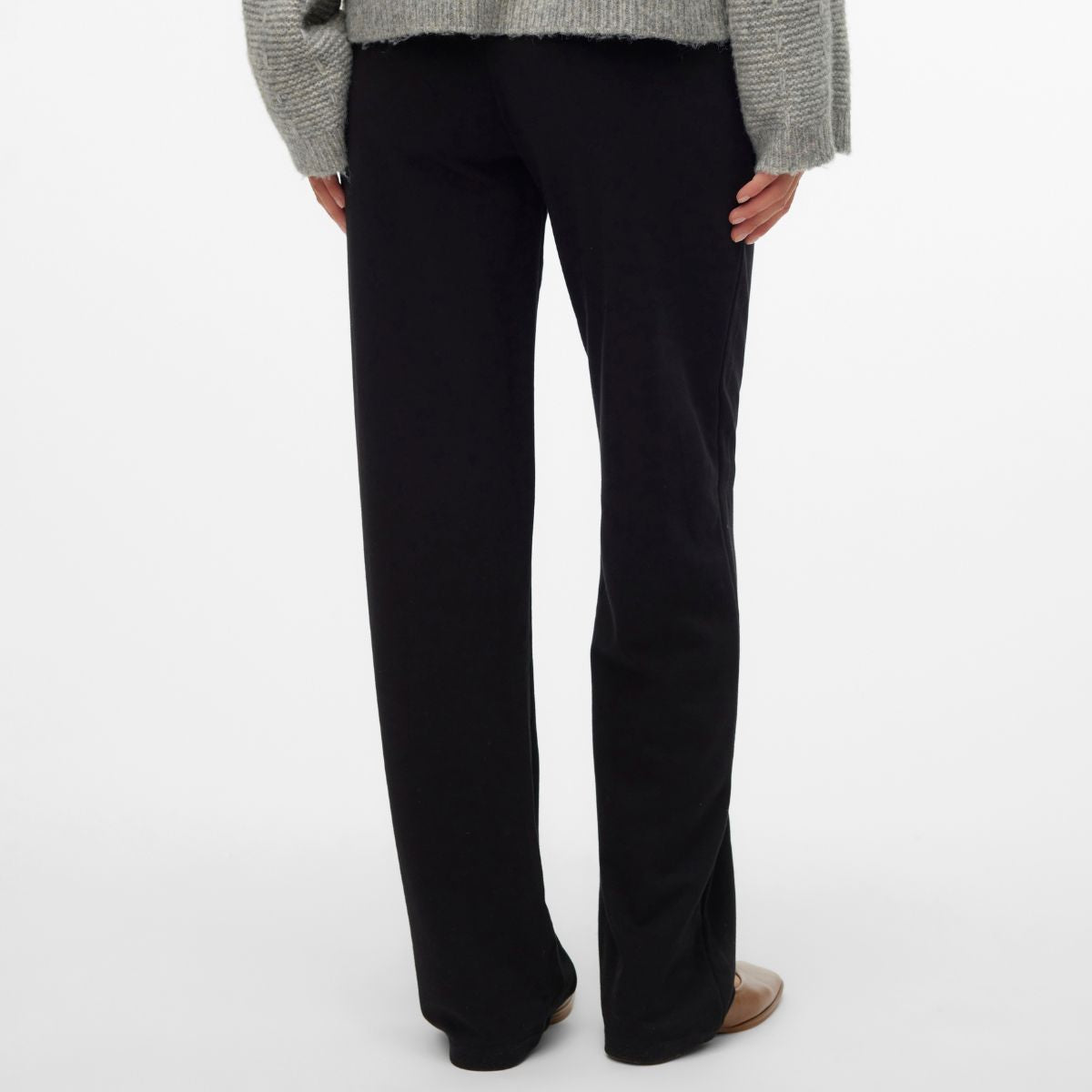
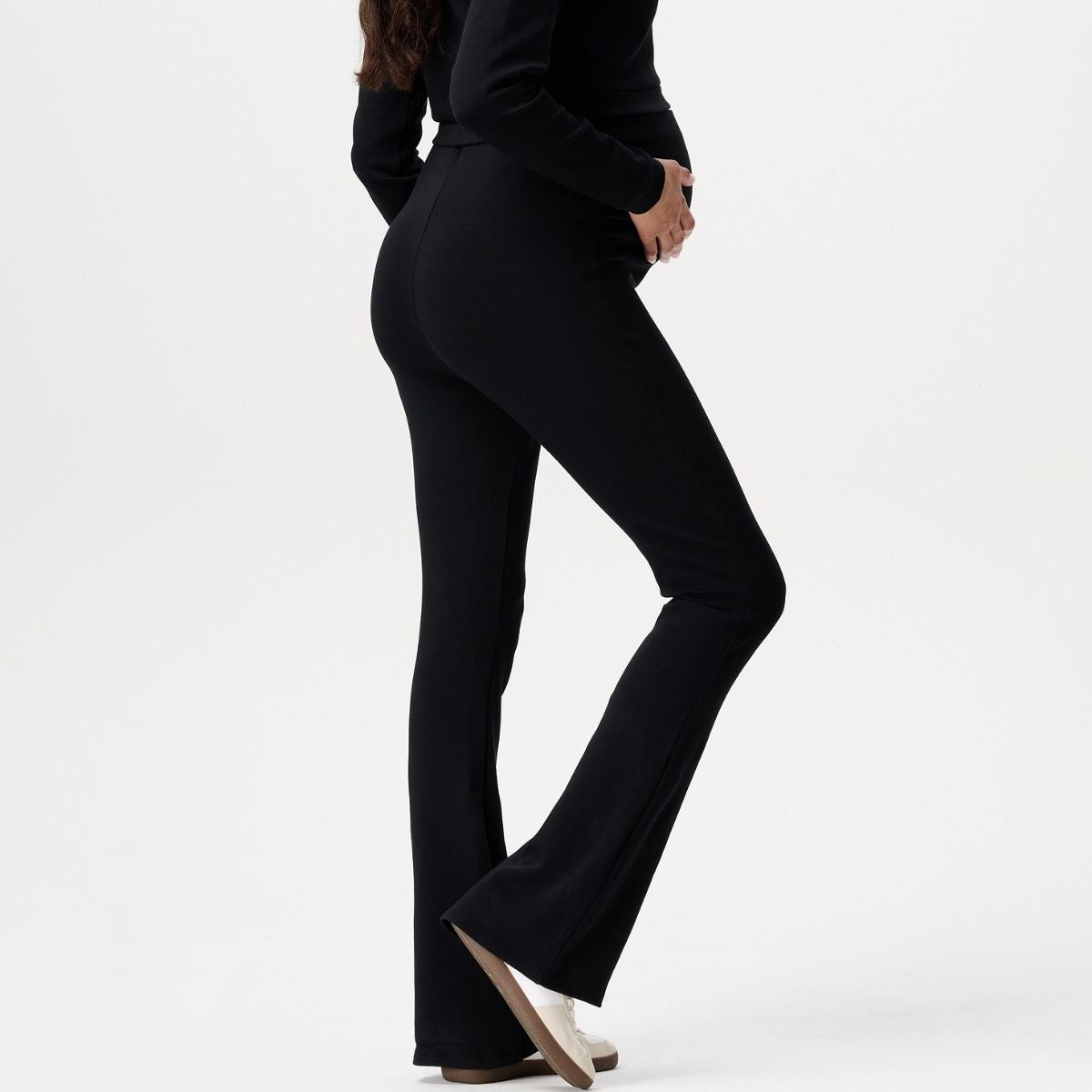
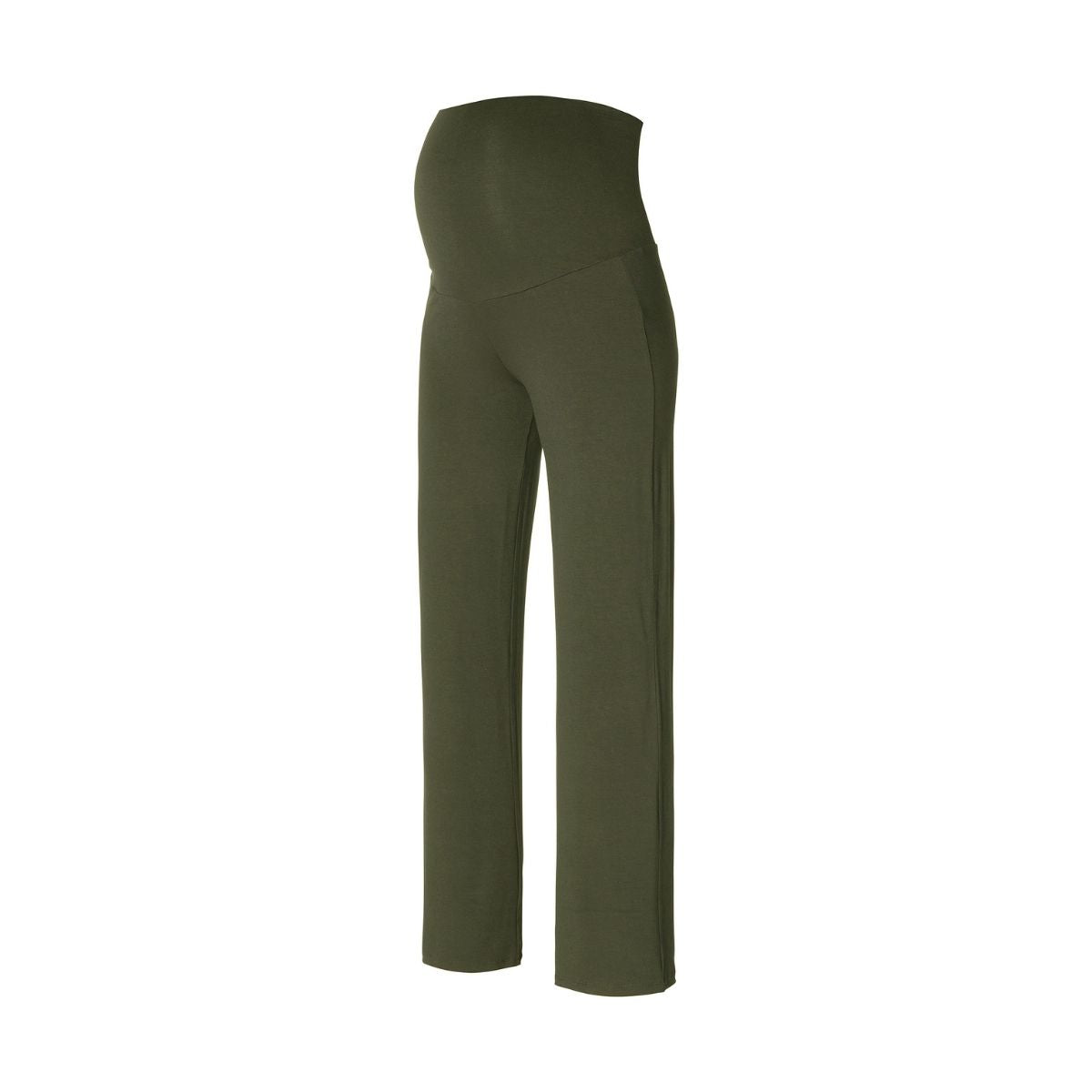
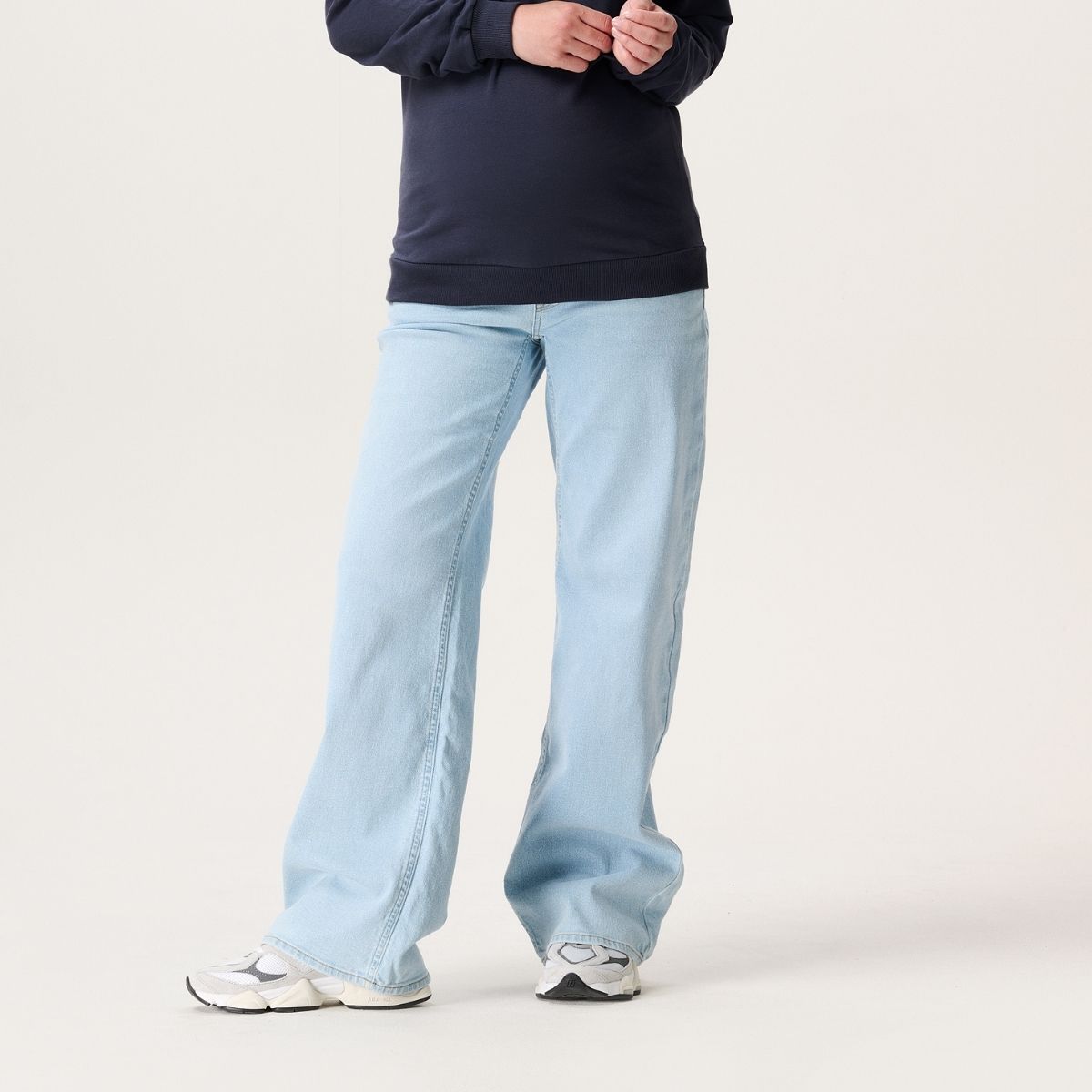
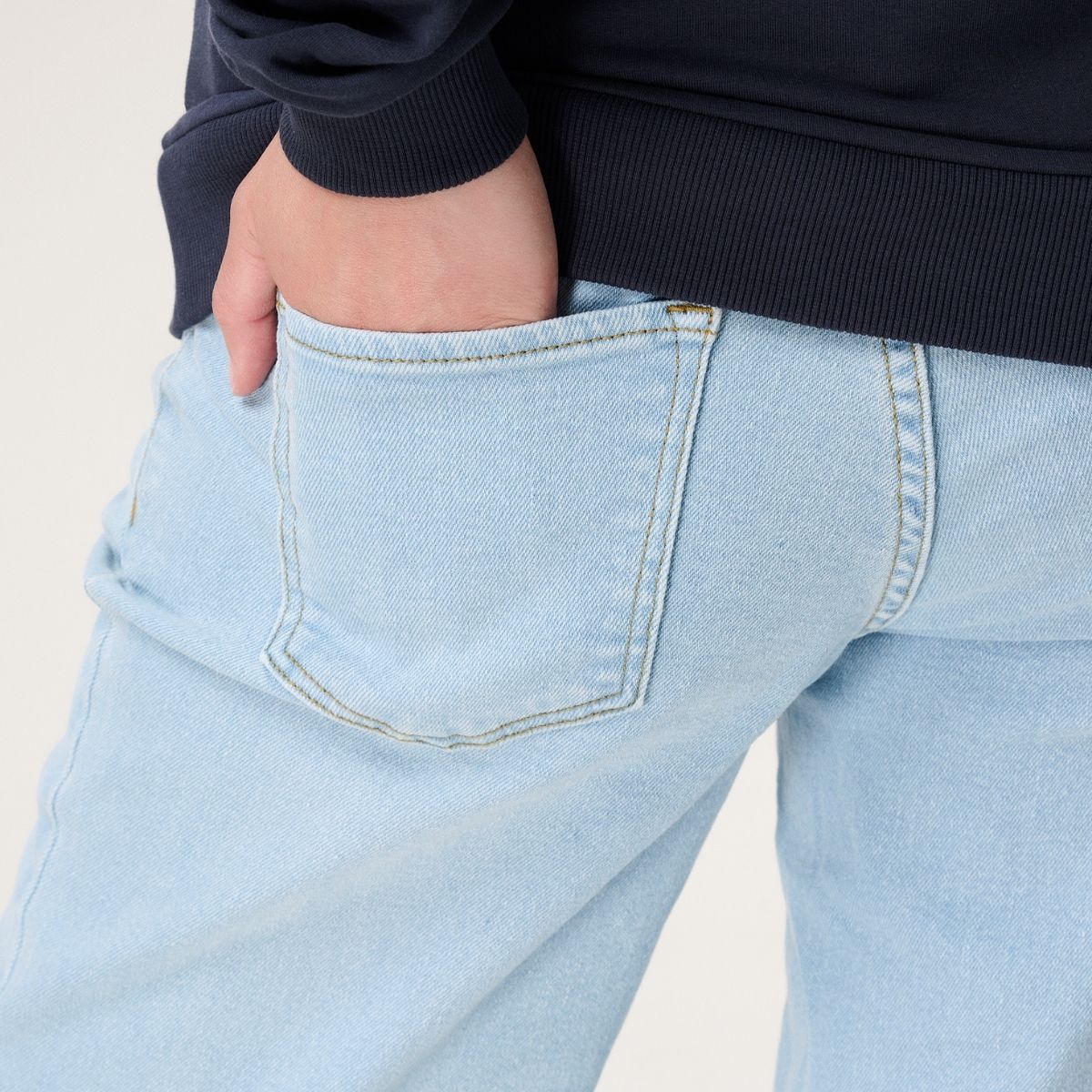
You can keep dressing in your usual style even when your regular trousers no longer fit the way you want them to. Maternity trousers may offer extra room or a different construction around your bump while still having slim, straight or wide legs. Some styles follow the shape of your body, while others have a looser silhouette with more space around the thighs and calves. Pockets, fastenings and fabric texture also influence the overall appearance. Rather than looking only at the waistband, consider whether the rest of the trousers have the cut you normally prefer. A pair may fit well around your bump but still feel uncomfortable if the hips or legs are too tight.
Maternity jeans, tailored trousers and relaxed styles
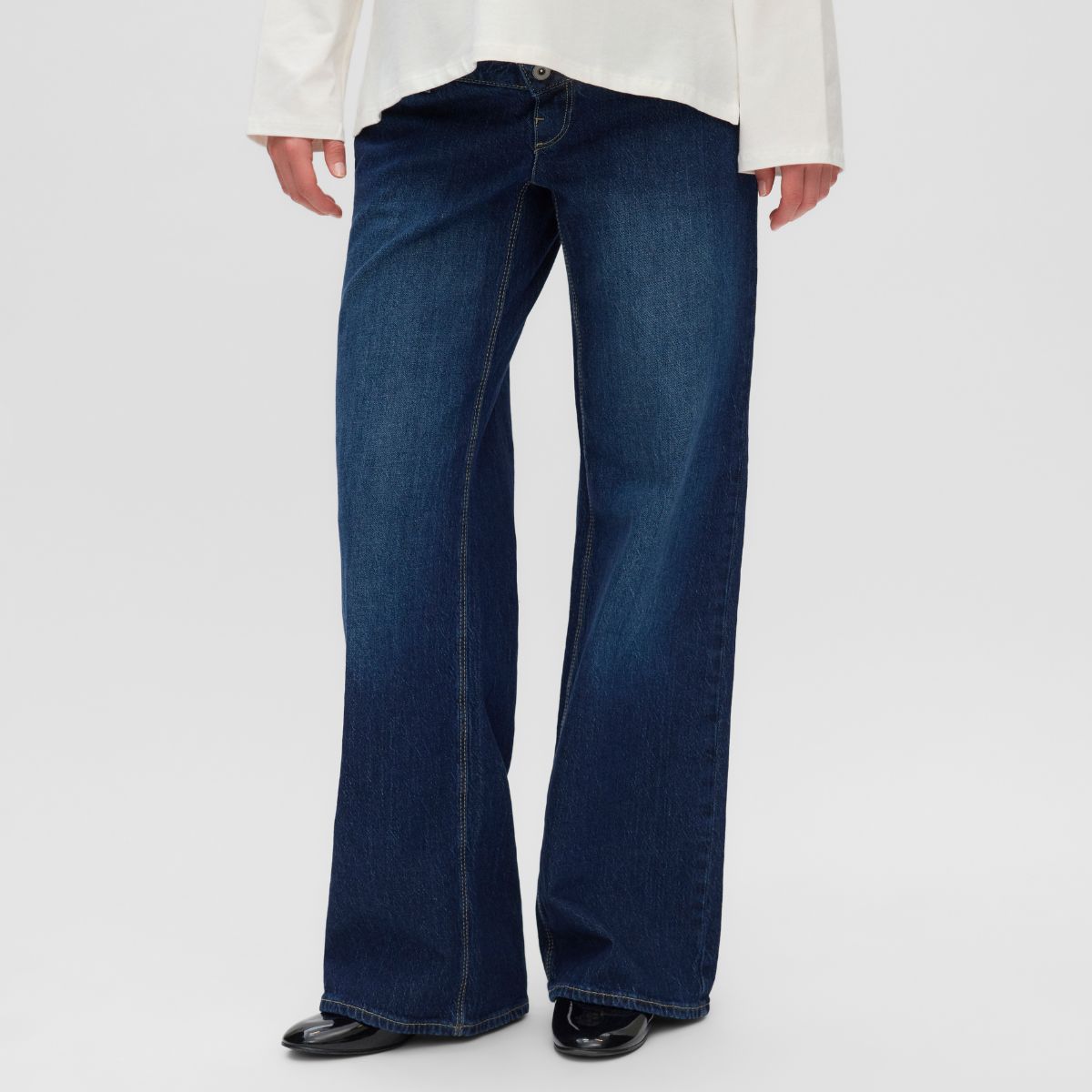
Different occasions call for different types of trousers. If jeans are part of your everyday wardrobe, maternity jeans may be a more natural choice than switching to a completely different way of dressing. If you usually wear smart trousers to work, a more tailored cut may suit your needs. The main differences between these styles lie in the fabric, how it drapes and the finishing details:
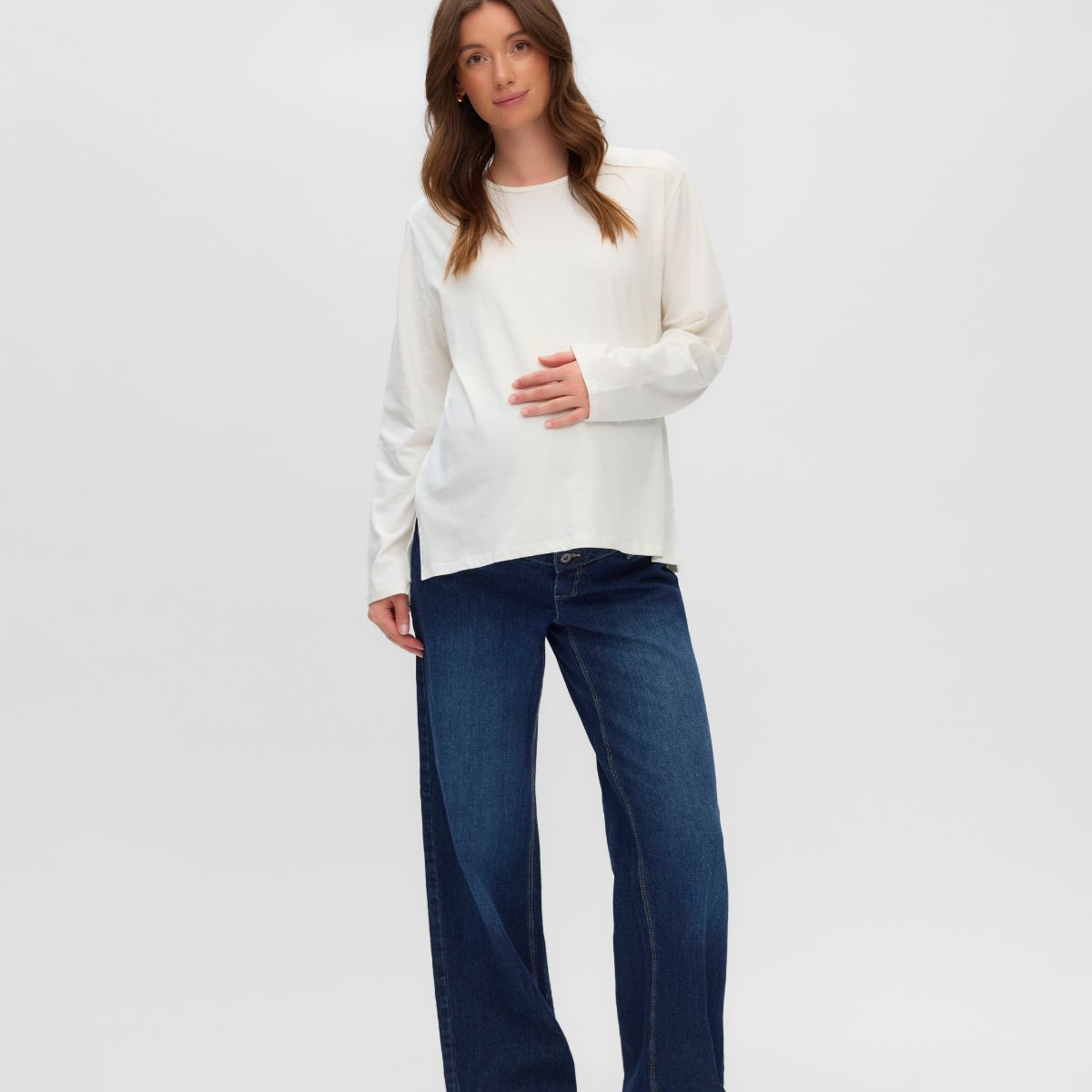
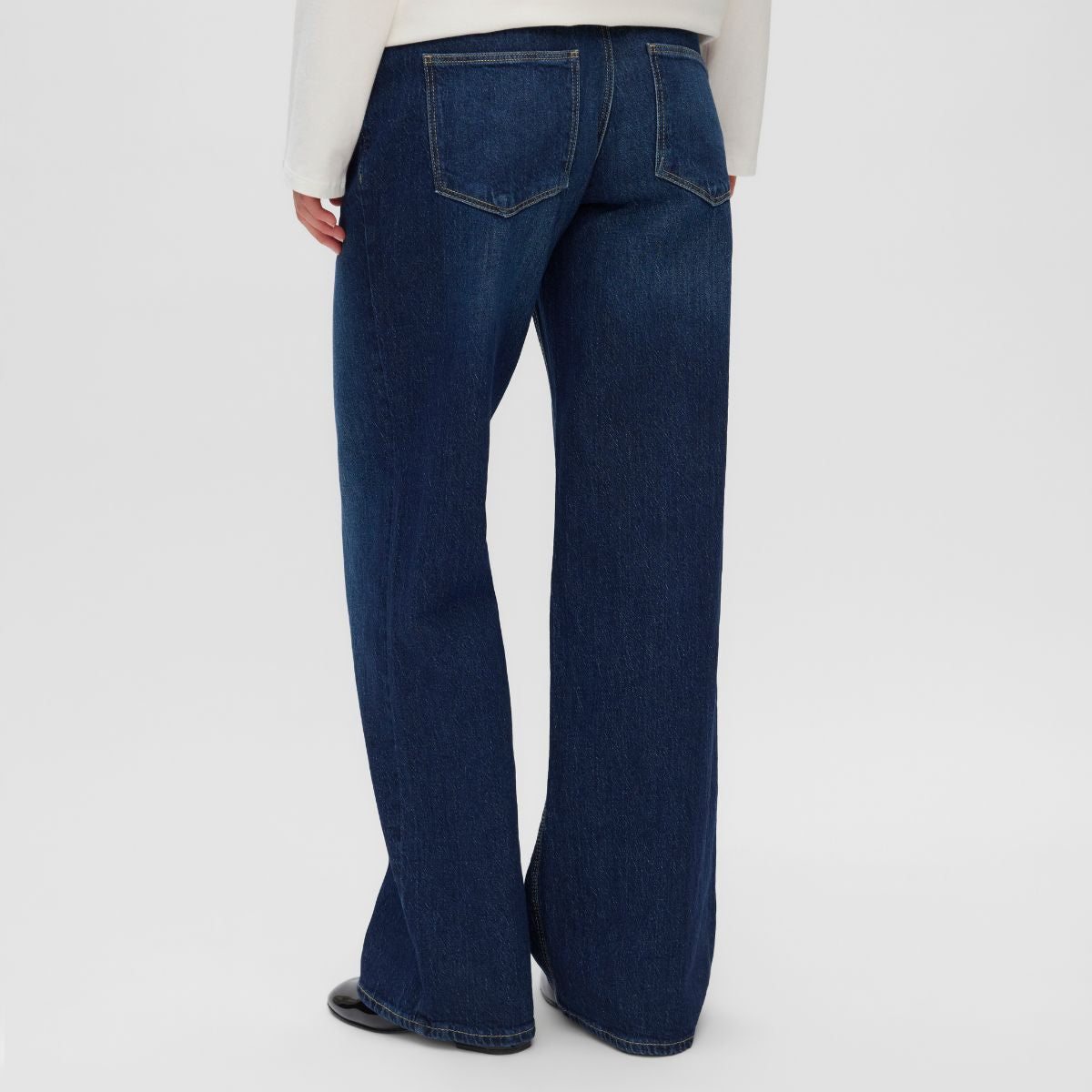
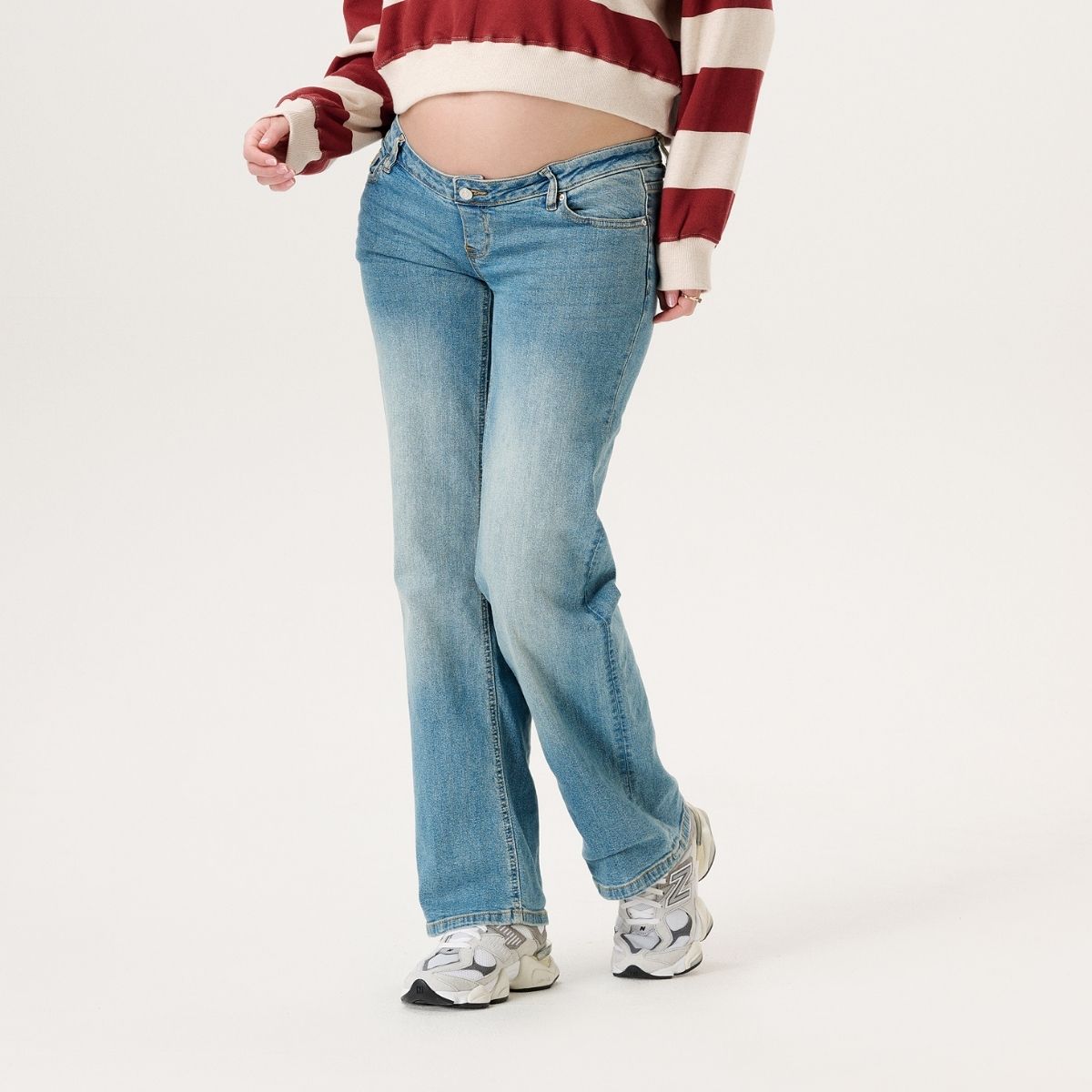
- Maternity jeans: Denim styles vary in wash and leg width. Denim containing elastic fibres may allow more freedom of movement than a more rigid weave, although stretch alone does not guarantee a good fit.
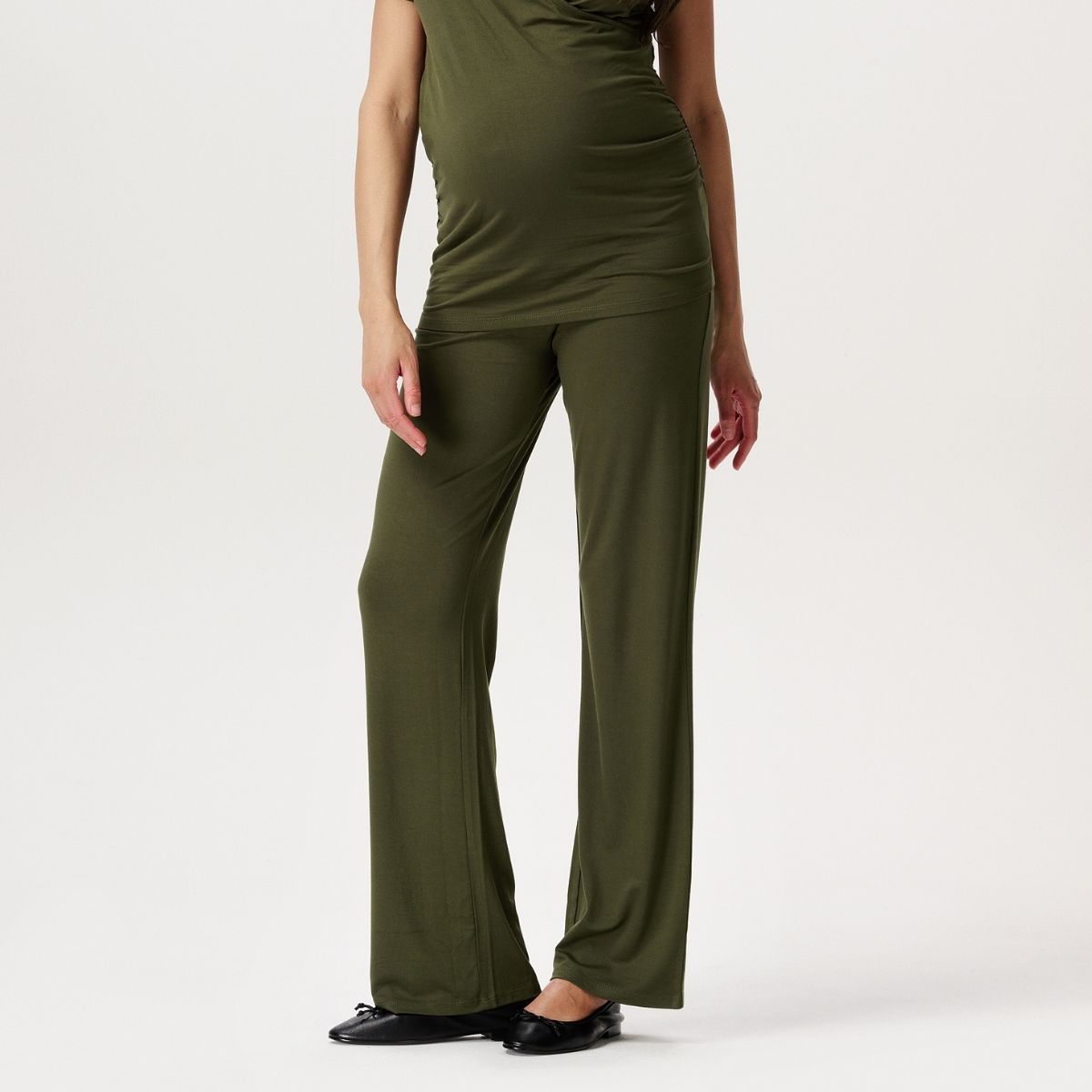
- Tailored maternity trousers: The fabric, pressed creases and drape of the trouser legs help create a more formal appearance. Straight legs can work well with a shirt, while wide legs create a different silhouette.
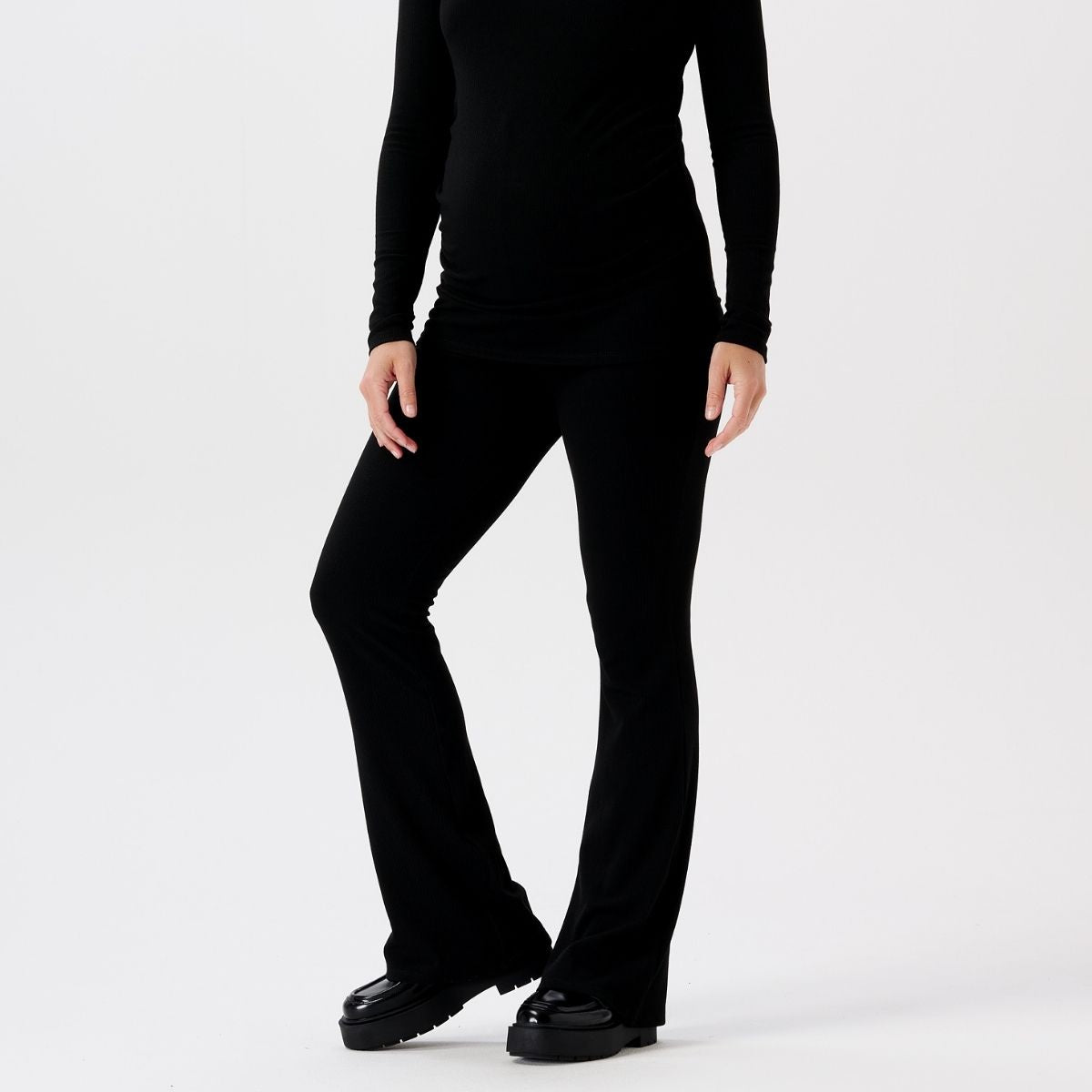
- Relaxed maternity trousers: A looser construction and generously cut legs can suit casual dressing. These styles differ from maternity leggings, which generally have a closer fit to the body.
You do not necessarily need a separate pair of trousers for every activity. The same pair can often be styled in several ways, depending on the tops and shoes you wear with it. If you already favour a particular leg width in your everyday wardrobe, that is a useful starting point when comparing maternity styles.
Bump panels and adjustable waistbands on maternity trousers
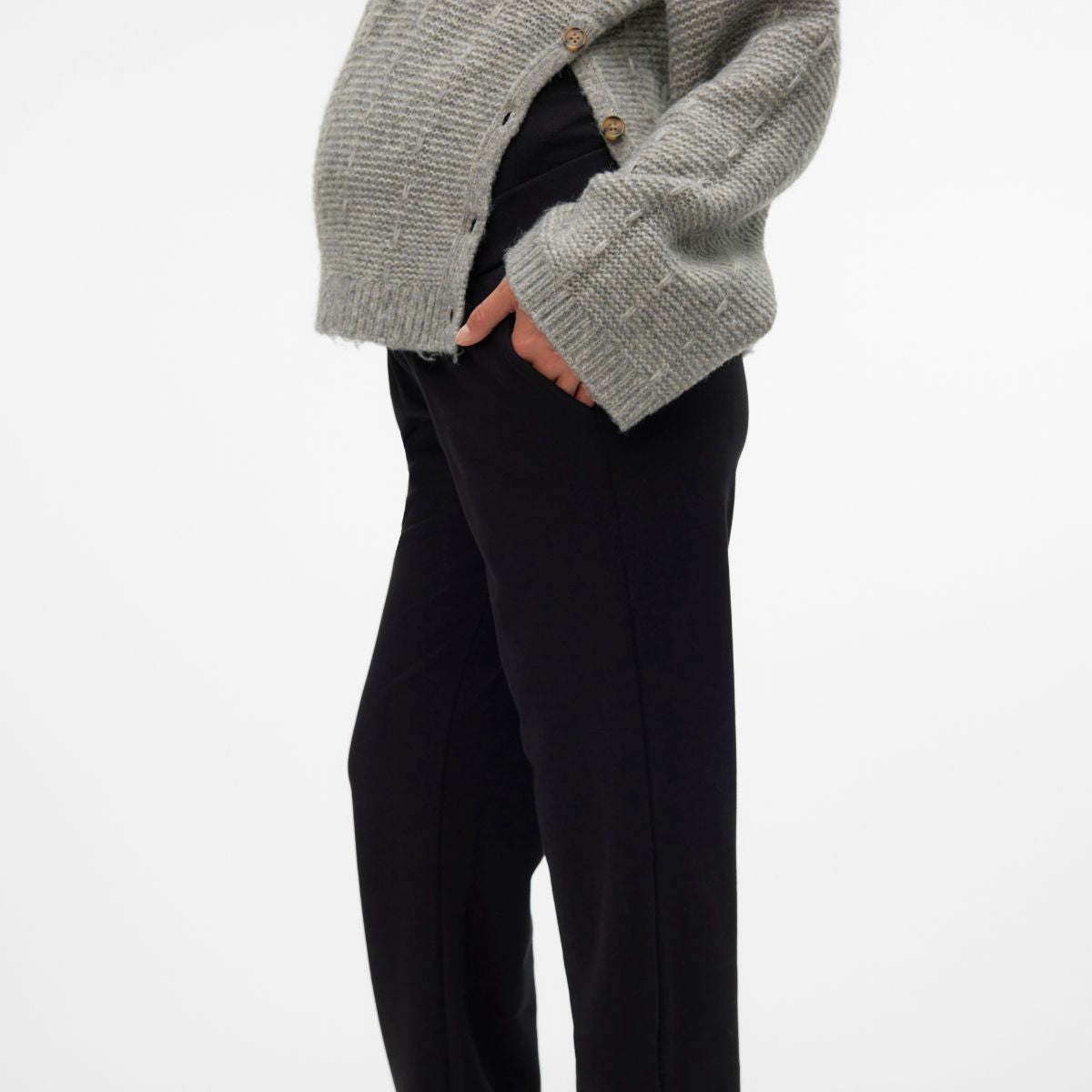
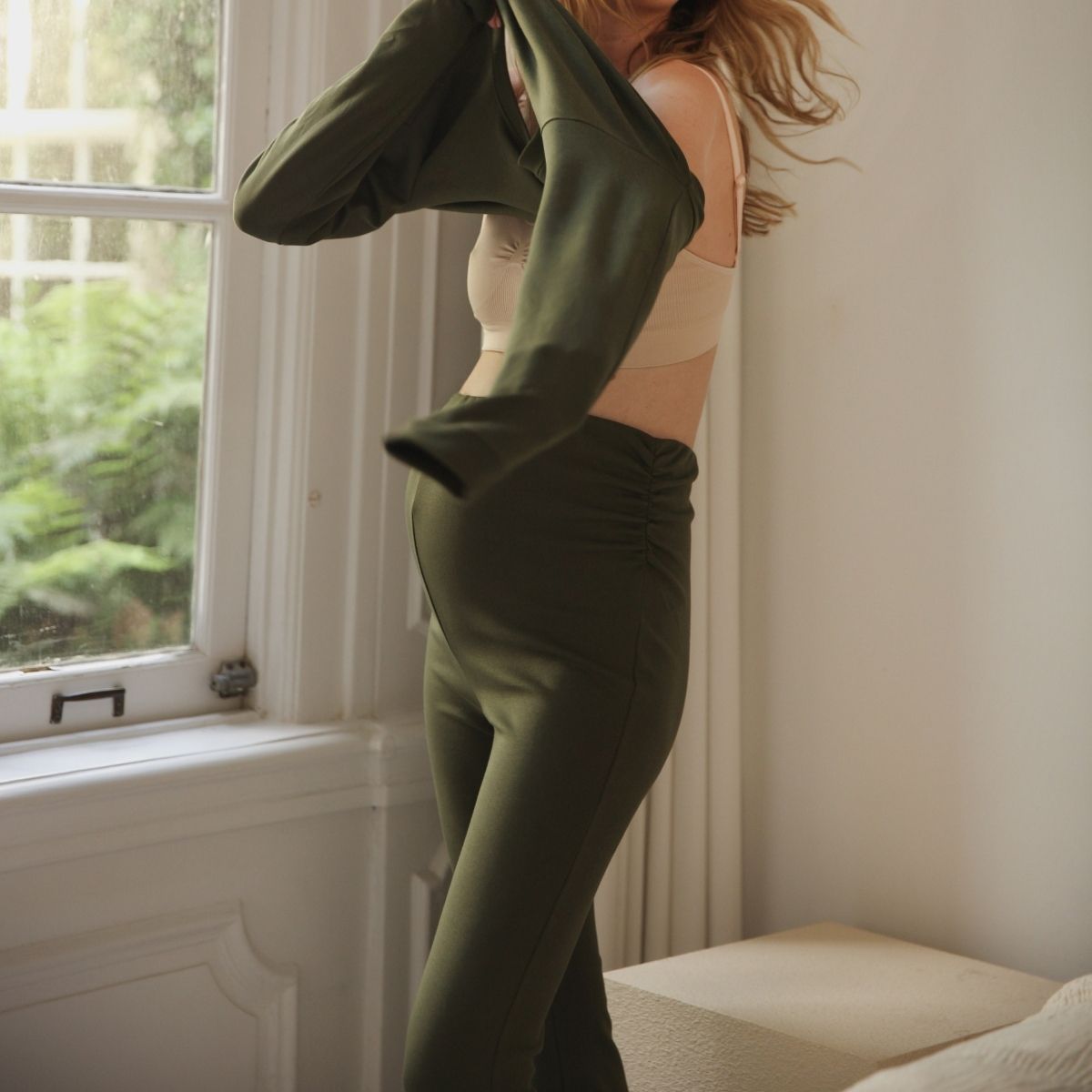
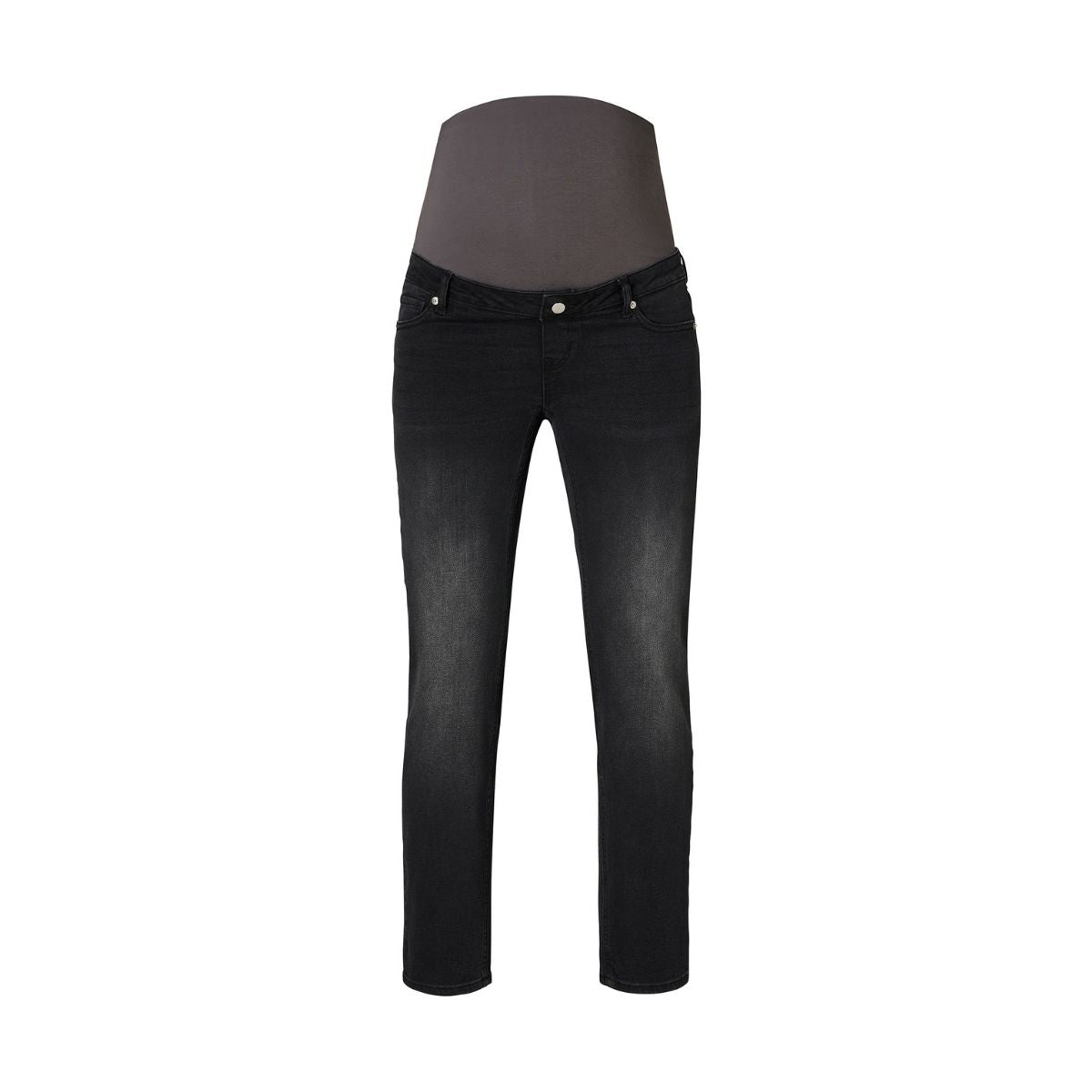
One of the biggest differences between regular trousers and maternity trousers is often found around the waist. Ordinary trousers may begin to feel tight across your bump even when they still fit around your hips and thighs. An elasticated bump panel is one possible solution, while a specially designed waistband or internal adjustment offers another. Not every style includes the same features, however.
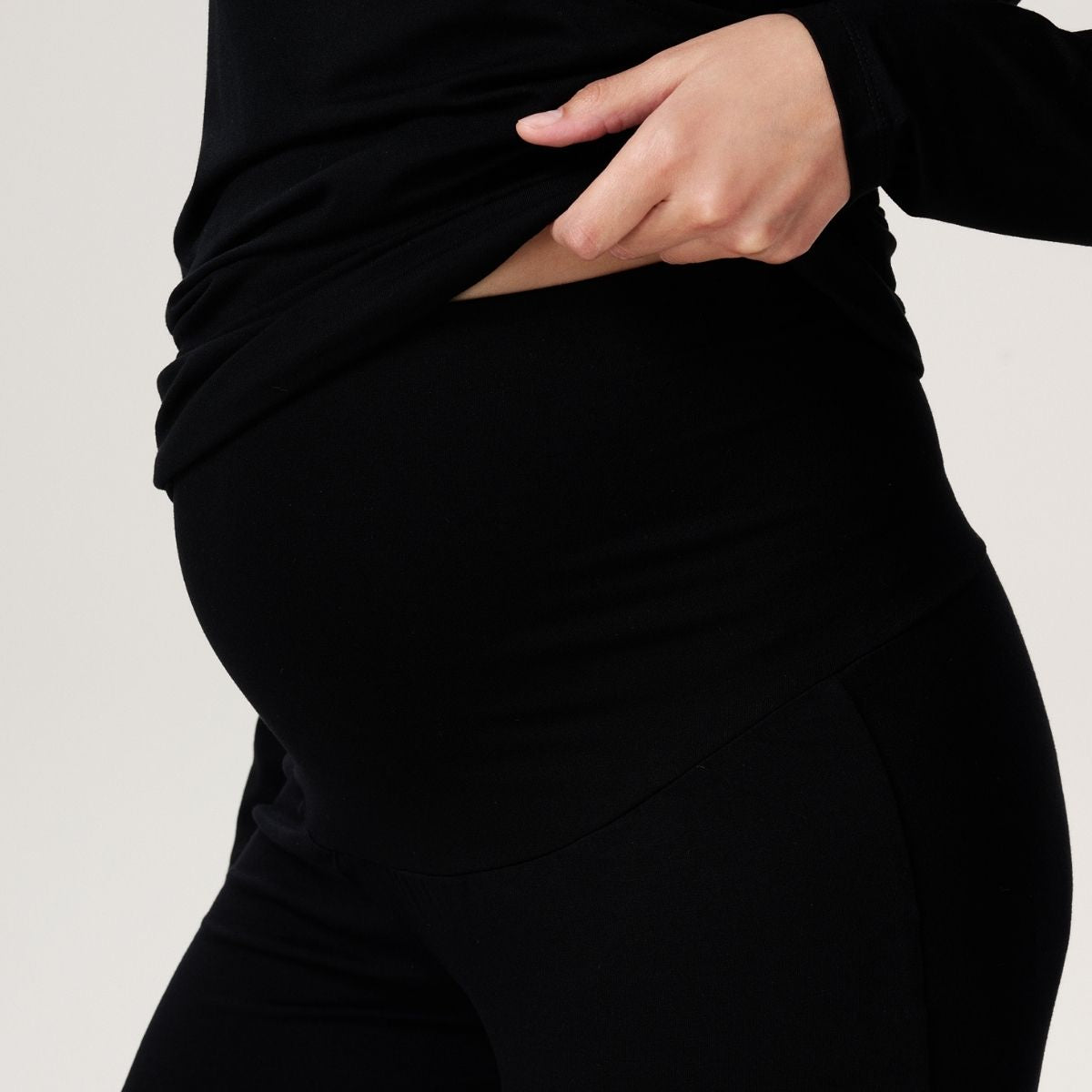
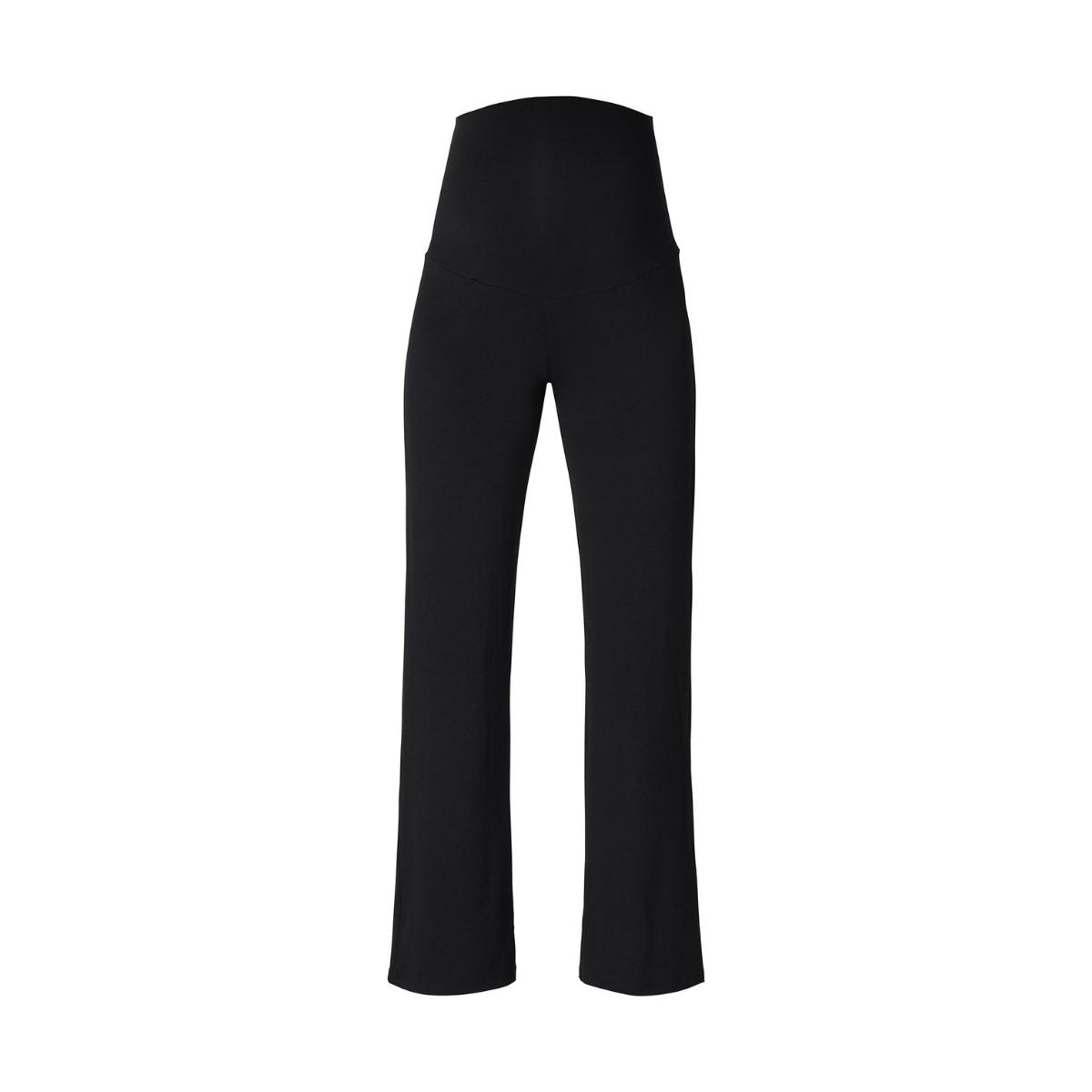
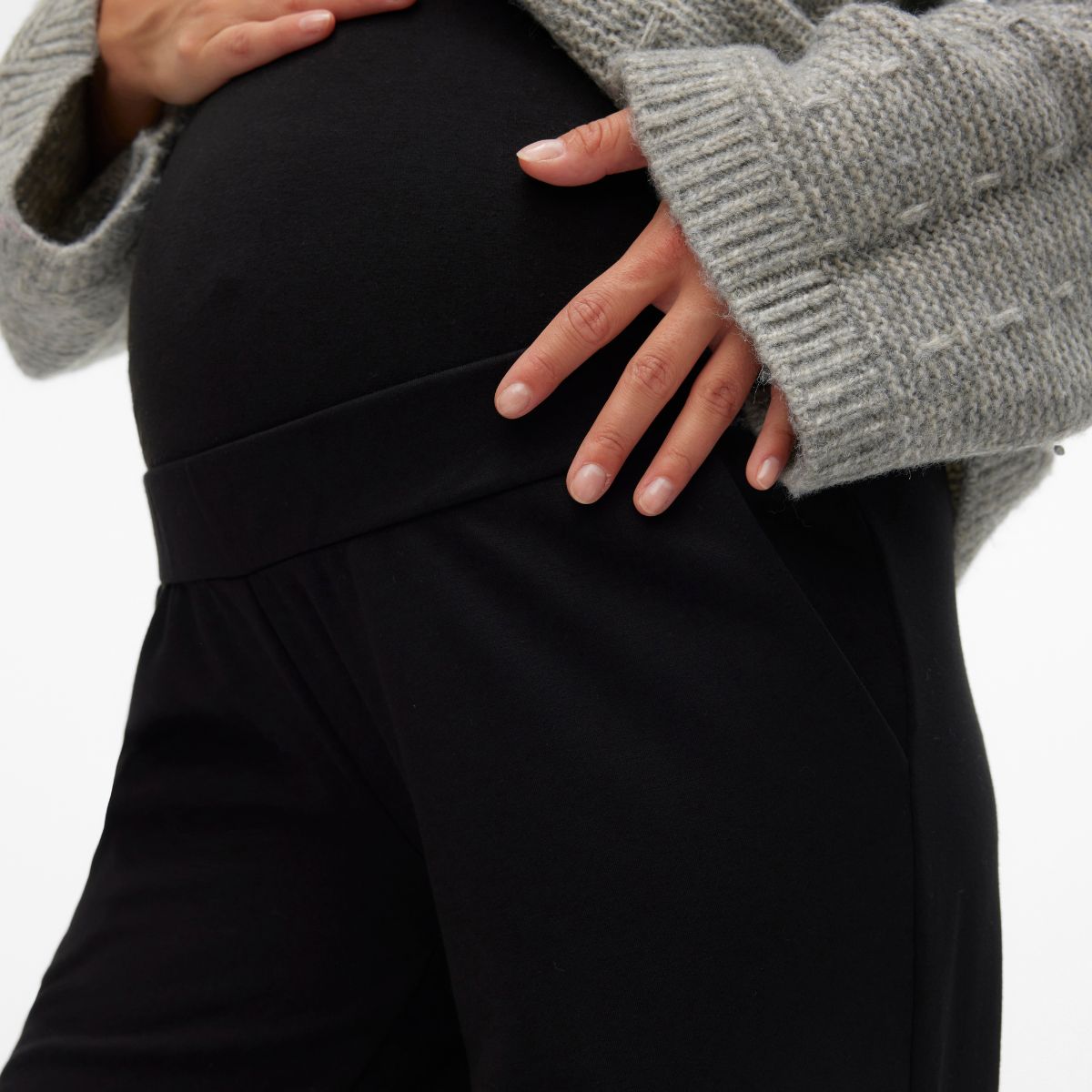
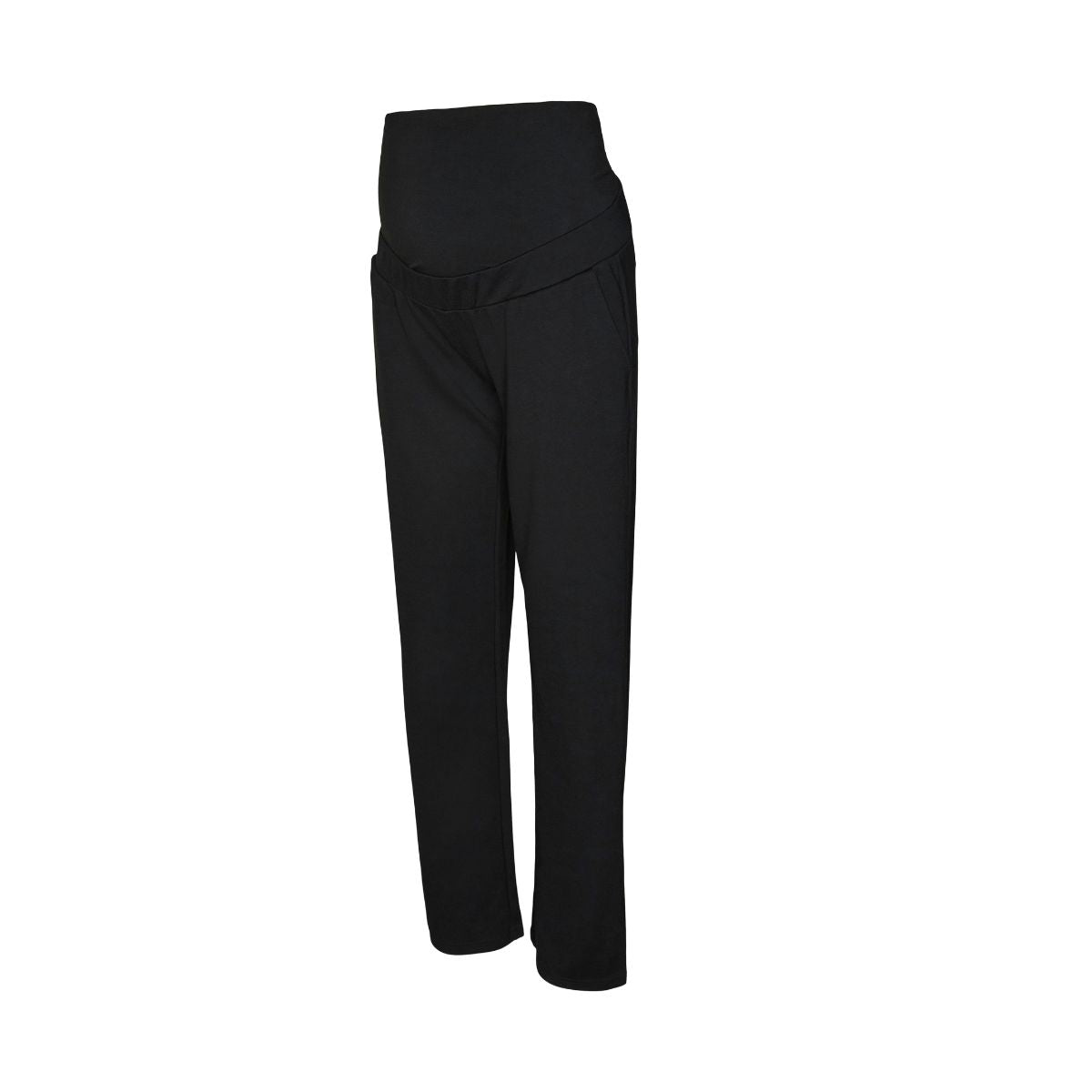
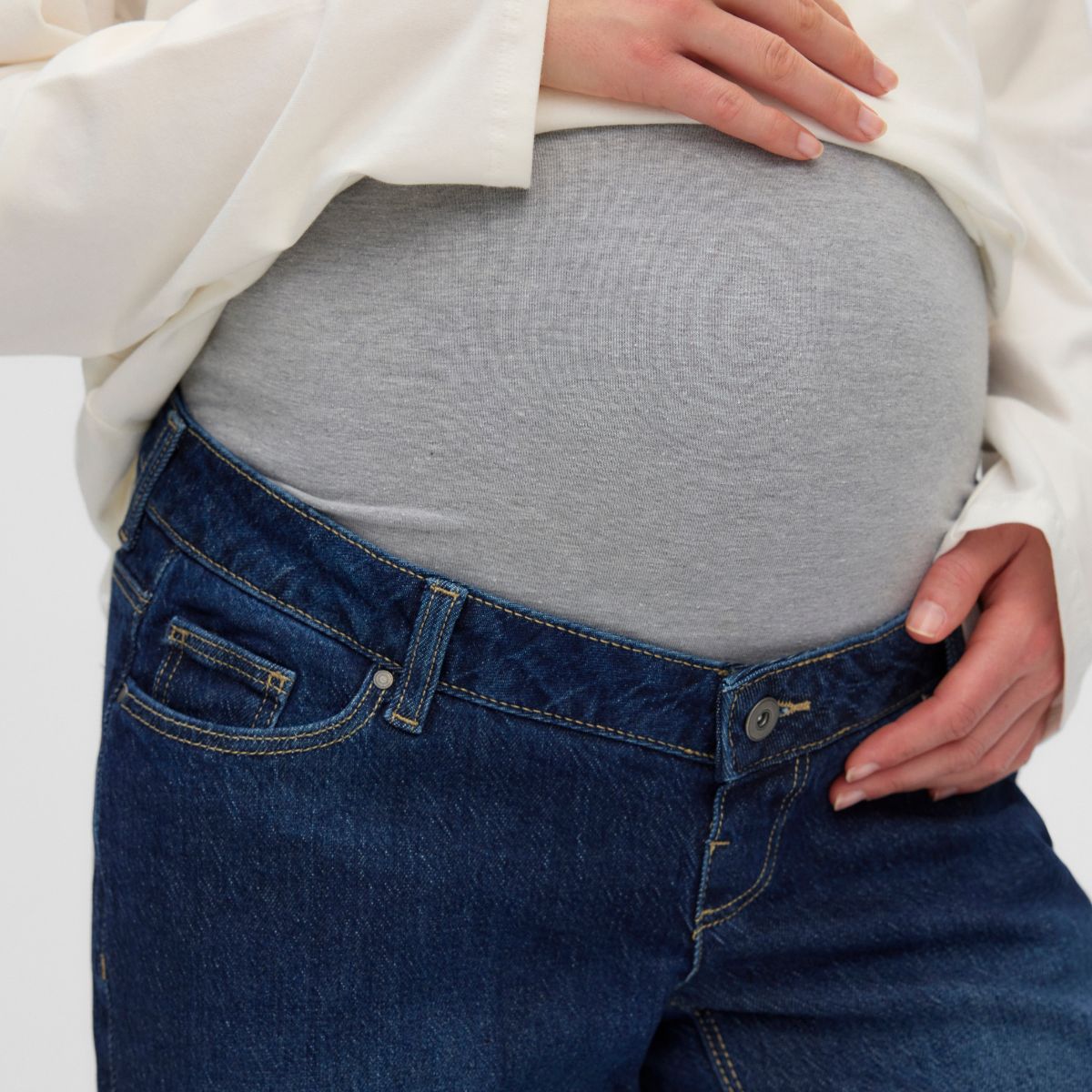
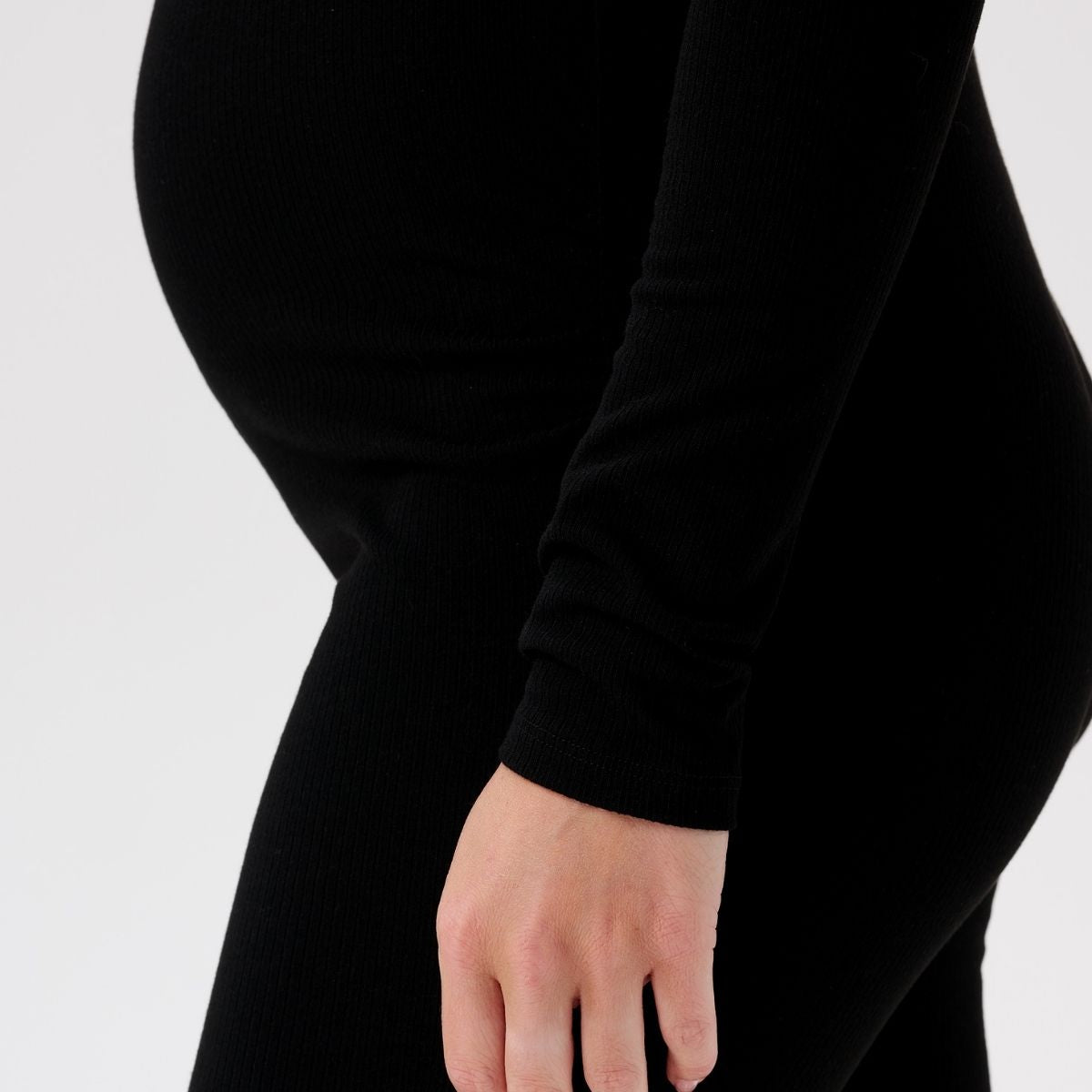
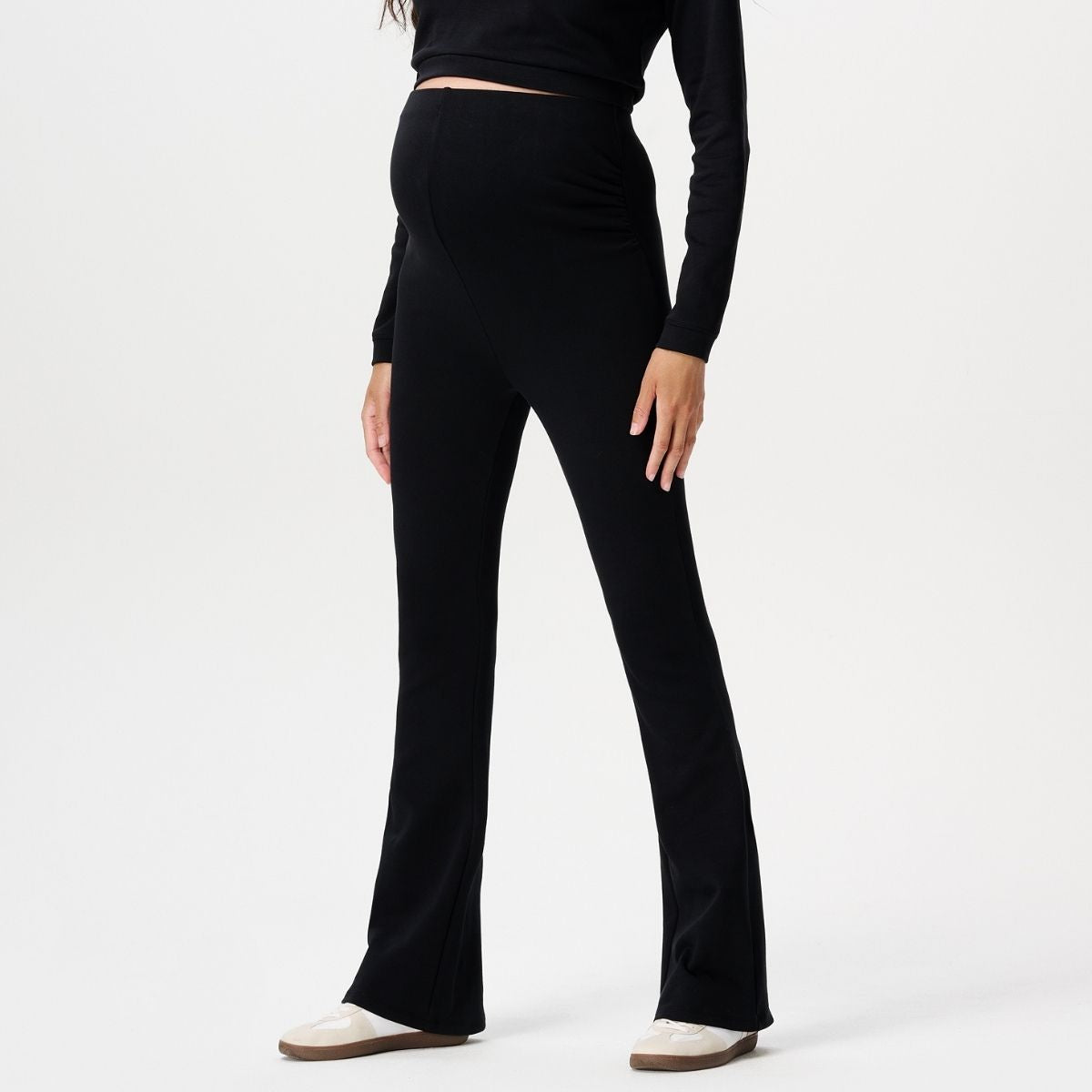
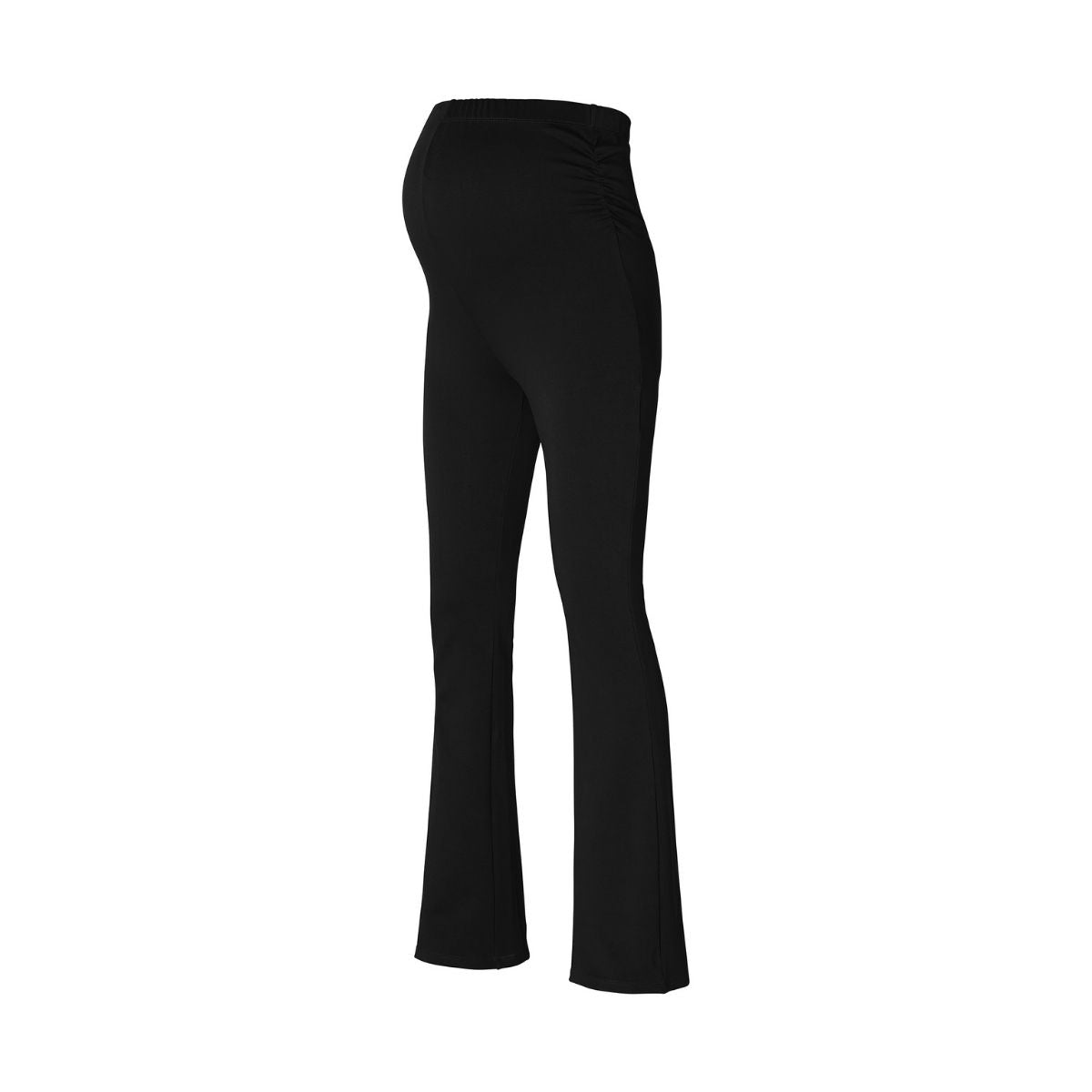
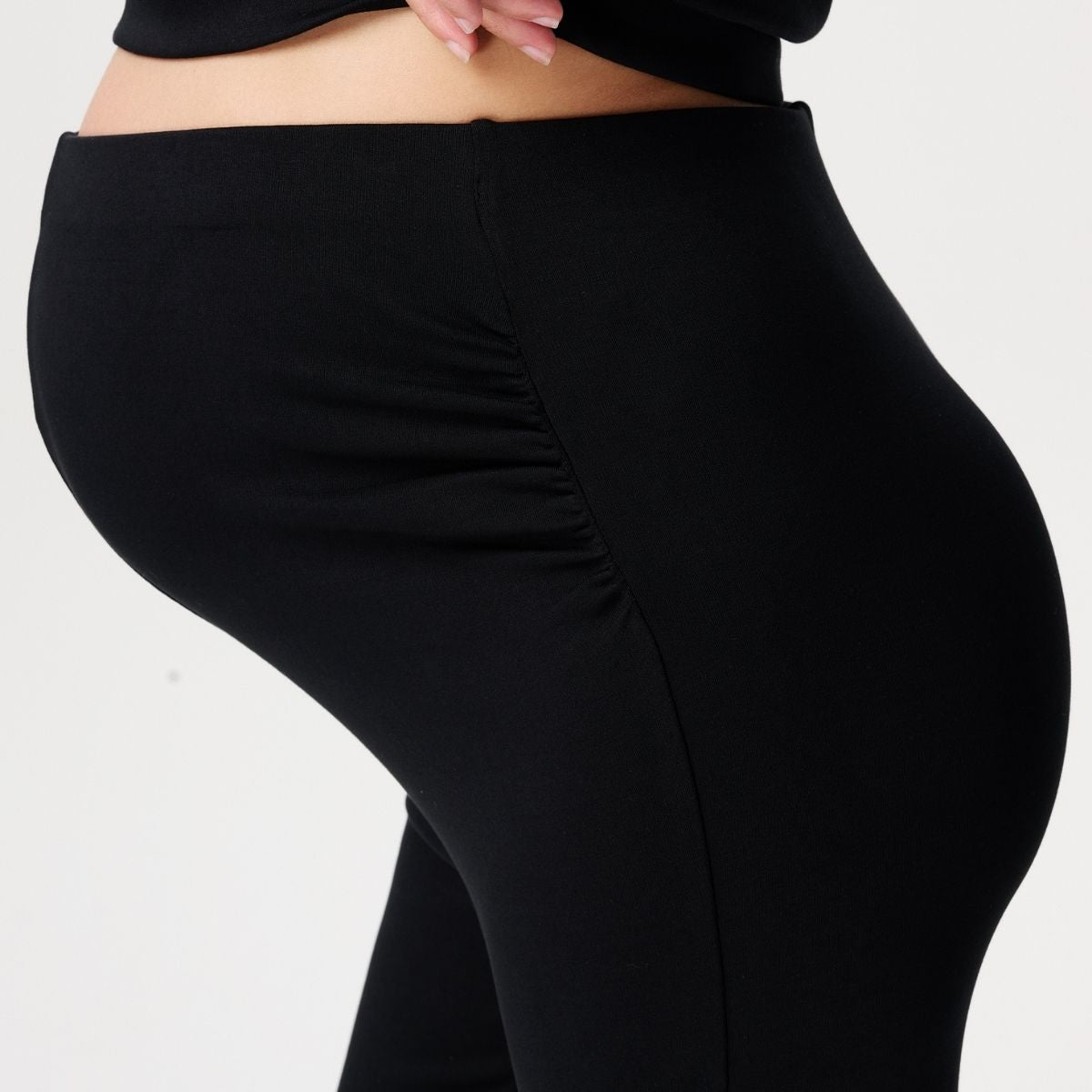
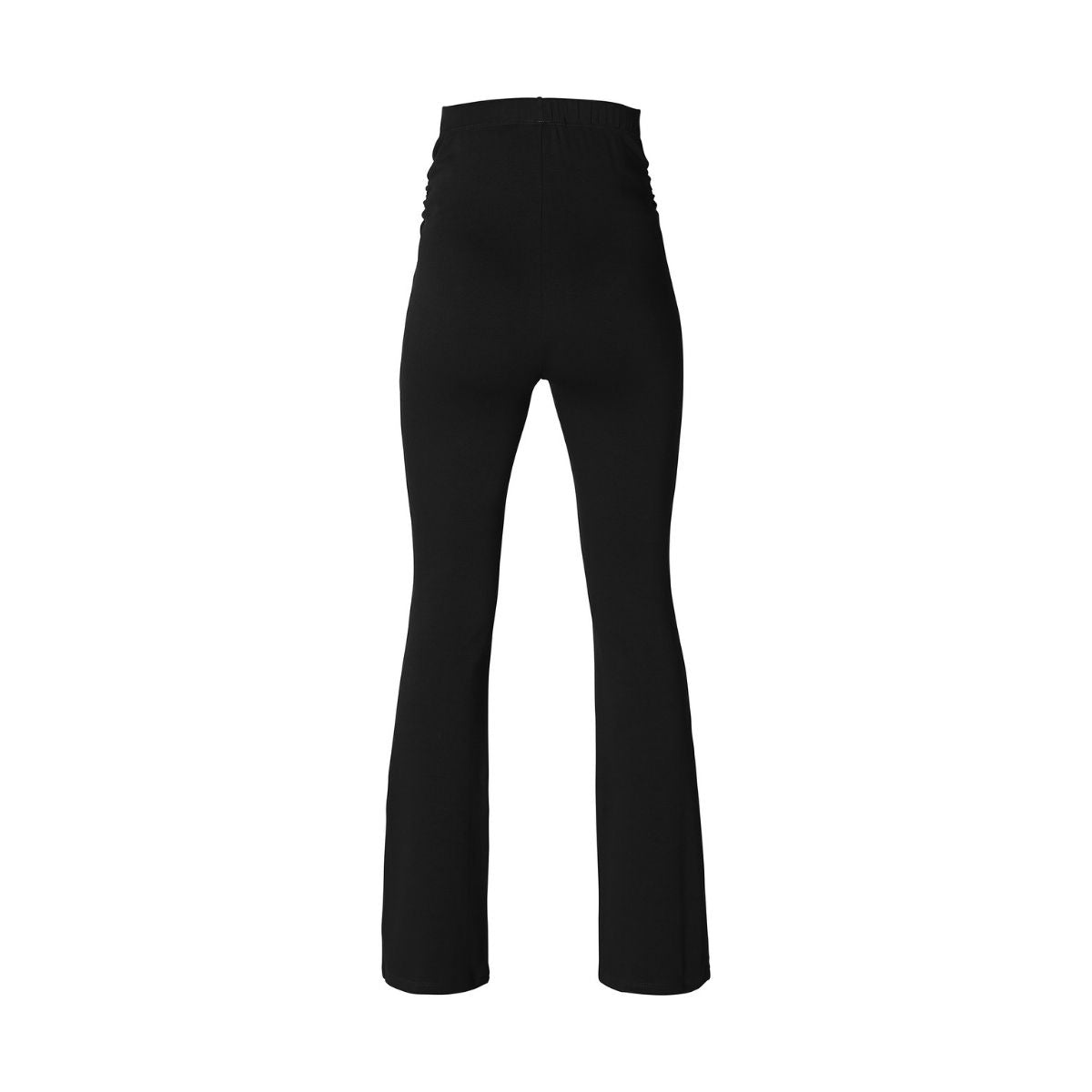
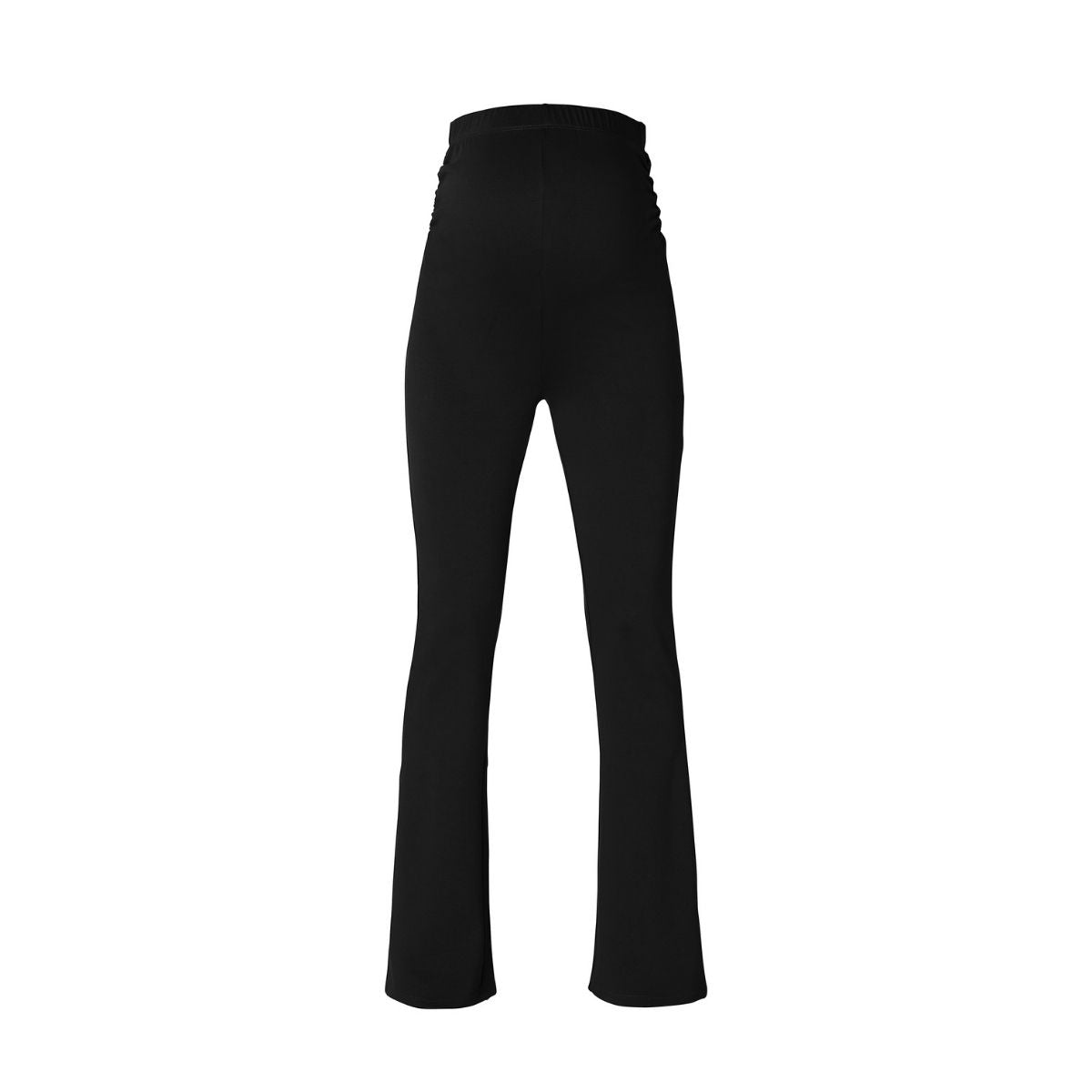
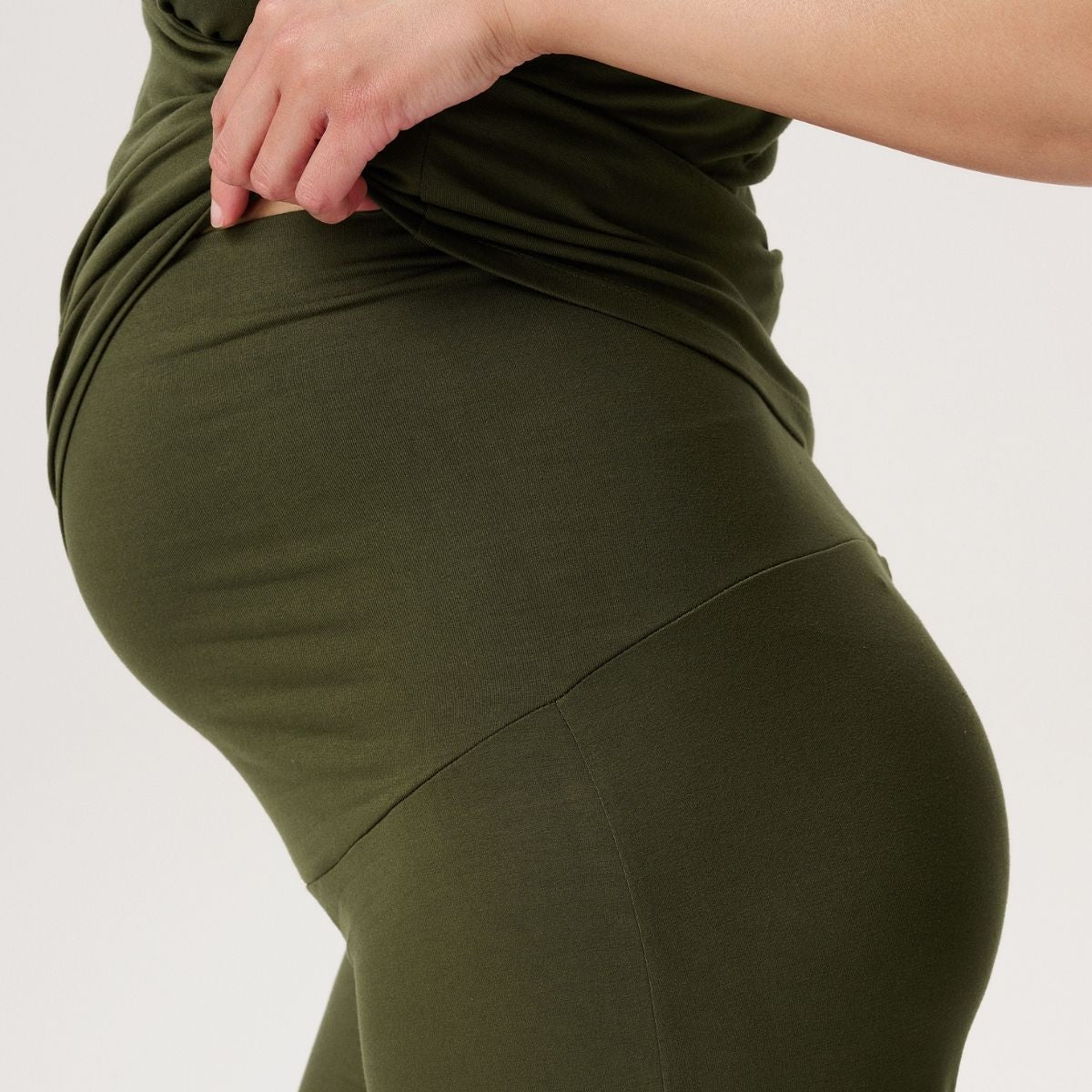
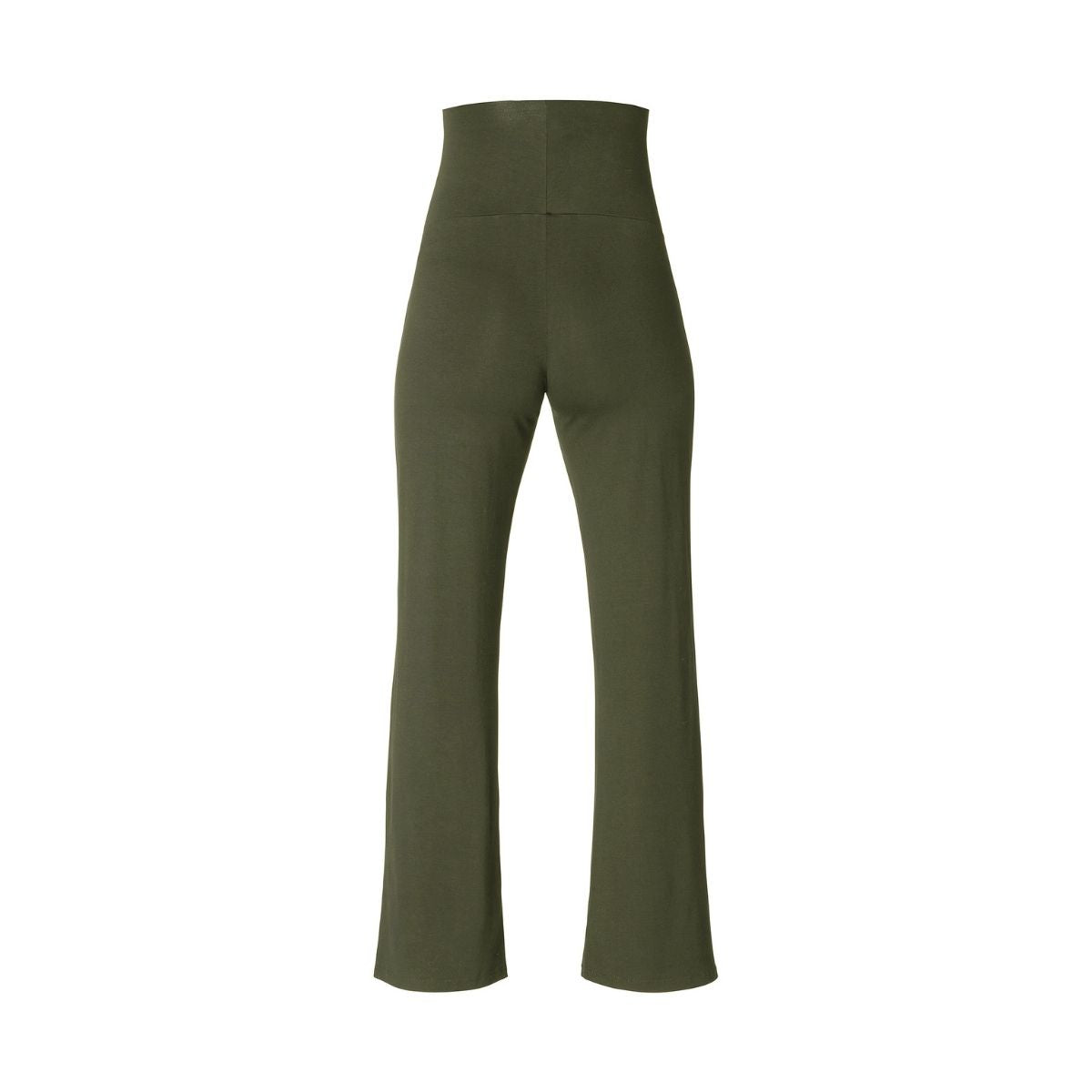
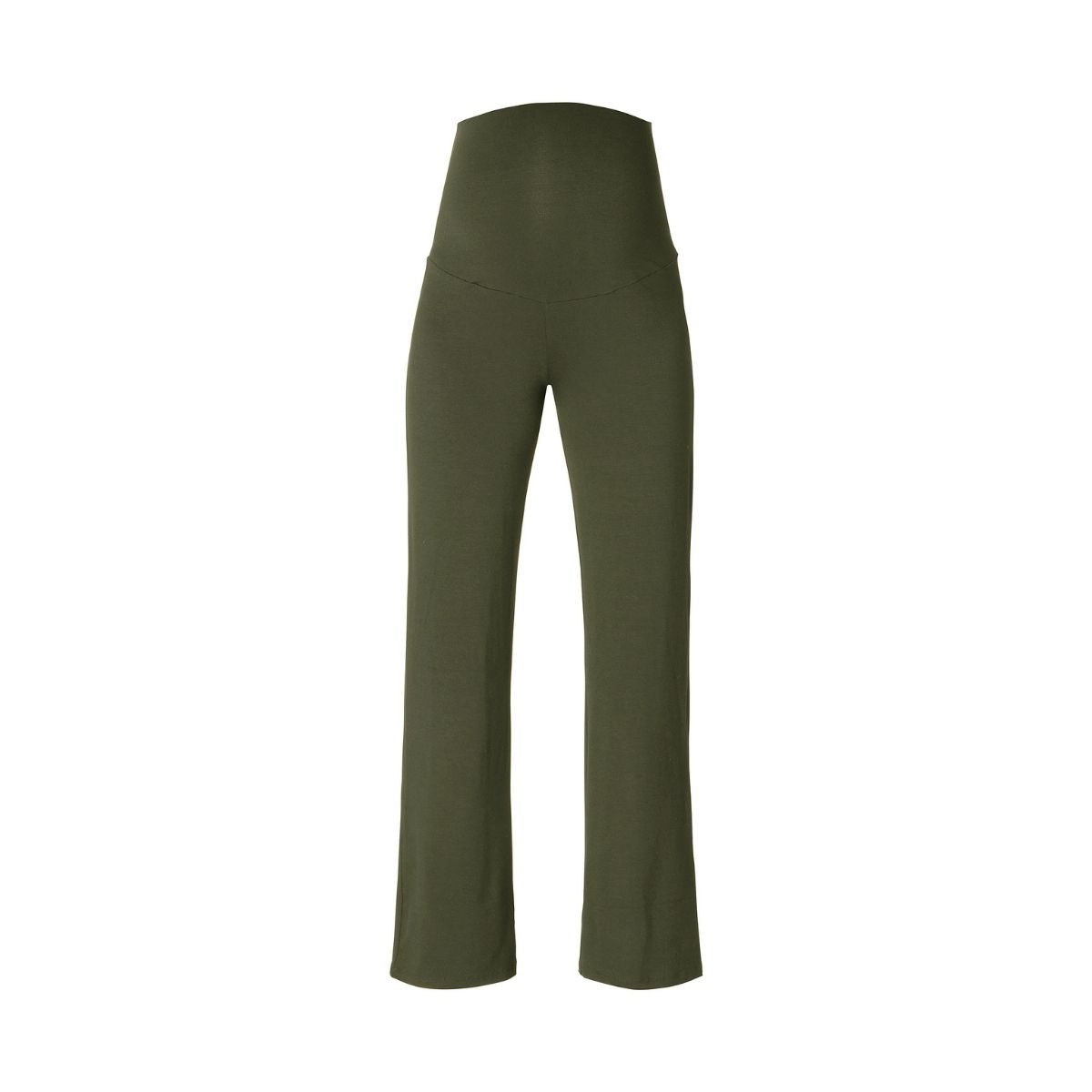
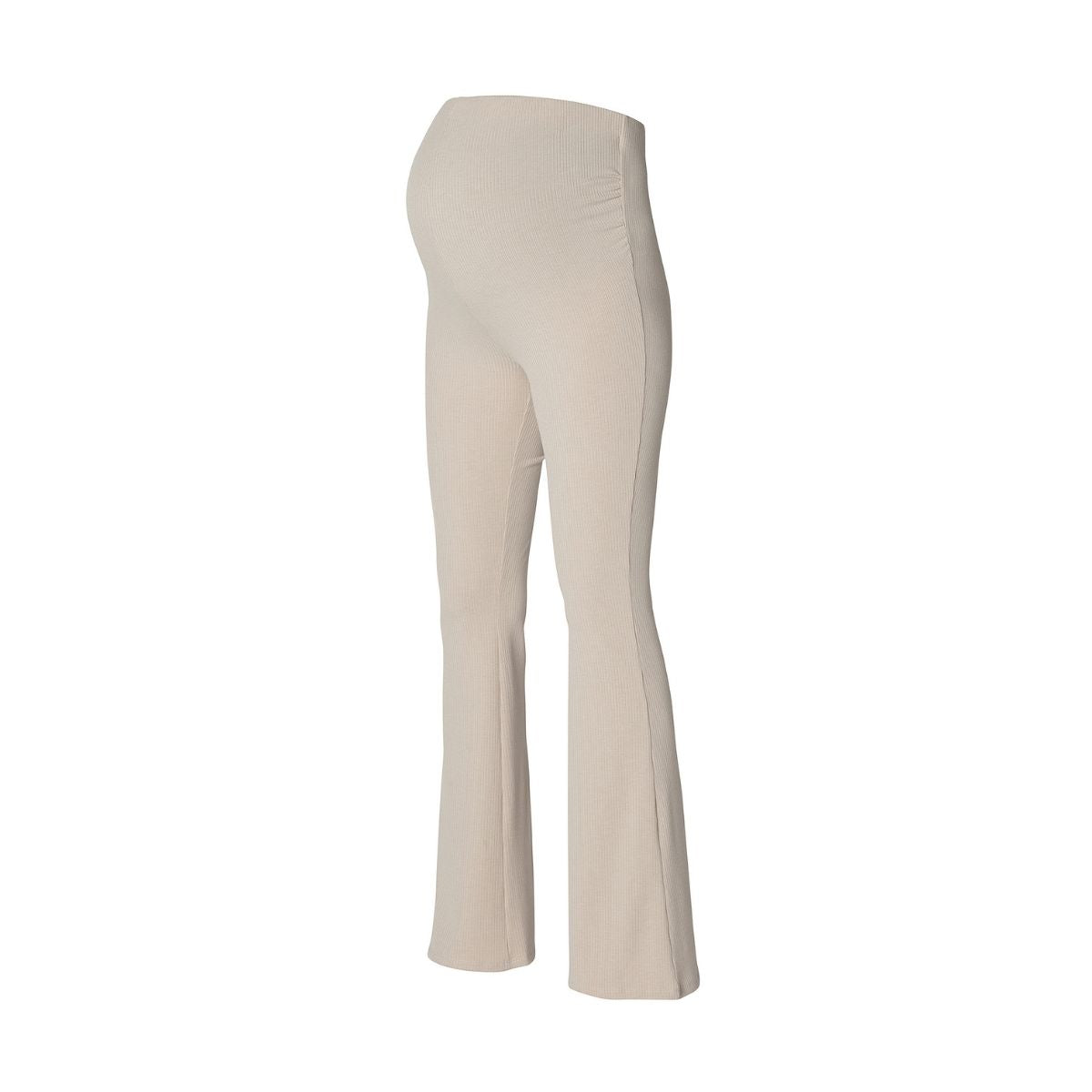
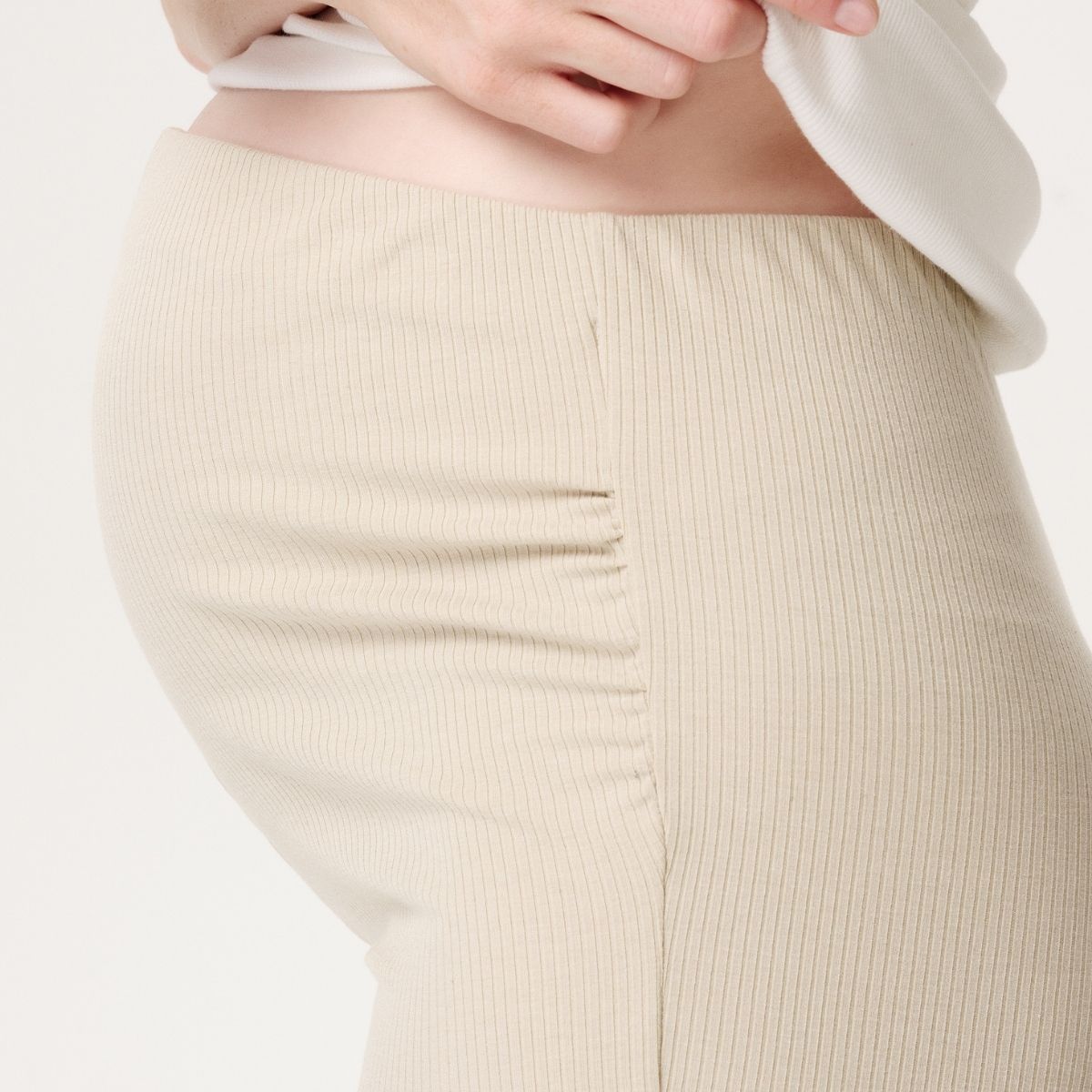
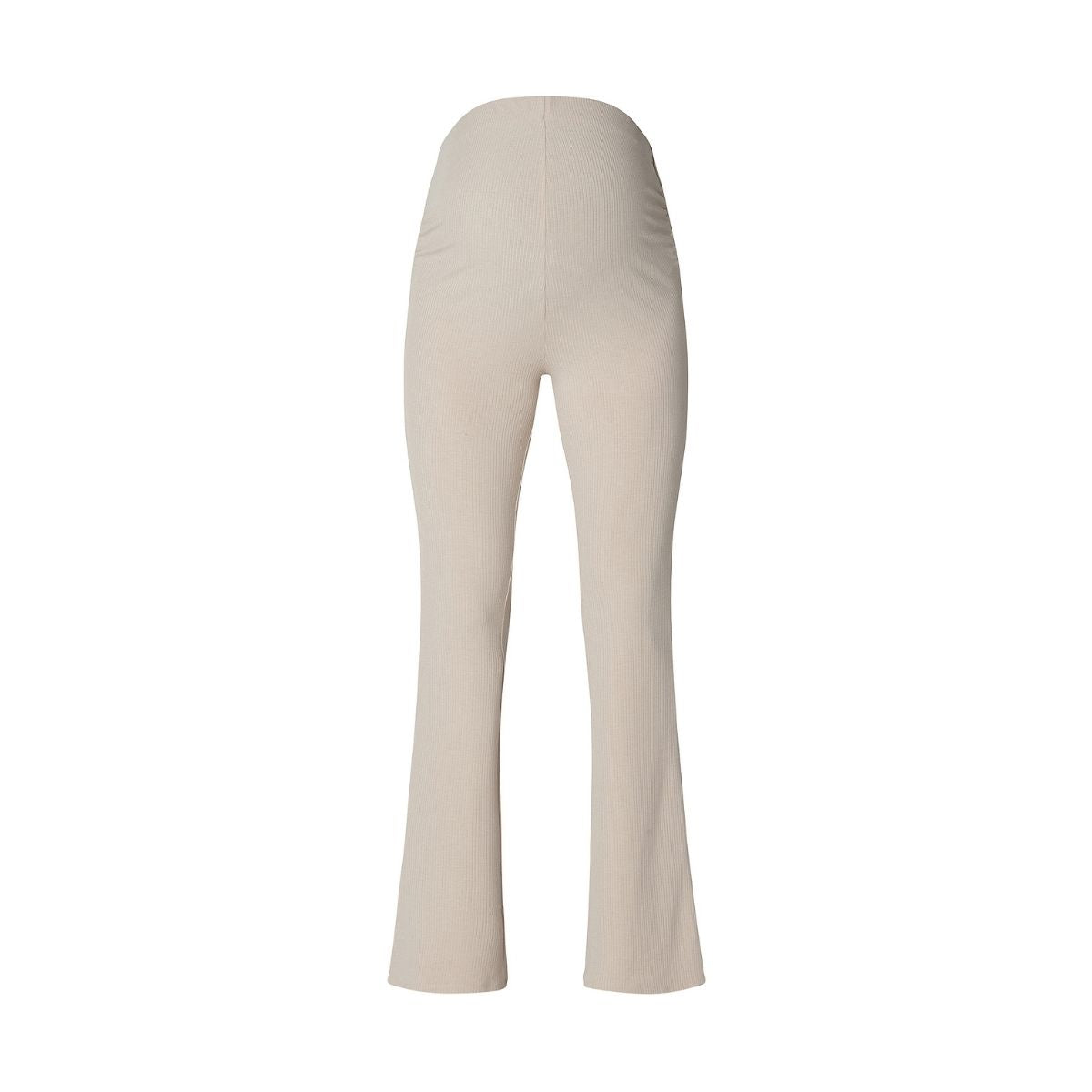
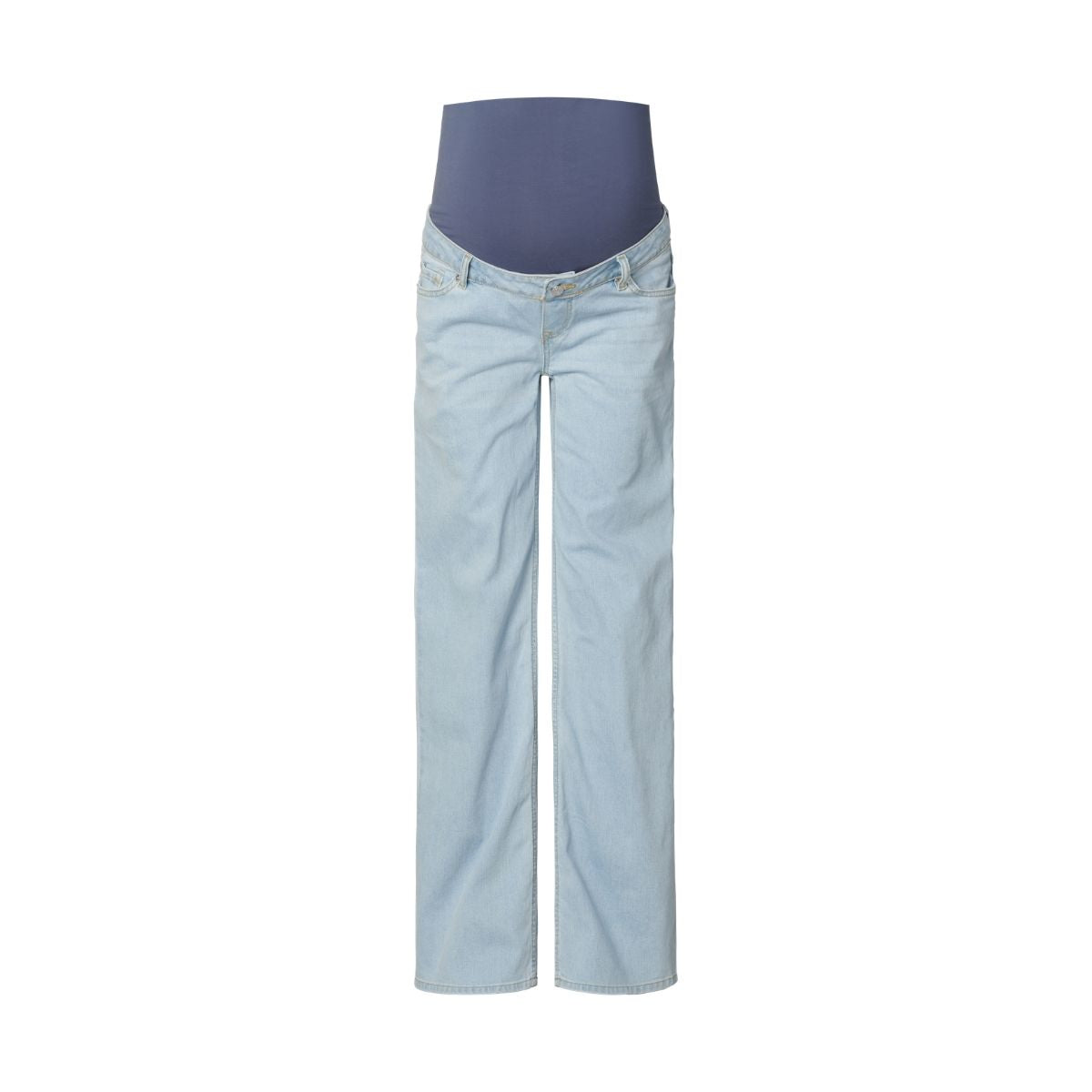
A bump panel usually consists of an additional section of fabric at the top of the trousers. On some styles, it extends high over the bump, while others cover only a smaller area. If you prefer fabric over your bump, a higher panel may appeal to you. If you would rather have the waistband sitting lower, a lower-cut design may be more suitable. Think about where the panel will sit both when you are standing and when you are seated, as its height alone does not determine how comfortable it will feel.
Some trousers have adjustable elastic that allows you to alter the circumference within the limits of the design. Others have a fixed waistband and rely on the stretch of the material for flexibility. Neither construction guarantees that the trousers will fit throughout your entire pregnancy. Changes in body shape vary from person to person, and the cut around the hips and legs matters too.
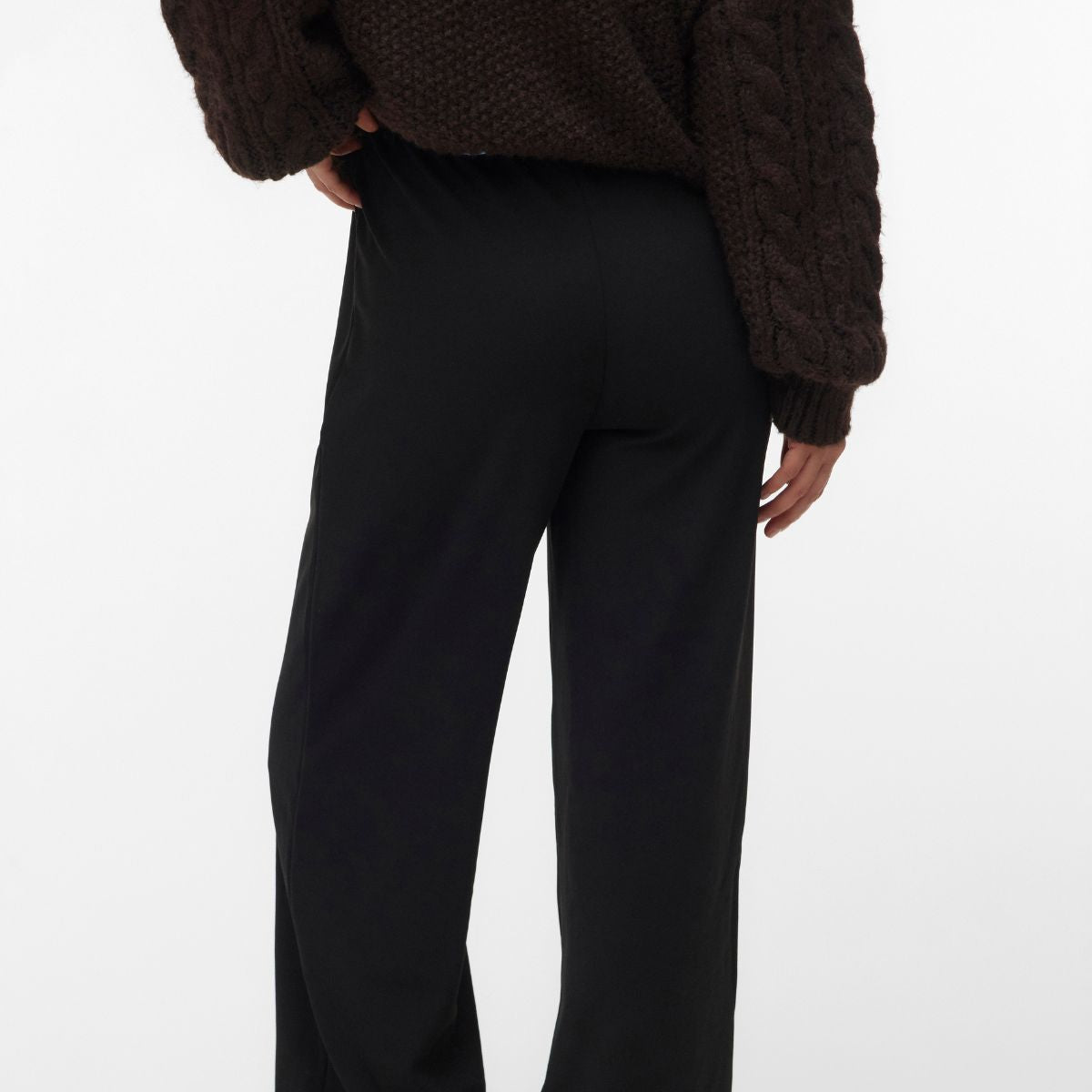
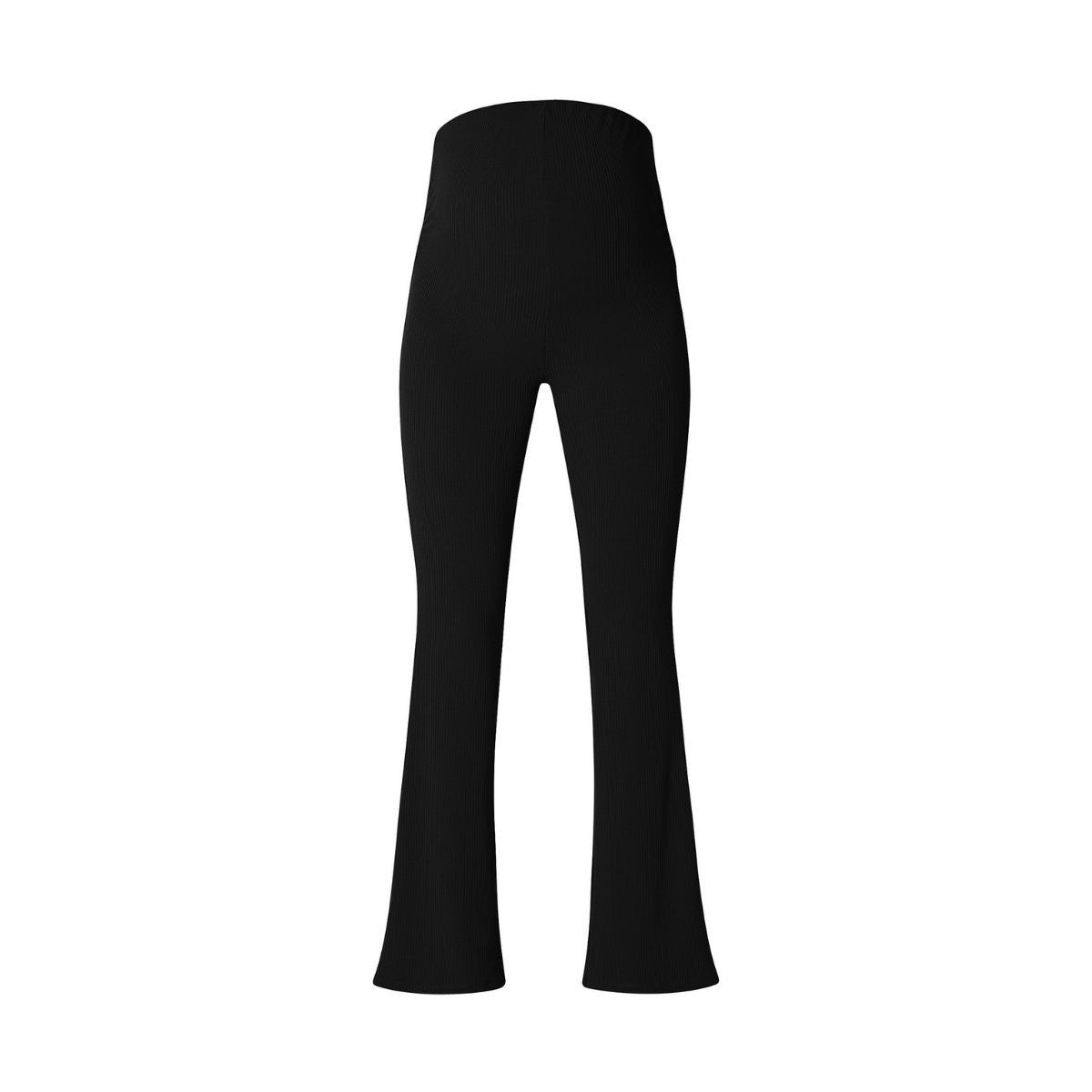
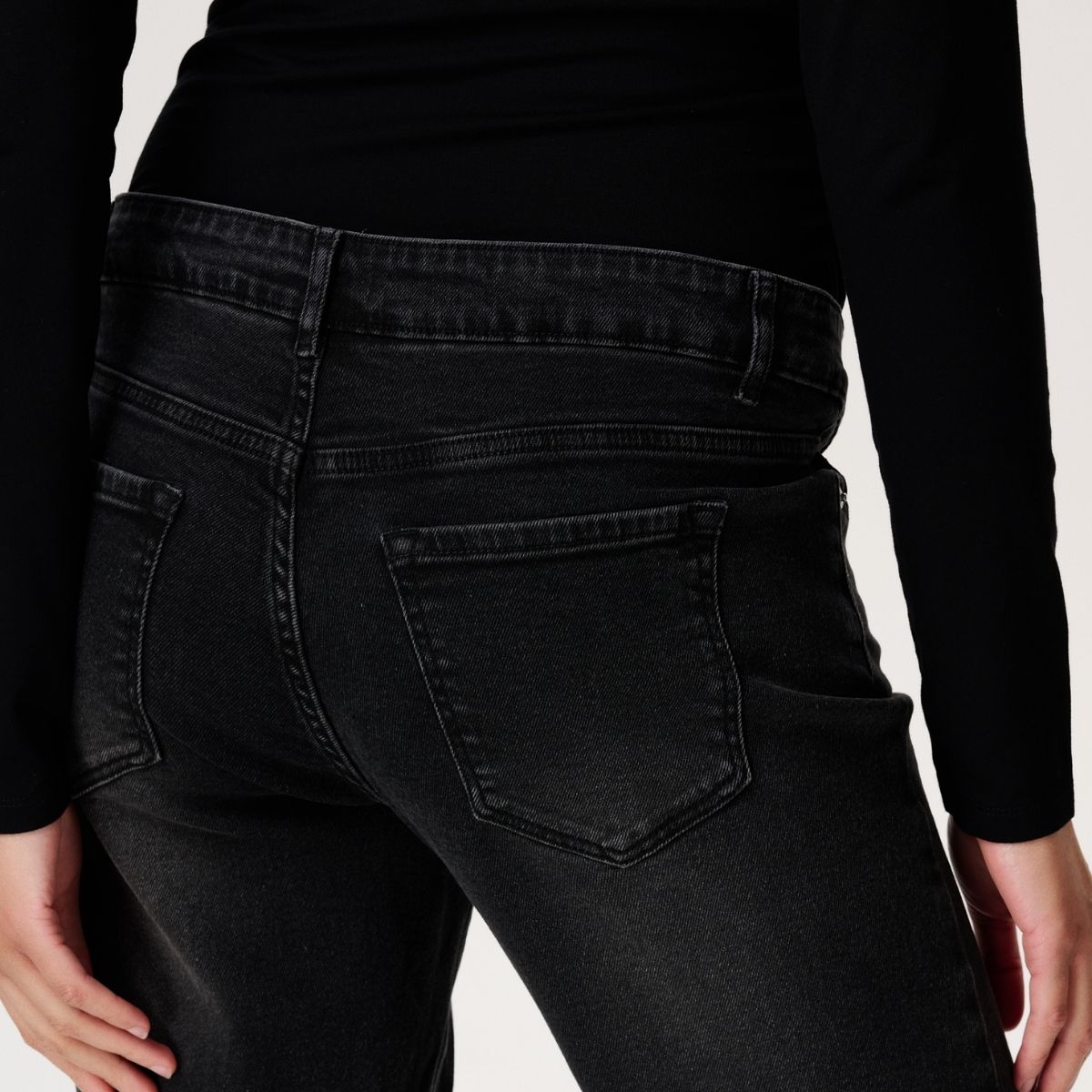
One detail that is easy to overlook in product photographs is the join between the bump panel and the main trouser fabric. Its position can affect how the trousers sit against your body as you move. It is therefore worth comparing the panel height, waistband and overall construction rather than focusing on a single feature.
Leg length and freedom of movement
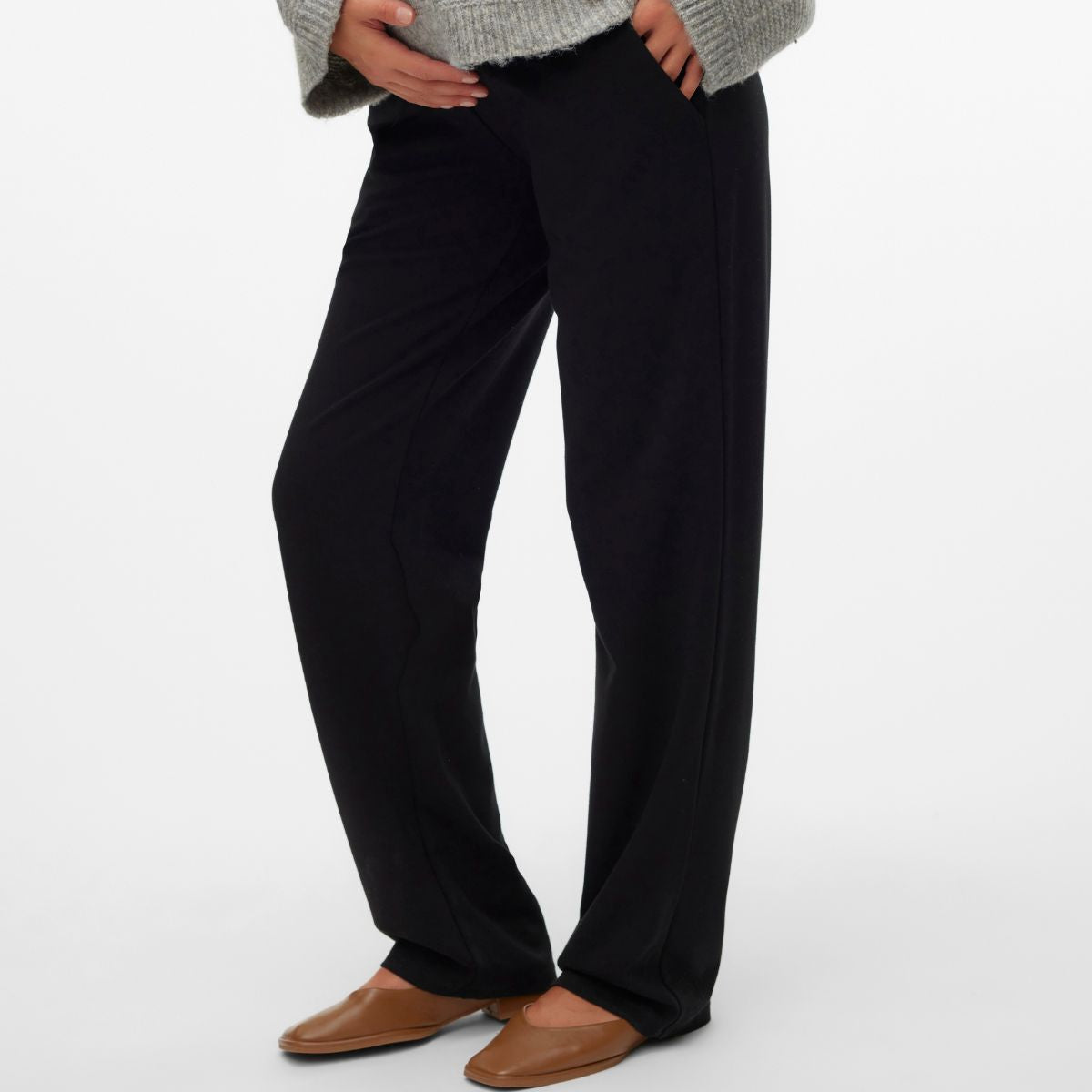
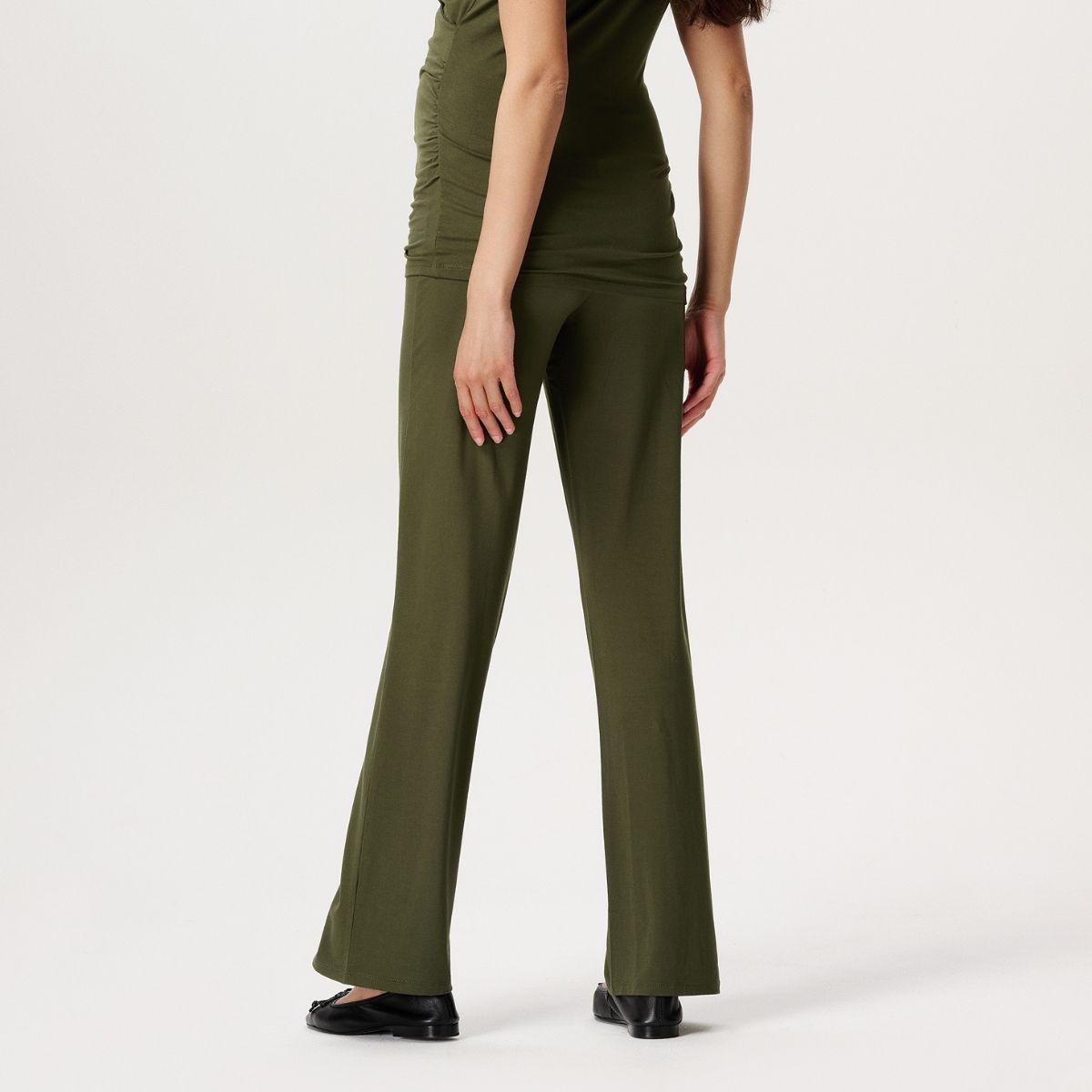
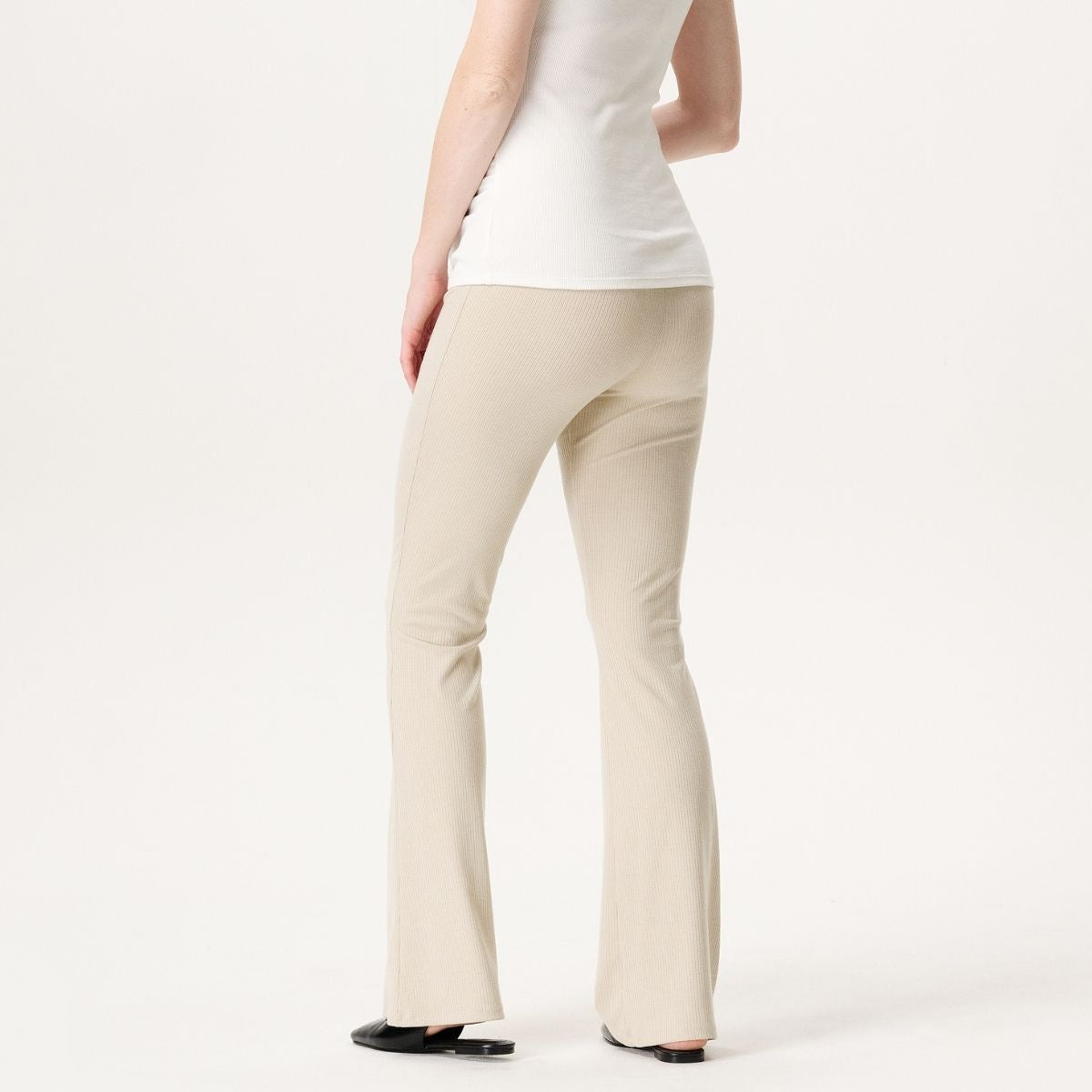
The legs deserve just as much attention as the waistband. Slim-fitting trousers sit closer around the knees and calves than straight-leg or wide-leg styles, and you may notice the difference particularly when bending your legs or sitting for extended periods. In close-fitting trousers, fabric stretch often plays an important part in freedom of movement. With looser styles, the extra room comes more from the cut itself. Seams and shaping around the knees can also affect how the trousers feel when worn.
Length influences both fit and appearance. Cropped trousers create a different look from styles that extend all the way to your shoes, while legs that are too long may bunch around the ankles. Some trousers are offered in several lengths, whereas others come in just one. If the inside leg measurement is provided in the product description, compare it with a pair of trousers that you already know fits well.
Finding the right size when buying maternity trousers online
Choosing a size larger than normal is not necessarily the right approach. Some maternity trousers are selected using your usual trouser size, while other size guides are based on your current body measurements. Always check the information provided for the individual style. Extra room around the bump does not automatically mean that the trousers are wider at the hips.
When shopping online, it helps to check several details before placing your order:
- Measurements: Look for hip measurements, waist measurements and inside leg length where available. Two styles carrying the same size label may still fit differently.
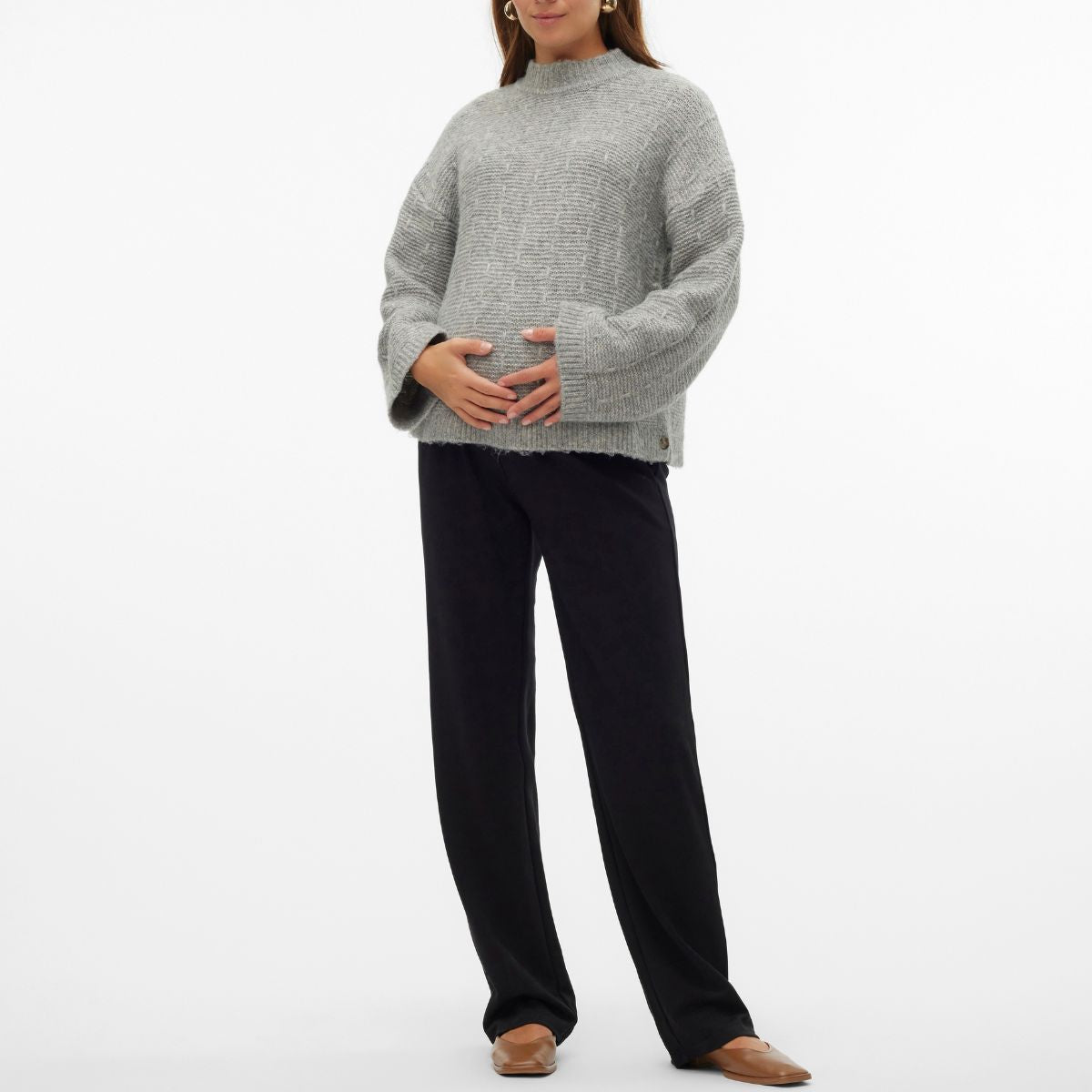
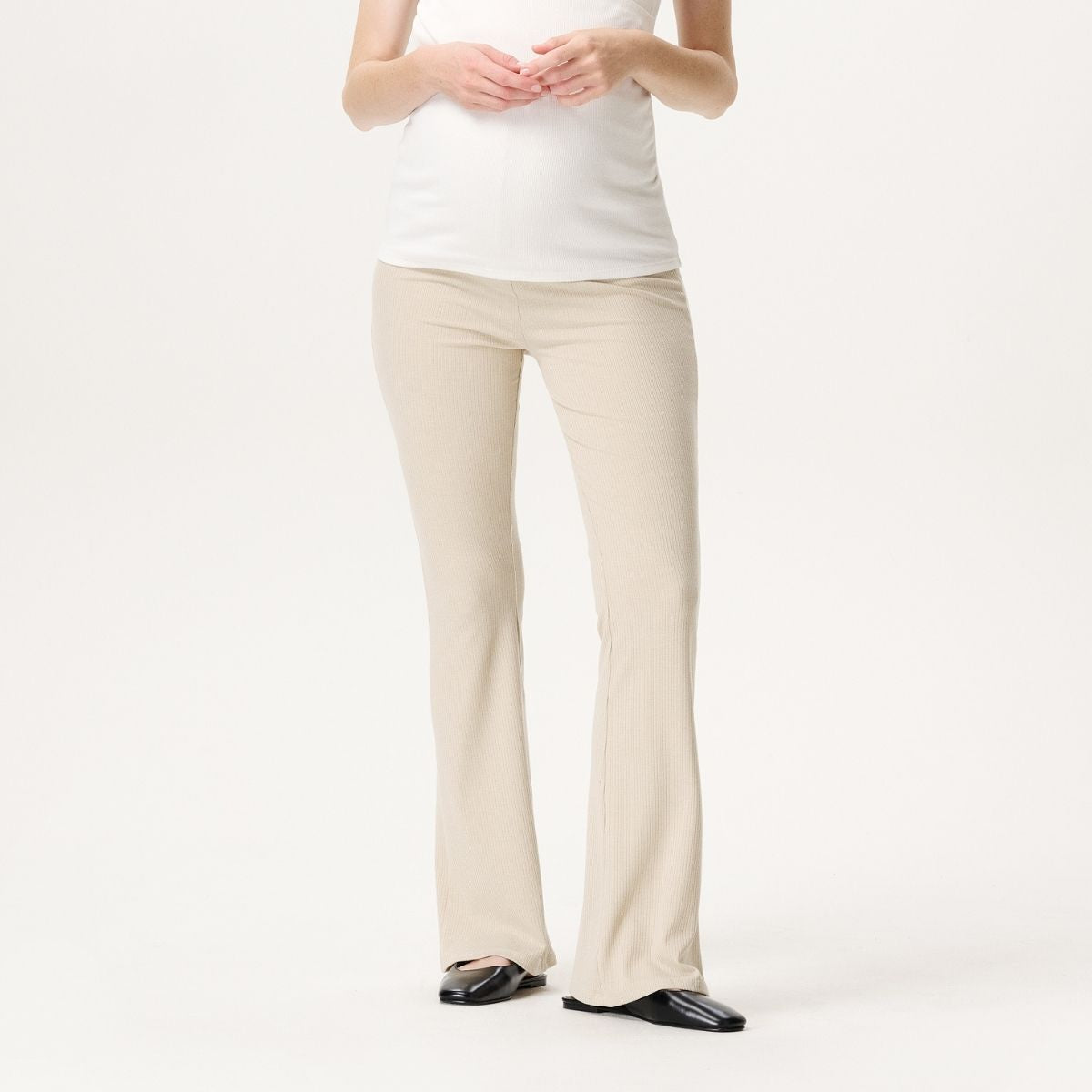
- Photographs: Examine the silhouette, pockets and fastening. Details of the model's height and the size shown can provide useful context alongside the size guide, but cannot predict how the trousers will fit your body.
- Fabric: The fibre composition can give an indication of how much stretch the material has. The cut and construction also affect how flexible the trousers feel.
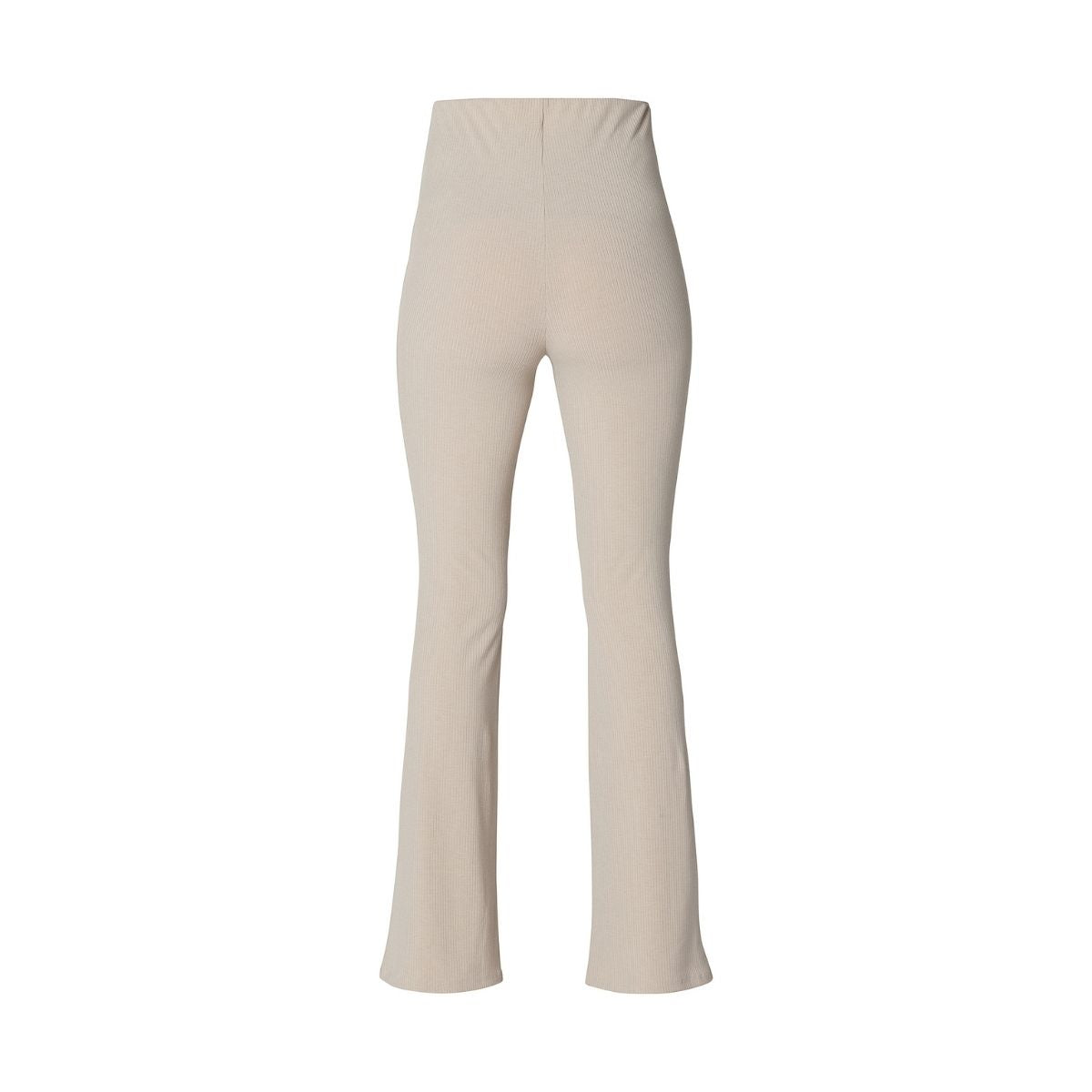
- Fastening and waistband: Some styles simply pull on, while others combine traditional trouser details with a specially designed maternity waist. This can influence how easy they are to put on and take off.
If you already own maternity trousers that fit well, they can provide a helpful point of comparison. Pay particular attention to the leg width, length and waistband construction. This makes it easier to distinguish a style that resembles your existing pair from one designed to fit differently. Actual garment measurements are more useful for this comparison than the size number alone.
