

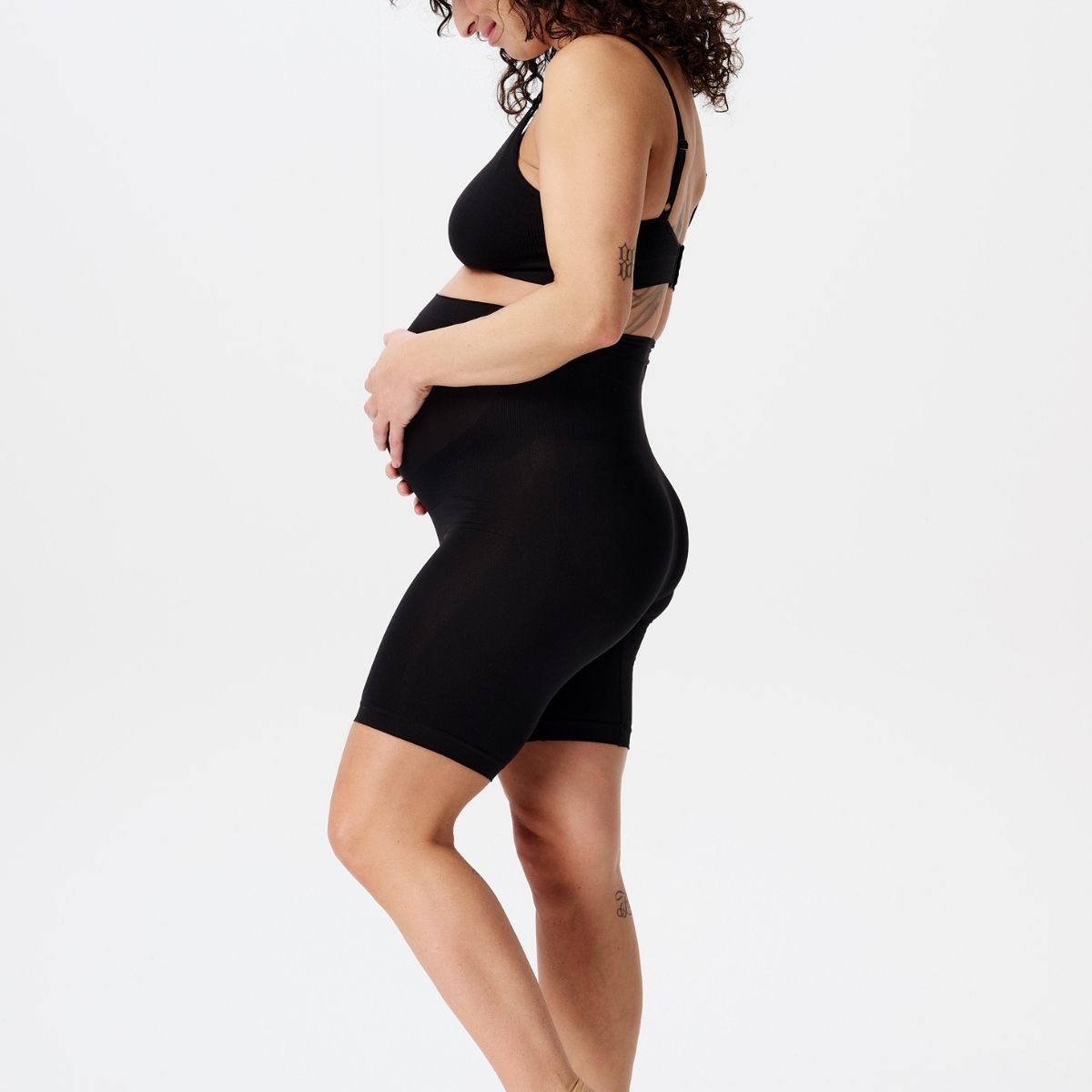
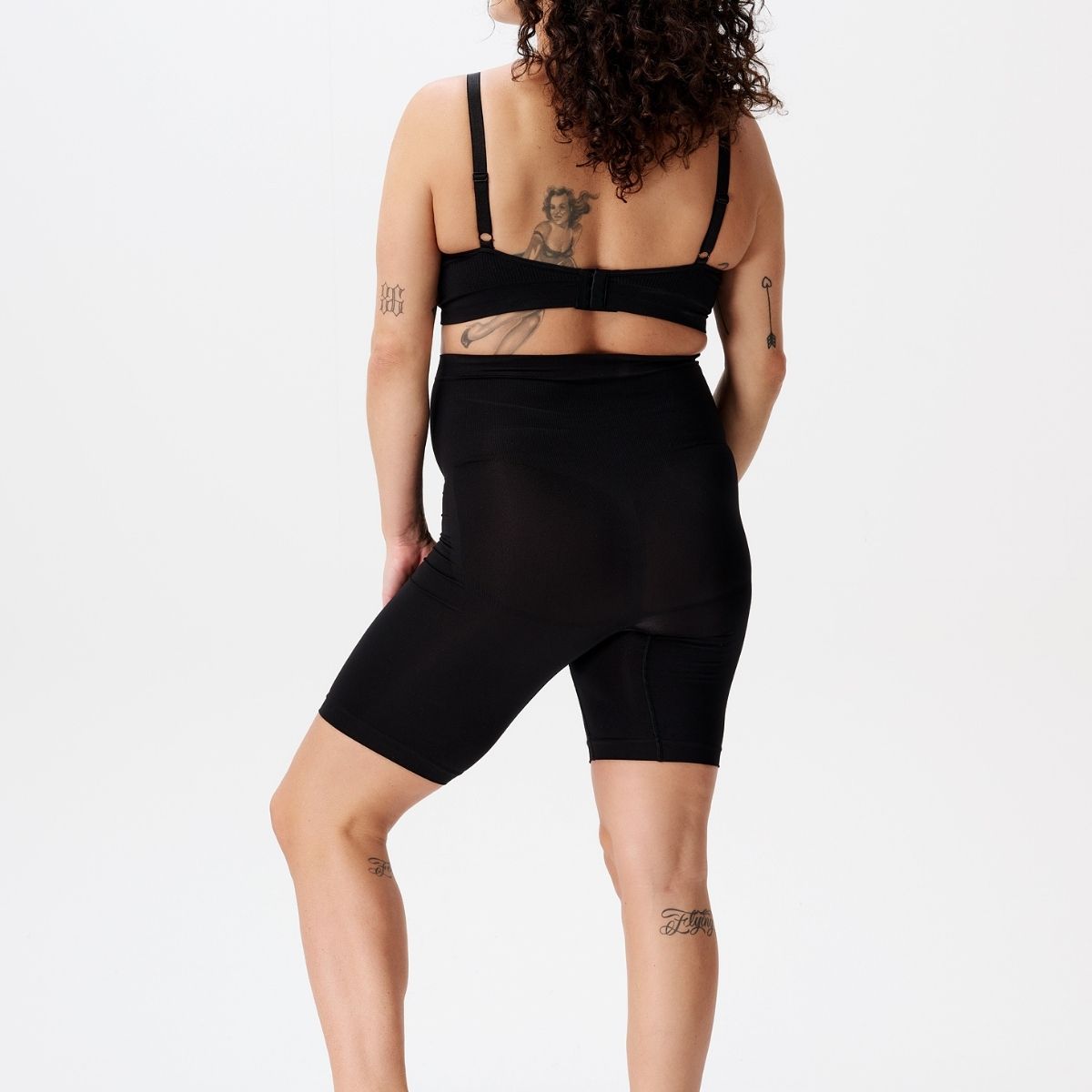
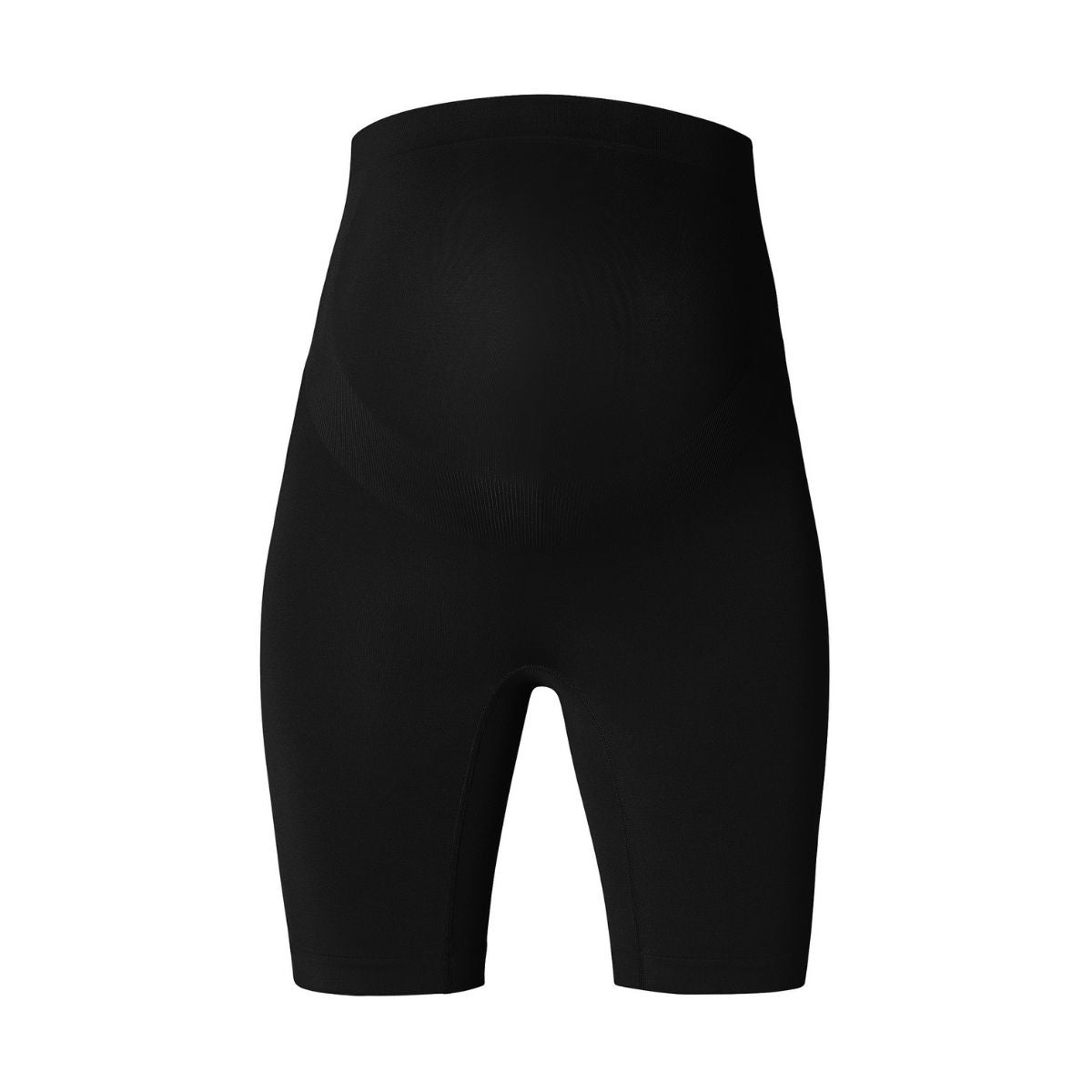
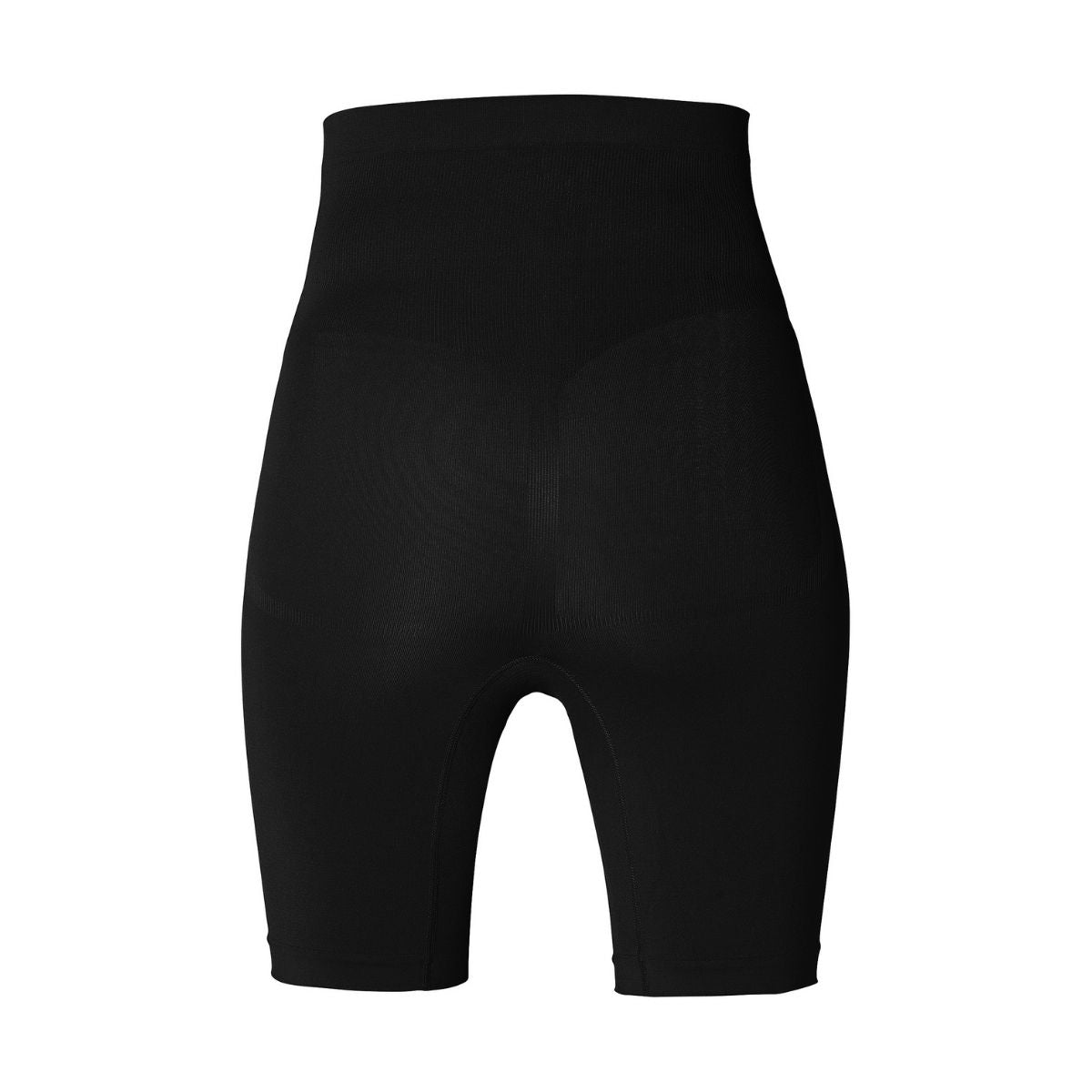
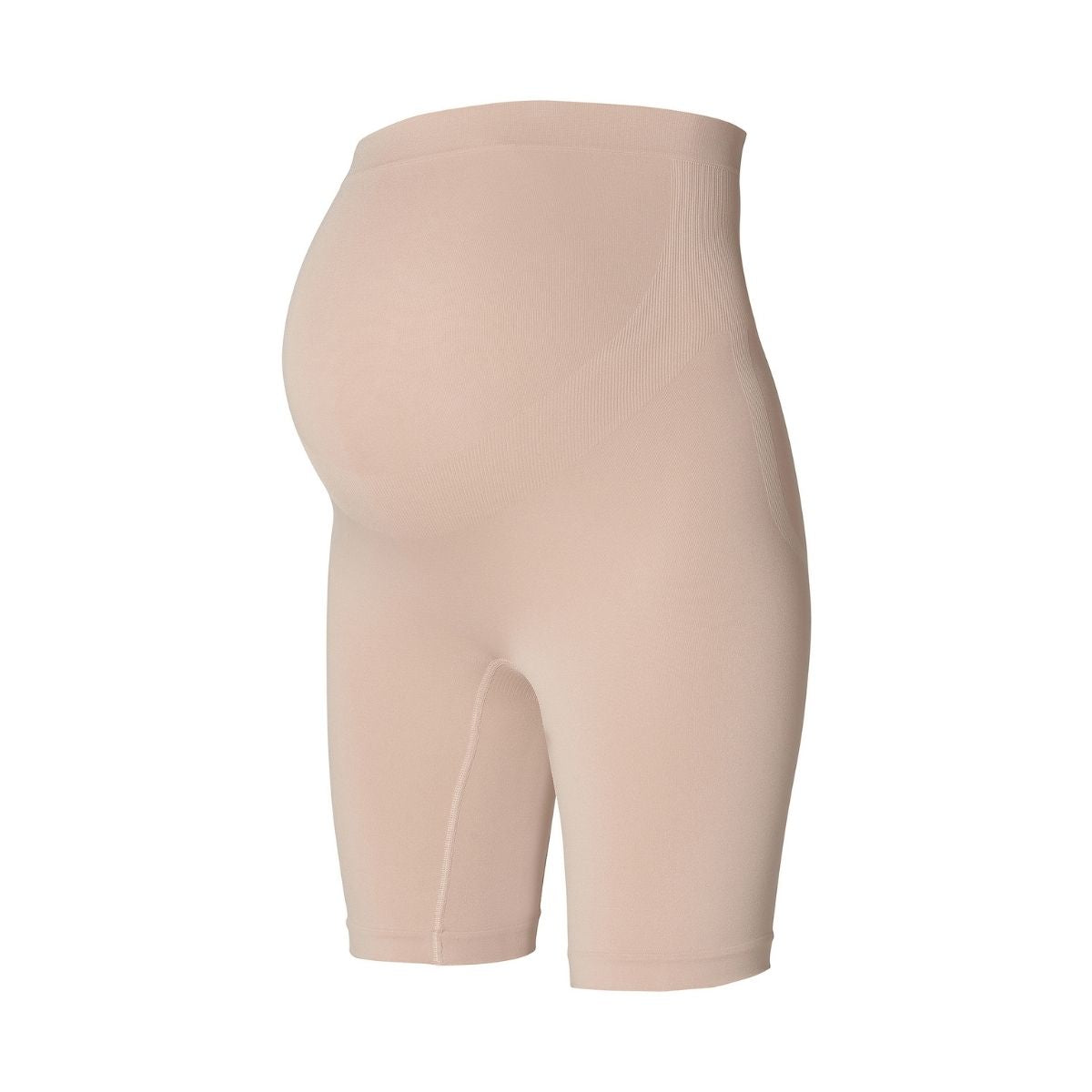
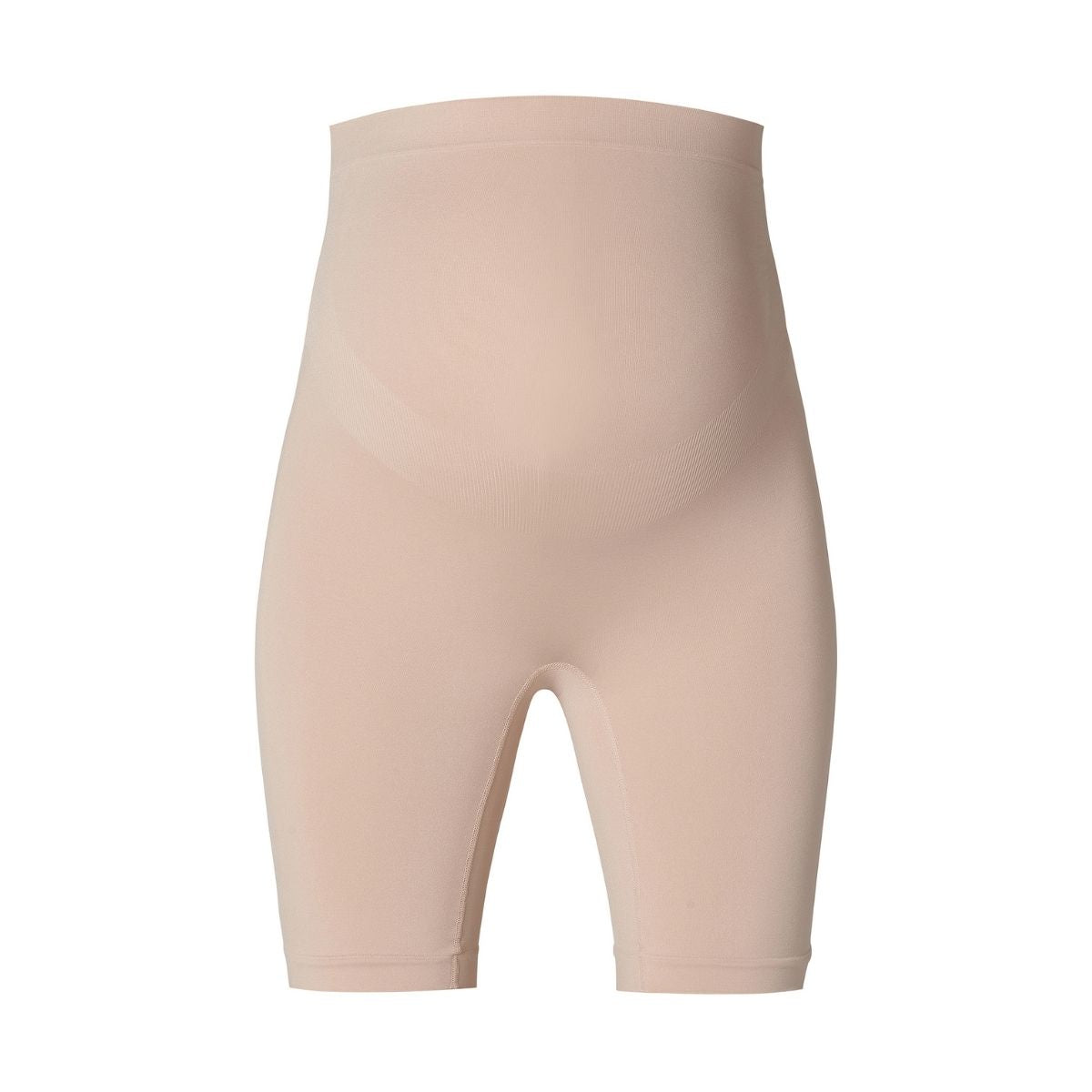
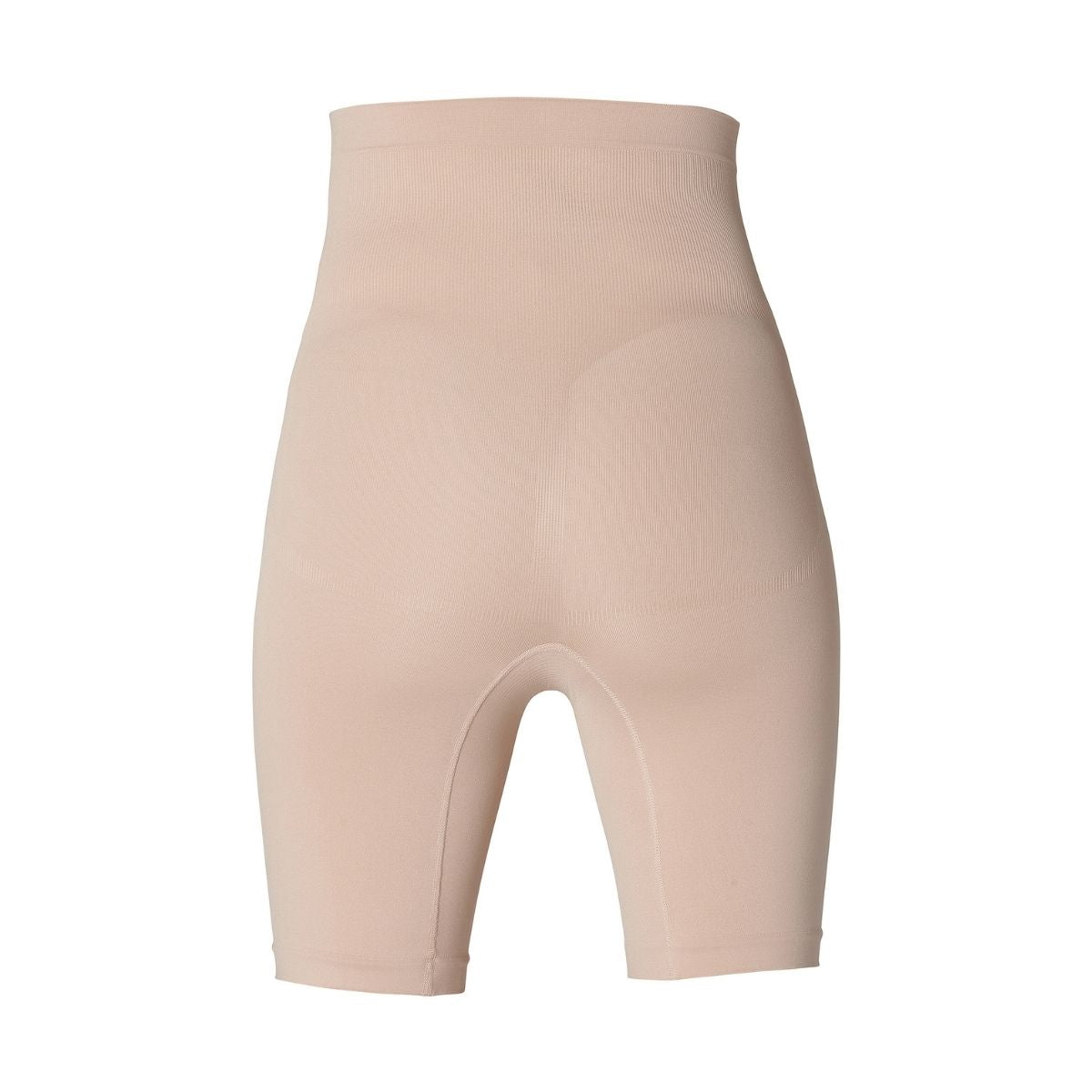
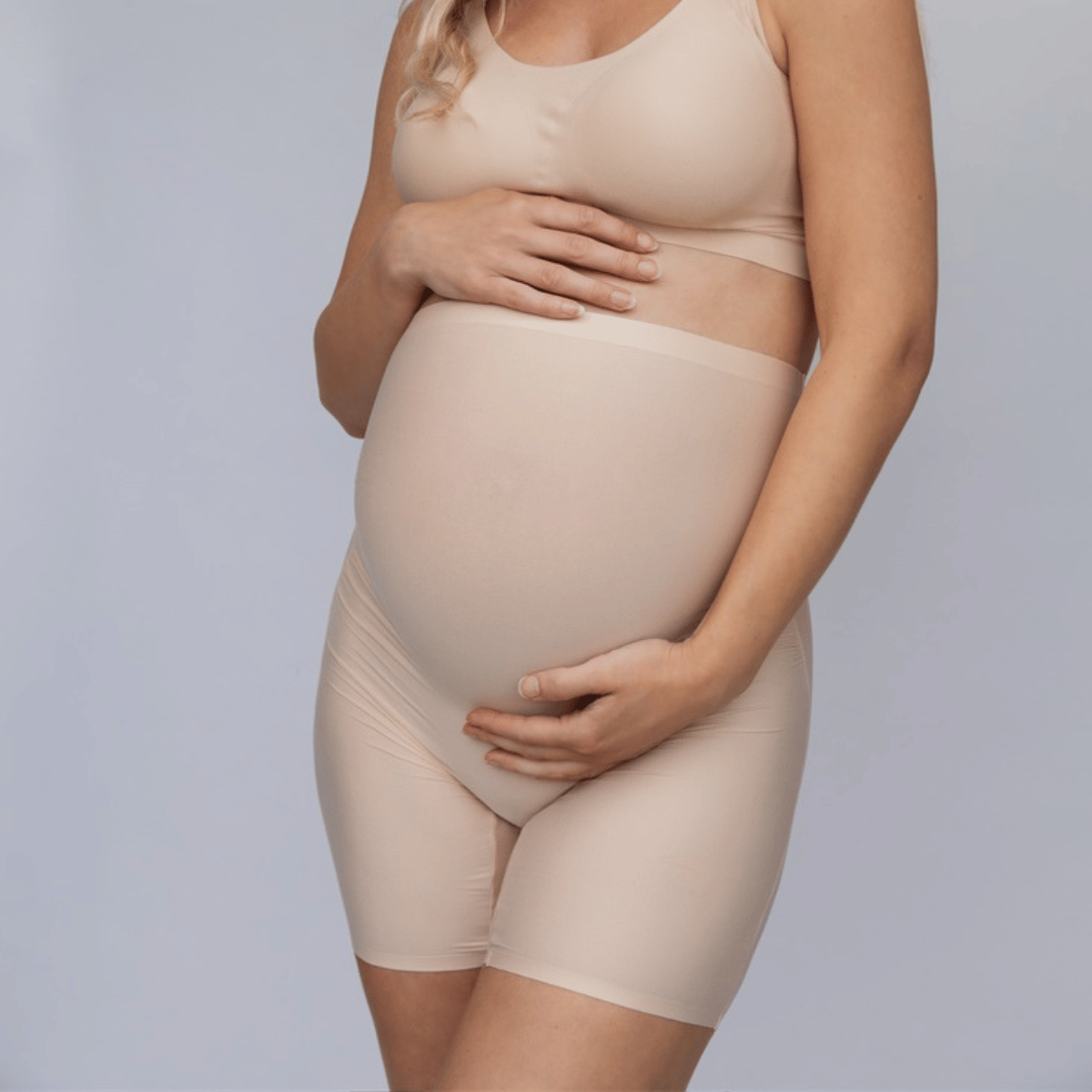
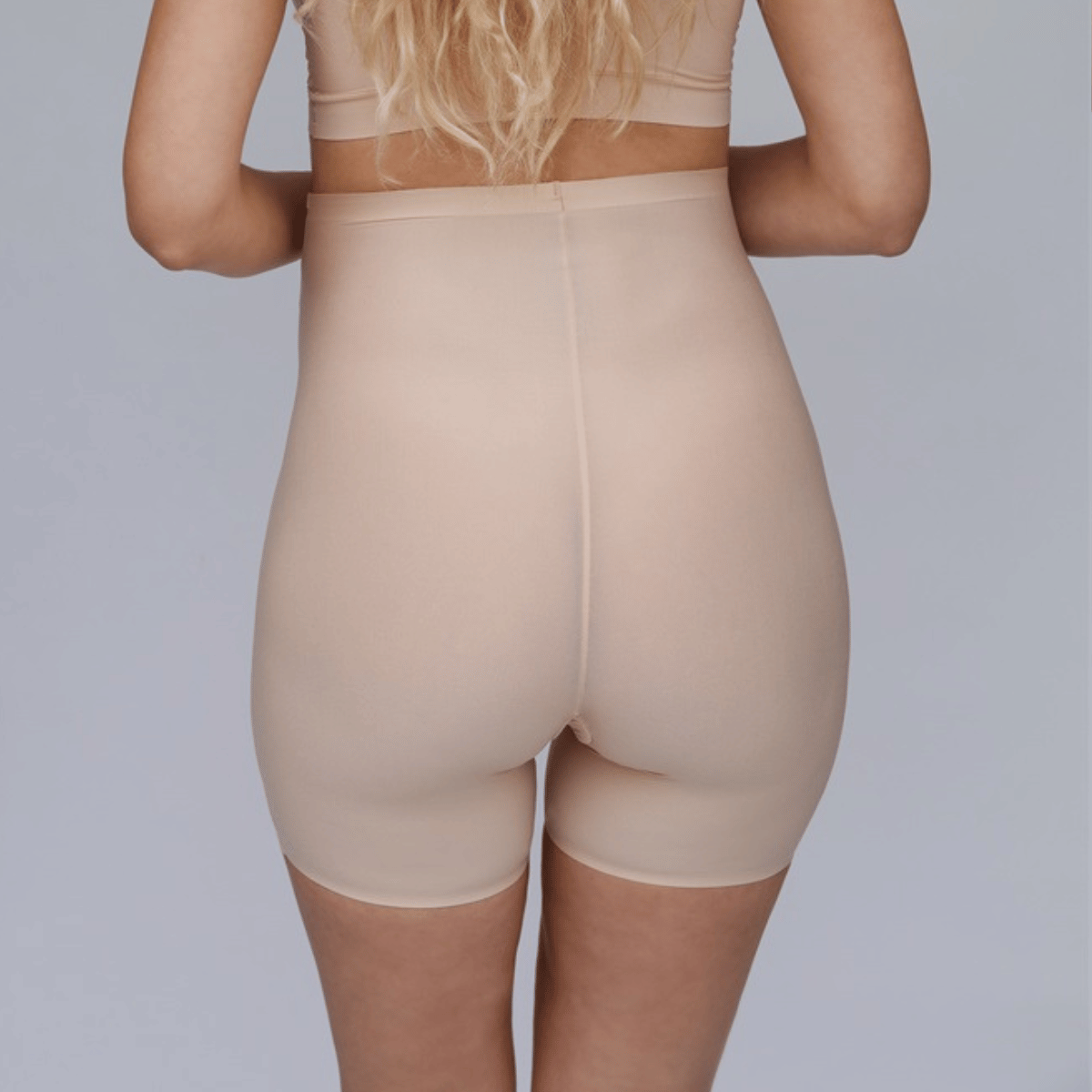
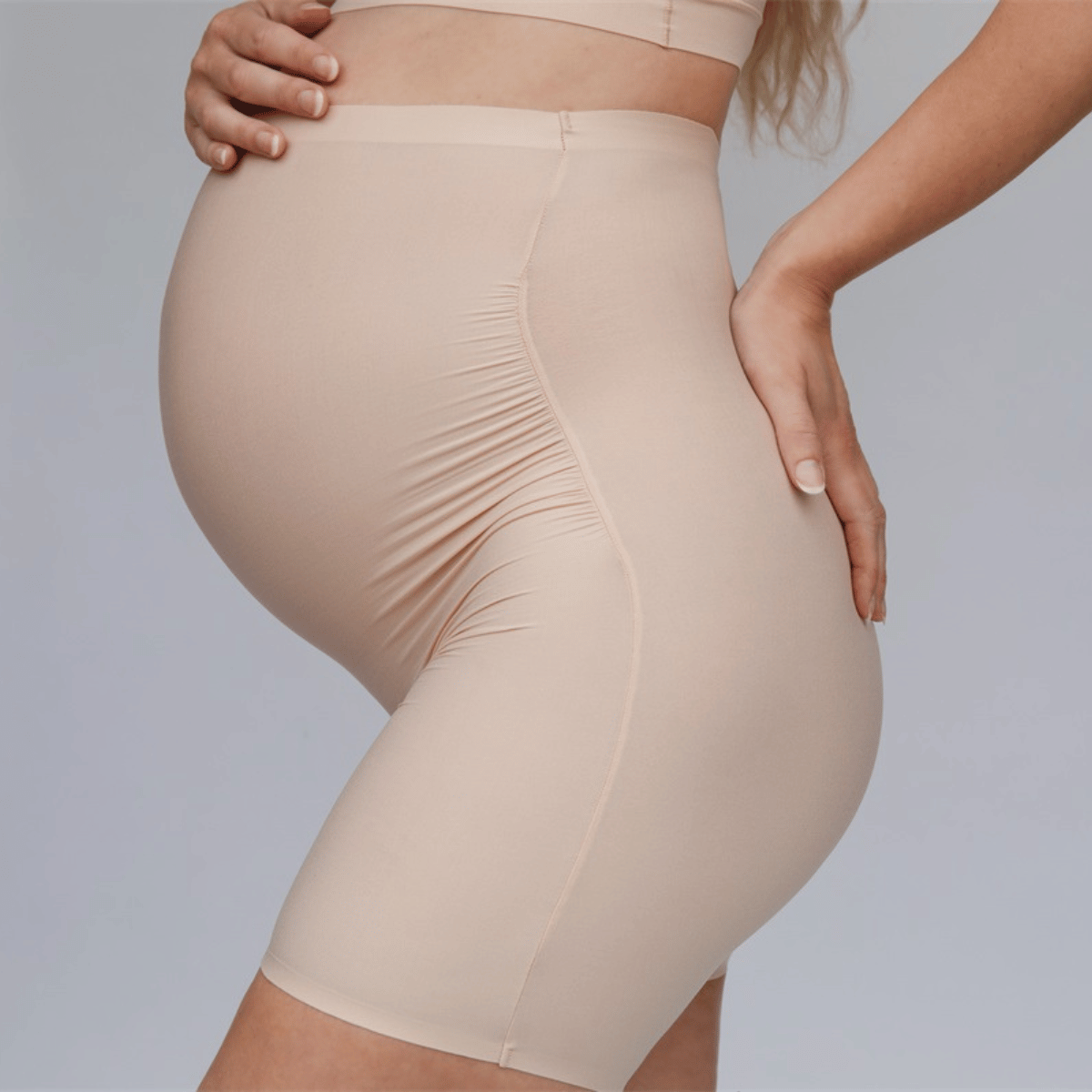
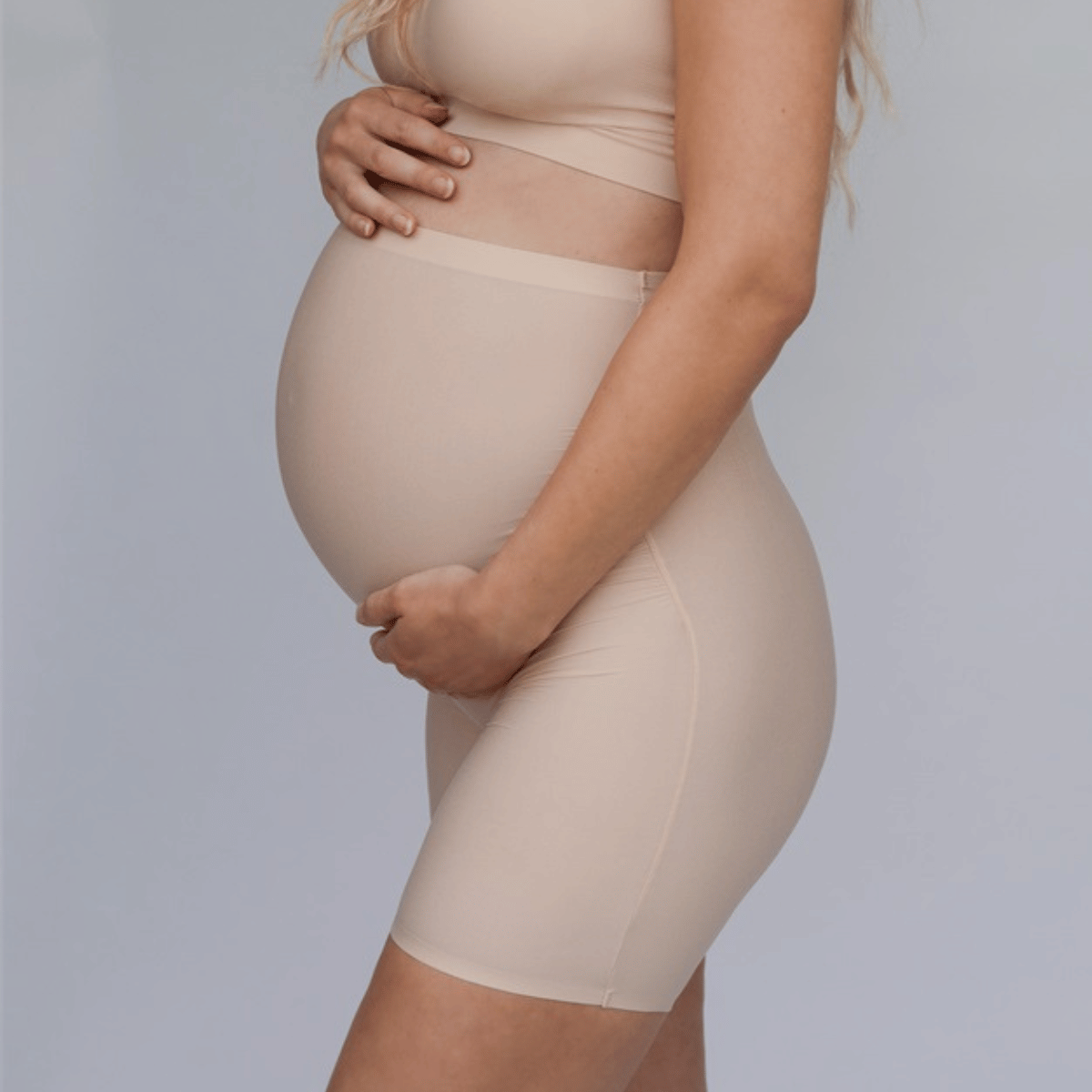


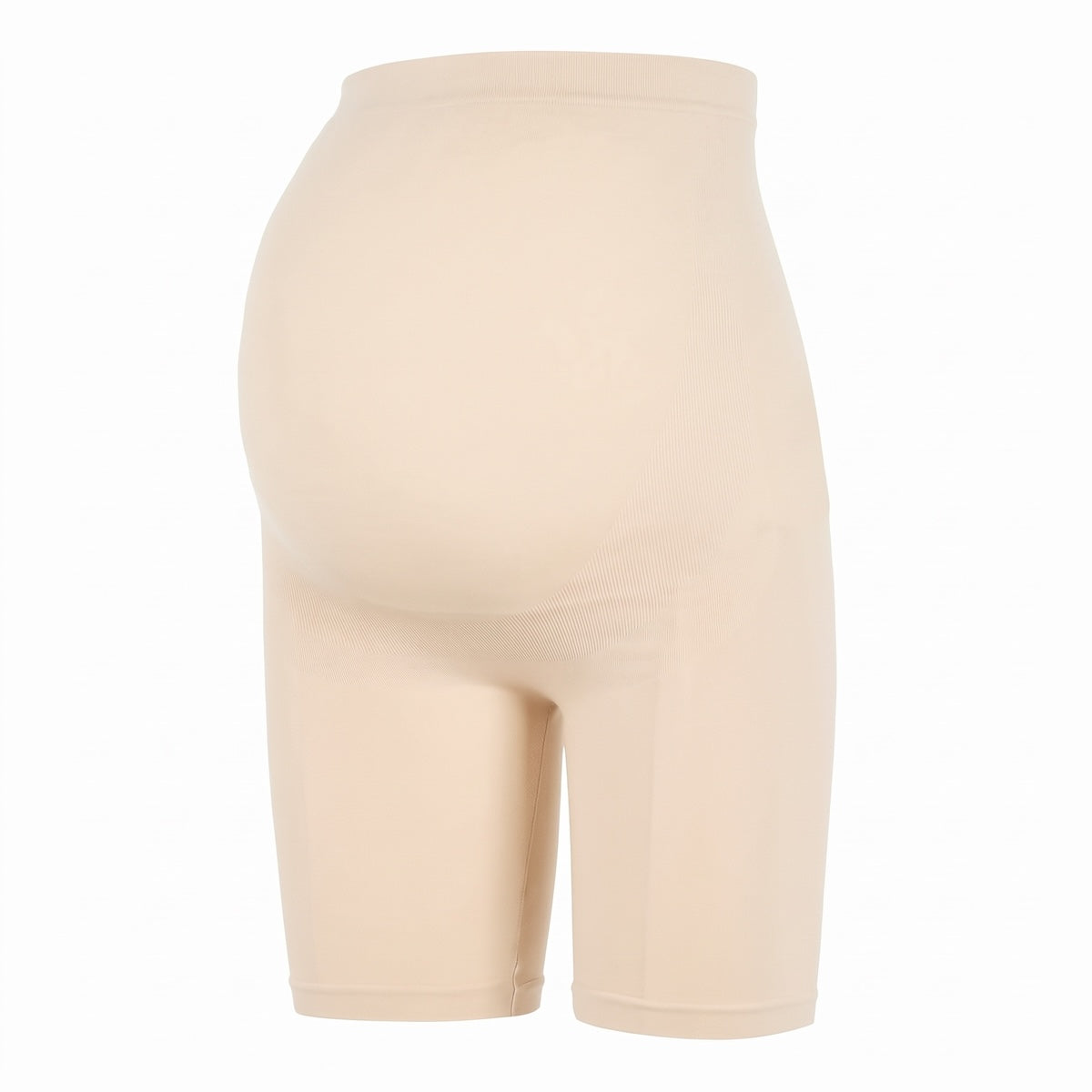
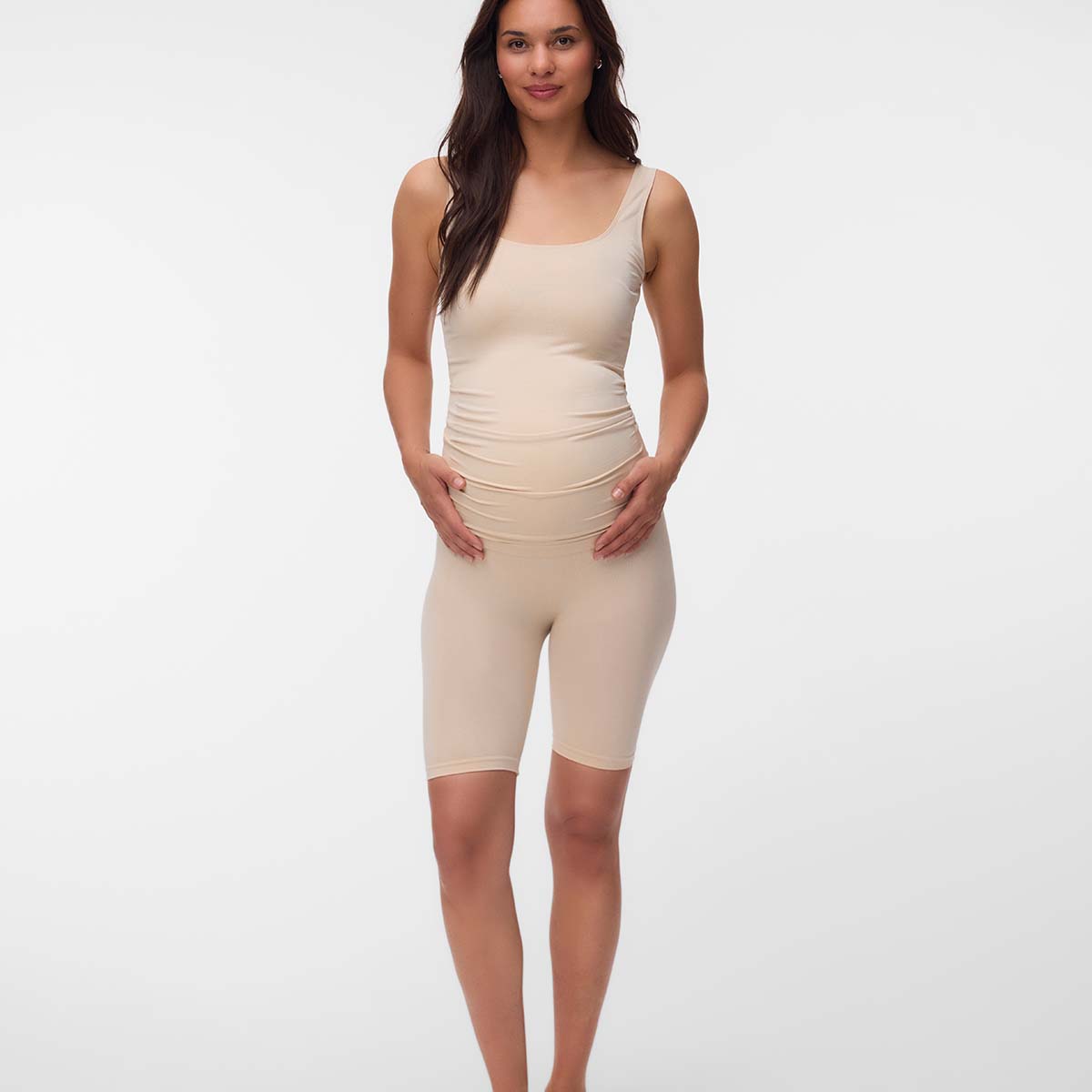
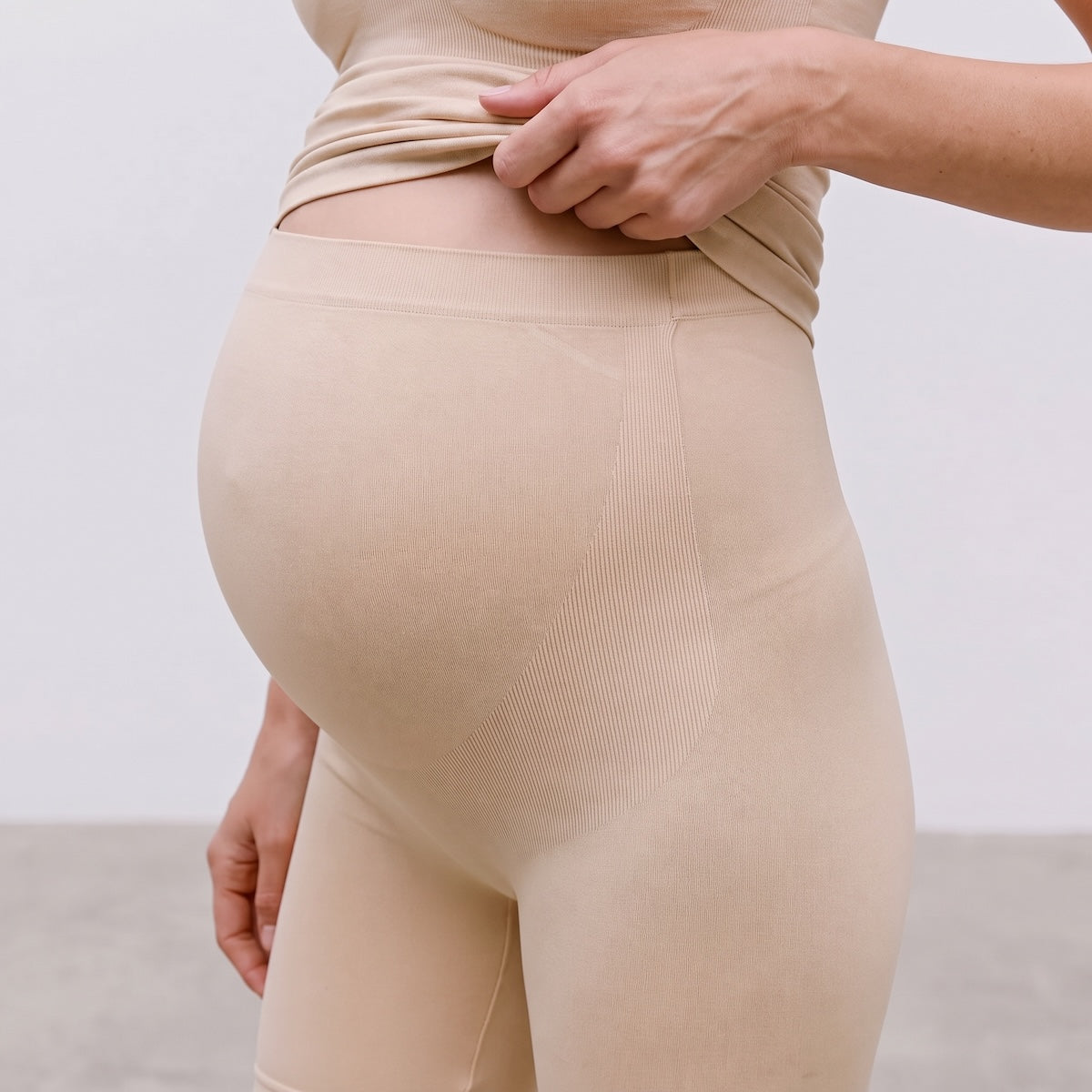

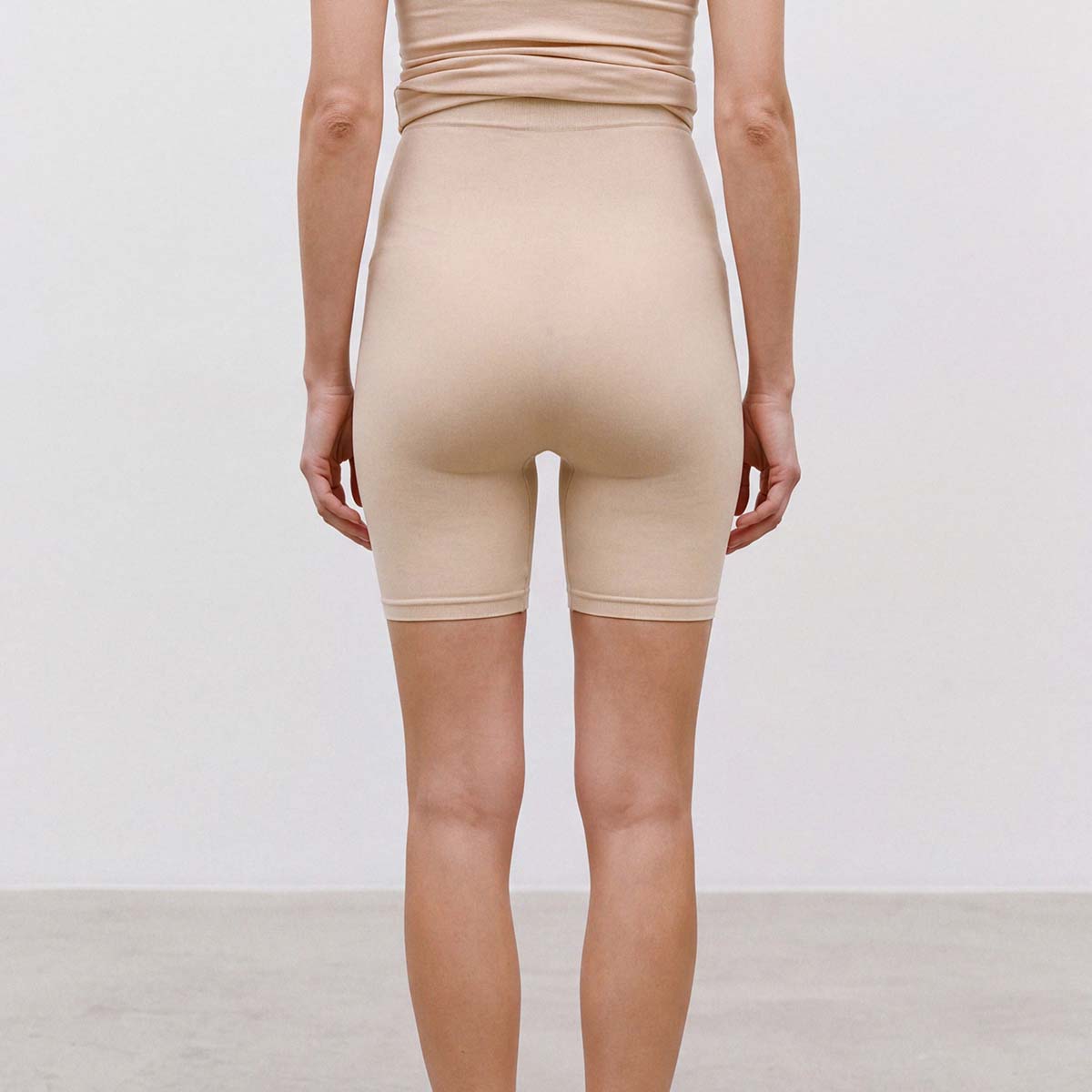


Maternity shorts in denim and lightweight fabrics
Maternity shorts can look and feel quite different even when they are roughly the same length. Denim tends to create a more structured look, while lighter woven fabrics may drape more softly around the hips and thighs. If denim shorts are already part of your summer wardrobe, choosing a maternity version in a similar style may be a natural next step. If you prefer looser shorts, both the fabric and the cut are worth examining. Rigid denim and denim containing stretch fibres can offer different degrees of freedom of movement, but stretch alone does not guarantee a good fit. Cotton, viscose and blended fabrics can also be used for shorts. How a fabric actually feels depends on its fibres, weave and construction. A heavier fabric may give the shorts a more defined shape, while a fabric with more drape will move differently around your legs.
Short, mid-length and knee-length maternity shorts
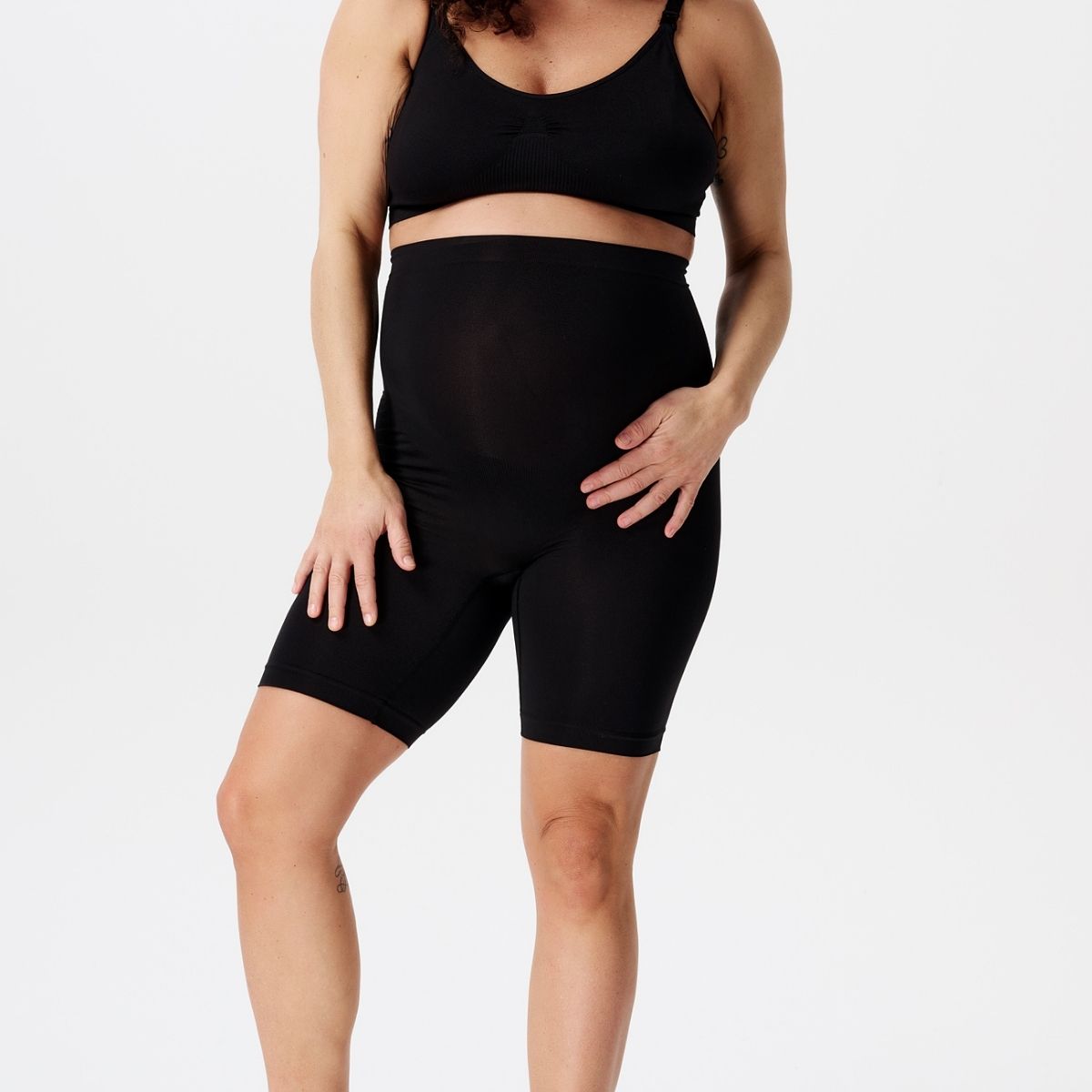
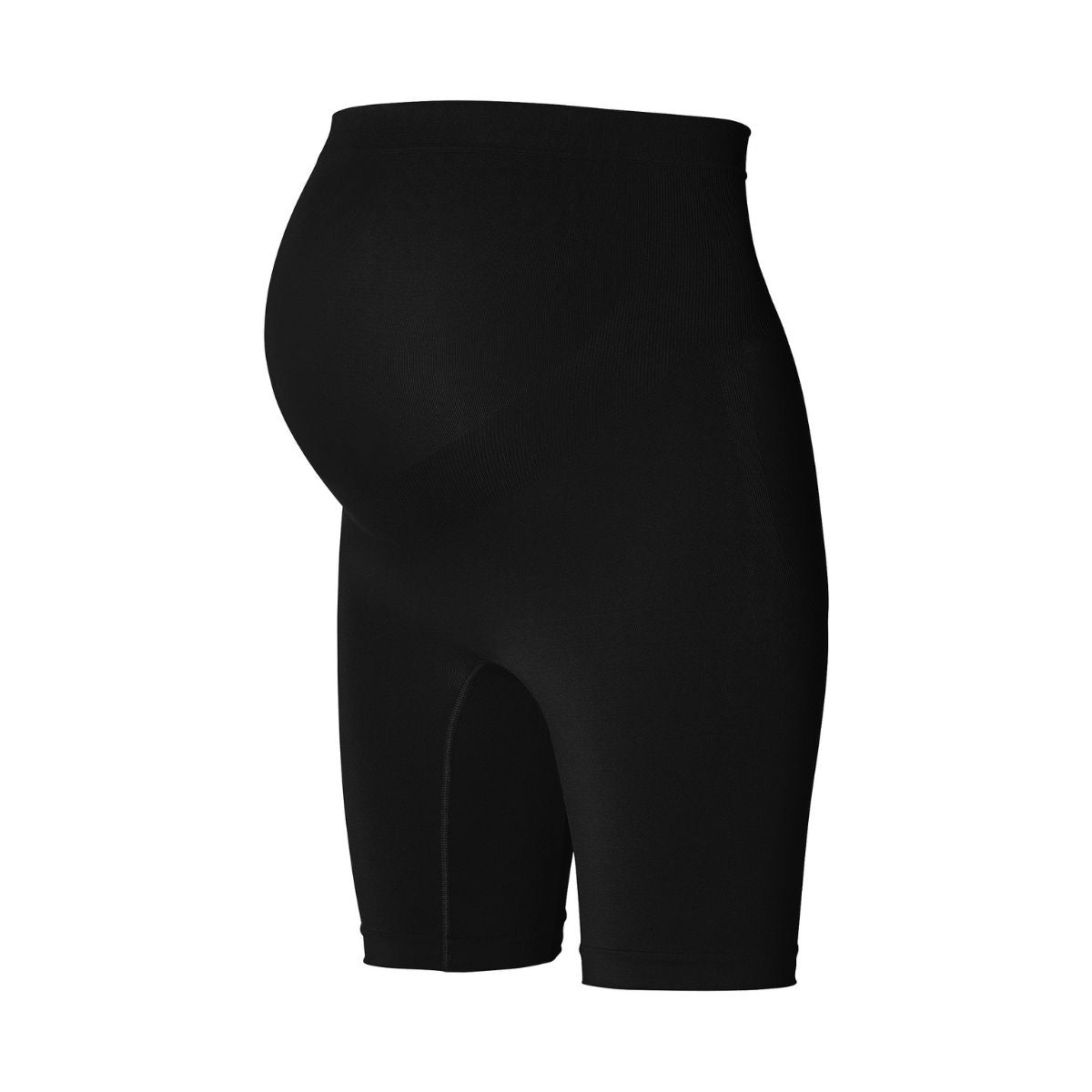
Length affects both how much of your legs are covered and the overall appearance of your outfit. Short maternity shorts may finish high on the thigh, while longer styles cover more of the leg. Bermuda shorts generally reach to around the knee or slightly above it, although there is no single standard length that every design follows.
A mid-length style may suit you if you want more coverage around the thighs than very short shorts provide, without a hem that sits close to the knee. However, two pairs with the same leg length can look quite different if one has narrow leg openings and the other has a more relaxed cut. Where the hem sits is therefore only one aspect of the overall fit.
Your height and leg proportions also affect where shorts finish. A pair that reaches the knee on one person may sit higher on someone else. If a particular length matters to you, check the inside leg measurement in the product description rather than relying only on descriptions such as short or long. You can also compare the measurement with a pair of shorts you already own that fits the way you like.
Leg width and fit when moving
Maternity shorts need to fit well when you move, not just when you are standing still. As you walk or sit down, the fabric sits differently around the crotch and upper thighs, making the cut particularly important. Loose-fitting maternity shorts have more room around the legs, so the fabric follows the shape of your thighs less closely. With fitted styles, fabric stretch is often more important because the material needs to give as you move.
A wider leg opening may provide more space, but it does not tell you how the shorts will fit across your hips. Equally, a close-fitting style can work well when the size, cut and fabric suit you. Particularly with shorter shorts, an unsuitable combination may cause the material to ride up during movement. It is therefore worth considering the length, leg width and crotch area together rather than assessing each feature separately.
If you prefer less loose fabric around your legs, fitted shorts may be a suitable option. If you would rather have more room around your thighs, a roomier style may better suit how you plan to wear them. Neither choice automatically provides greater freedom of movement in every situation. The difference depends on the garment's construction and the properties of its fabric.
Pockets, turn-ups and adjustable details
Small design details can make a noticeable difference to how maternity shorts look and function in everyday wear. However, product photographs do not always show whether a detail is practical or purely decorative. The following features are worth checking:
- Pockets: Side and back pockets may be designed to hold small items, while decorative pockets mainly affect the appearance. Check the product description if functionality matters to you.
- Turn-ups: A folded leg hem may be stitched in place or made with a looser fold. It can change the appearance of the leg opening, but is not necessarily designed to be unfolded.
- Drawstrings: A visible drawstring may allow genuine adjustment or may simply be decorative. This depends on how it is incorporated into the design.
- Fastenings: Buttons and other fastening details may be functional or form part of the design. A visible button does not automatically mean the shorts can be adjusted.
Distinguishing between appearance and function is especially important if you want adjustable maternity shorts. The product description should explain how the garment is constructed, and a decorative feature should not be taken as evidence that the fit can be changed. Pocket placement and turn-ups can also influence the overall look, even on shorts with the same basic cut.
Maternity shorts for warm weather and outdoor activities
On hot summer days, maternity shorts can be an alternative to long trousers because they leave more of your legs uncovered. This does not mean that one particular style will always feel better in warm weather. Length, leg width, fabric weight and textile construction all make a difference. A lightweight woven fabric may feel different from heavy denim, but thinner fabric is not necessarily more breathable than every heavier alternative.
If you prefer some space between the fabric and your skin, a looser leg cut may be worth considering. If you like a closer fit without much loose fabric moving around, a fitted style may be more suitable. The way a material handles moisture can also affect how it feels, although this cannot be reliably judged from fabric thickness alone.
Think about whether you will mainly wear the shorts for relaxing, everyday walks or other outdoor activities. A style that works well while sitting down may not be the one you prefer for a longer walk. Consider how the leg openings and fabric are likely to behave during the activity you have in mind.
If you plan to wear the shorts in direct sunlight, remember that ordinary clothing does not automatically have a verified level of UV protection. How much sunlight a fabric blocks depends on factors including its colour, weave and any special treatments. Any claim about a specific level of UV protection should therefore be stated in the information for the individual product.
